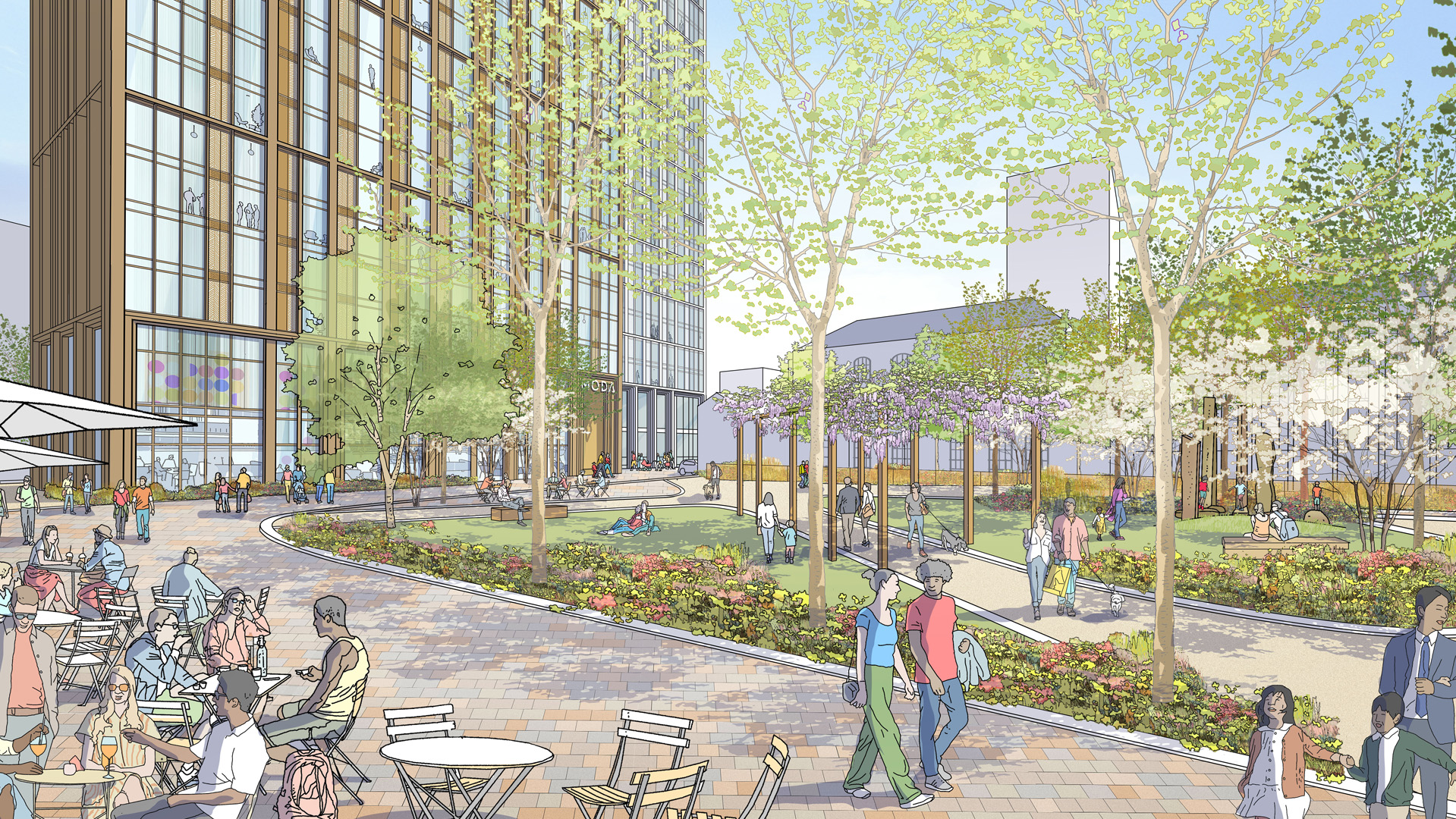
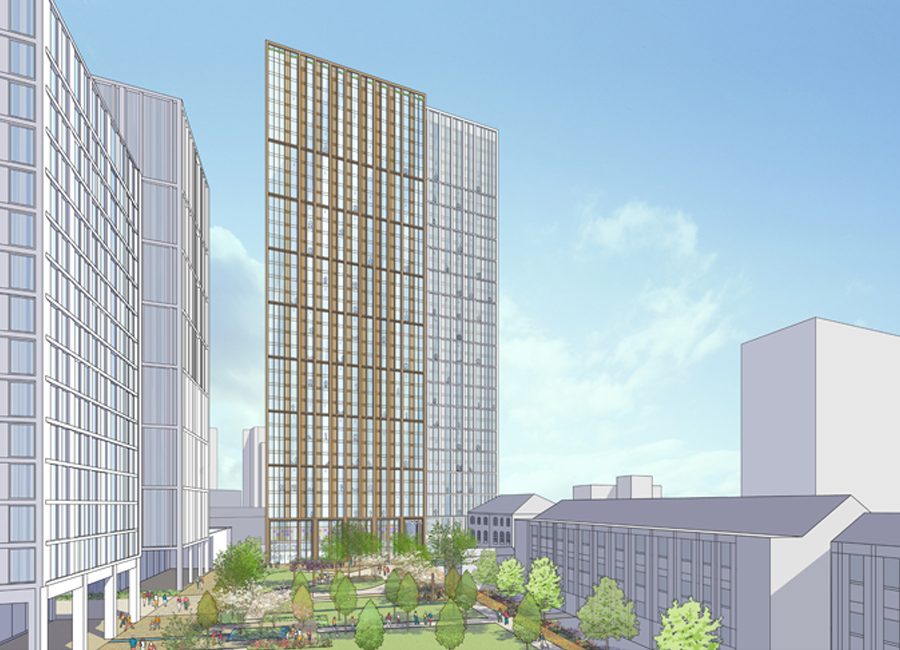
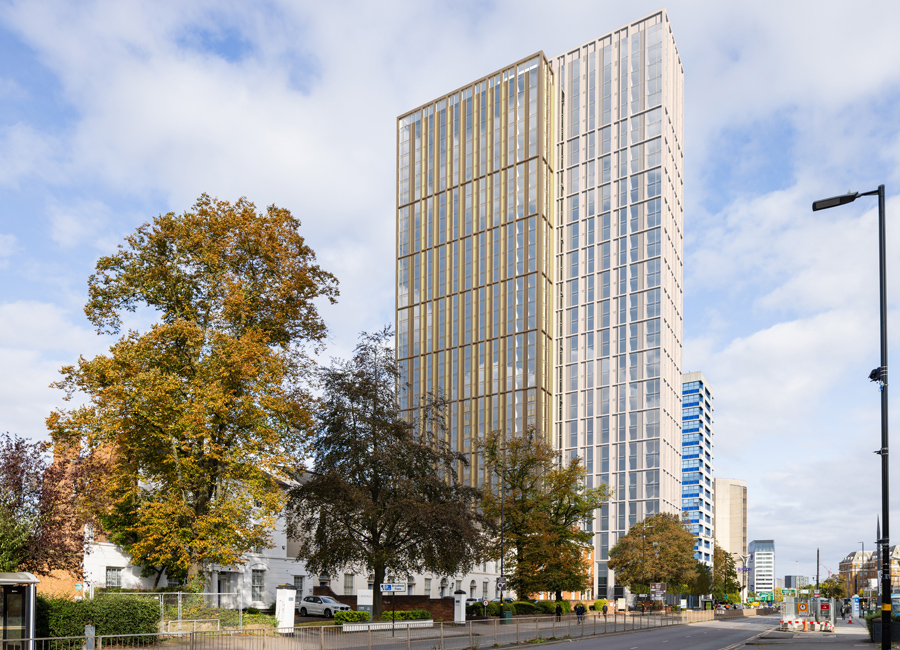
We are delighted to have secured planning permission for the next phase of MODA and Calthorpe Estates city gateway masterplan in Edgbaston, New Garden Square, paving the way for over 400 much-needed new homes in the Birmingham district. This major, full planning approval follows a proactive consultation exercise with Birmingham City Council’s planning team.
Residents will benefit from best-in-class amenity spaces such as a roof terrace, 24-hour gym, co-working space and resident lounges, along with 230 new cycle parking spaces to encourage sustainable travel in the city.
Anchored by 2,400 new homes in a mix of tenures, the 11-acre New Garden Square masterplan will include a new park, along with retail space, a range of cafes, bars and restaurants, as well as community amenities and industry-leading workspace.
This has been an amazing journey to date, collaborating with our clients and consultant colleagues, and we now look forward to developing the pre-construction information with them over the coming months.
Client: MODA Living / Sector: Residential / Status: Ongoing / Visualisation: Architecture in Perspective & Virtual Planit
Olive Lane
Waverley
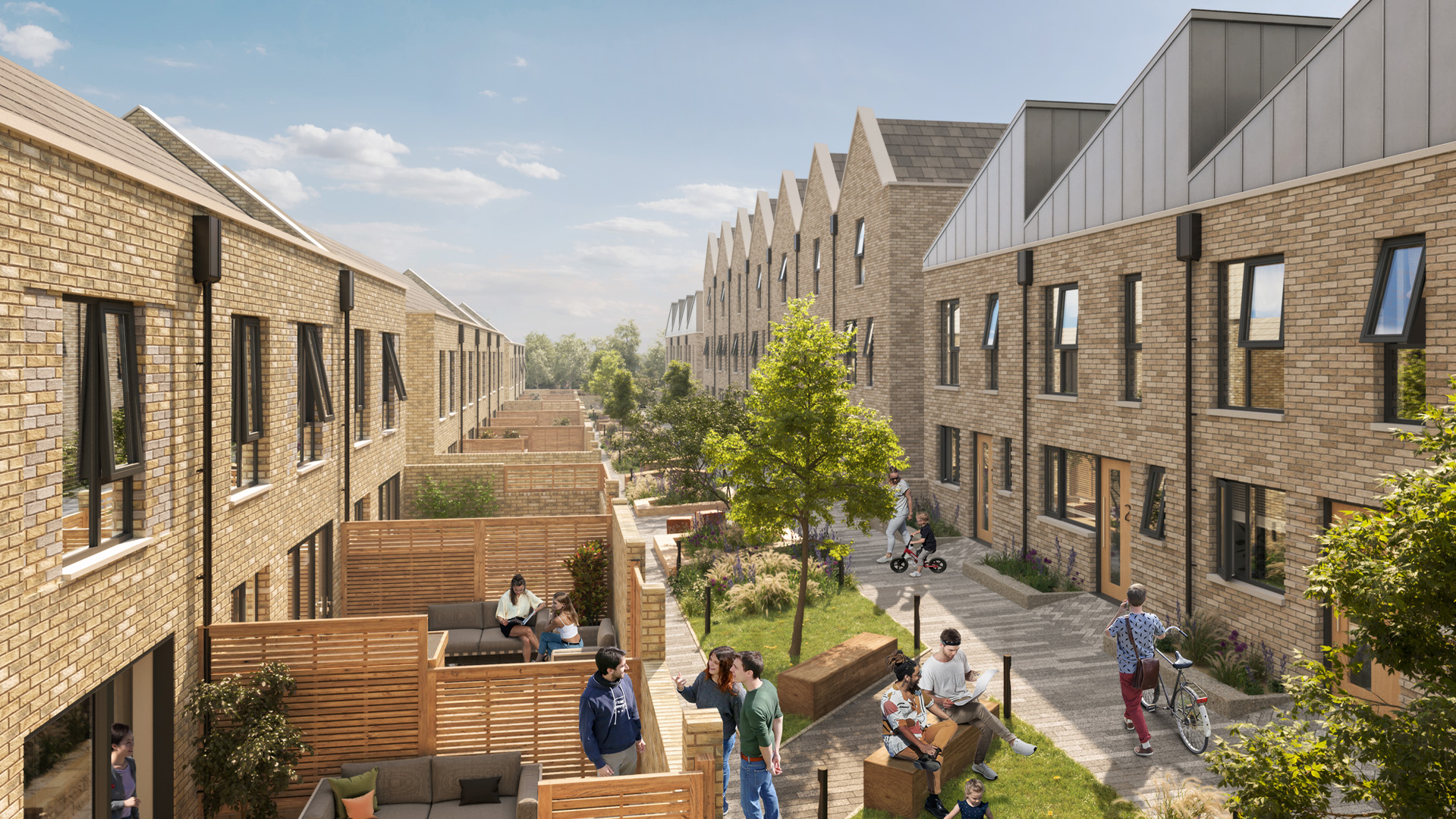
Our client Forge New Homes has recently gained planning permission for a new build residential scheme, with a contemporary approach to townhouse design. The scheme is part of a wider mixed-use development at Waverley, near Sheffield, by Harworth Group.
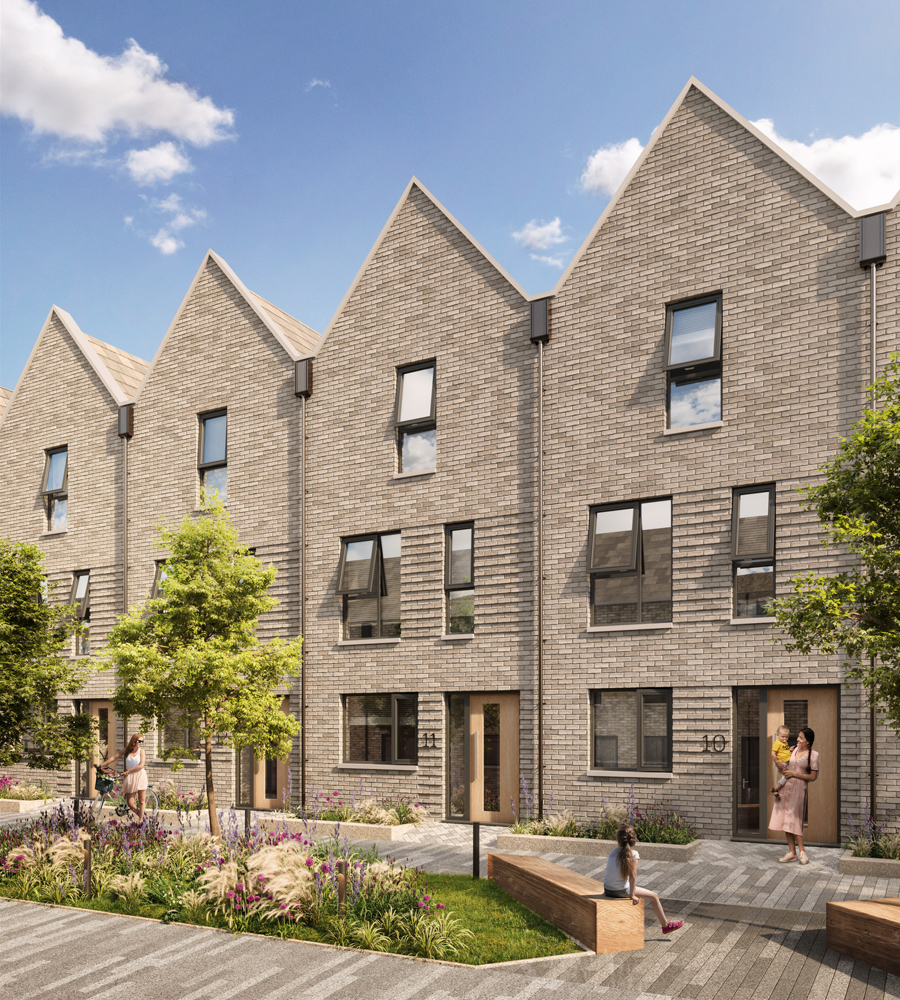
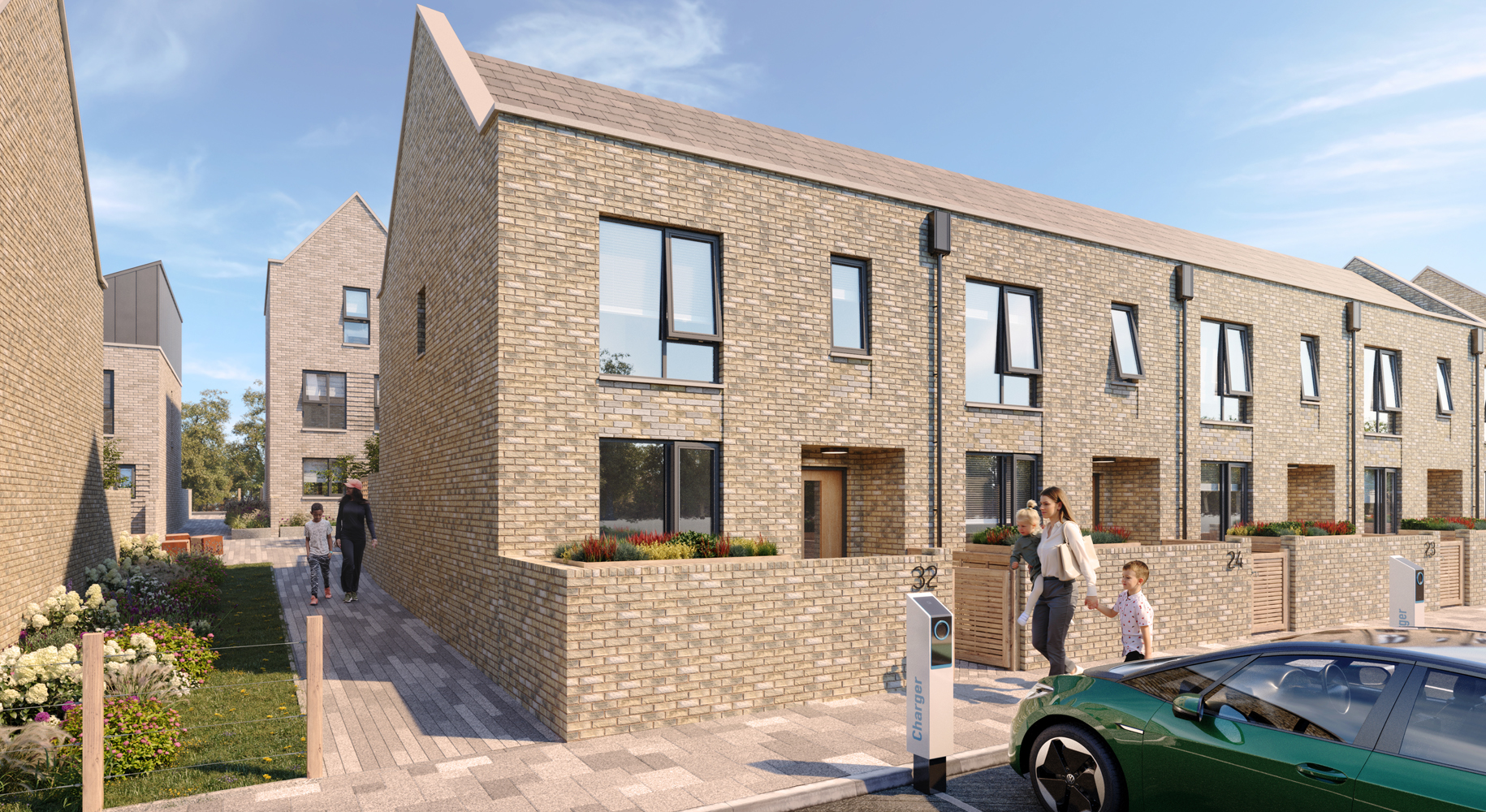
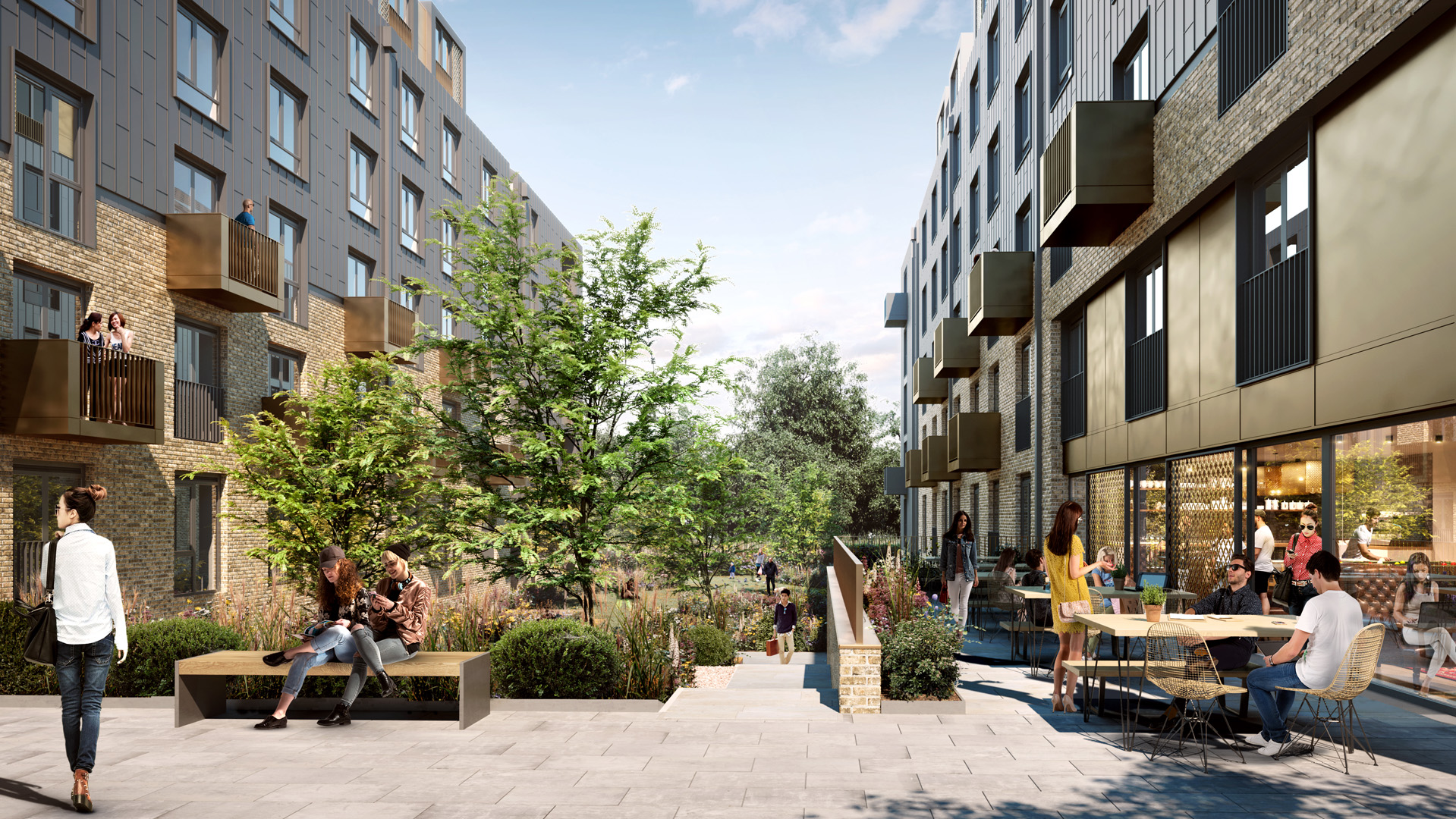
This scheme will provide 32 high quality residential homes designed around a shared ‘garden street’. This green space will provide the residents an opportunity to relax, play and interact socially with their new community. All the homes have individual gardens and parking spaces with electric charging points. The homes are grouped together in a series of terraces with the majority being designed as two storeys apart from one central terrace which is designed over three floors.
With strong street frontages, free-flowing layouts and a design that allows blended indoor and outdoor living. Fuse worked closely with Forge New Homes, to further develop their layouts to provide more open plan spaces. The homes provide either two or three bedrooms with generous built-in storage and a high specification throughout.
Delivering this exciting project required a strong collaborative approach working with an excellent project team: Edge PS – Project Manager/Quantity Surveyor, Stantec – Planning Consultant, PWP – Landscape Architect.
Client: Forge New Homes / Sector: Residential / Status: On going / Visualisation: Our Studio
Hudson Quarter
York
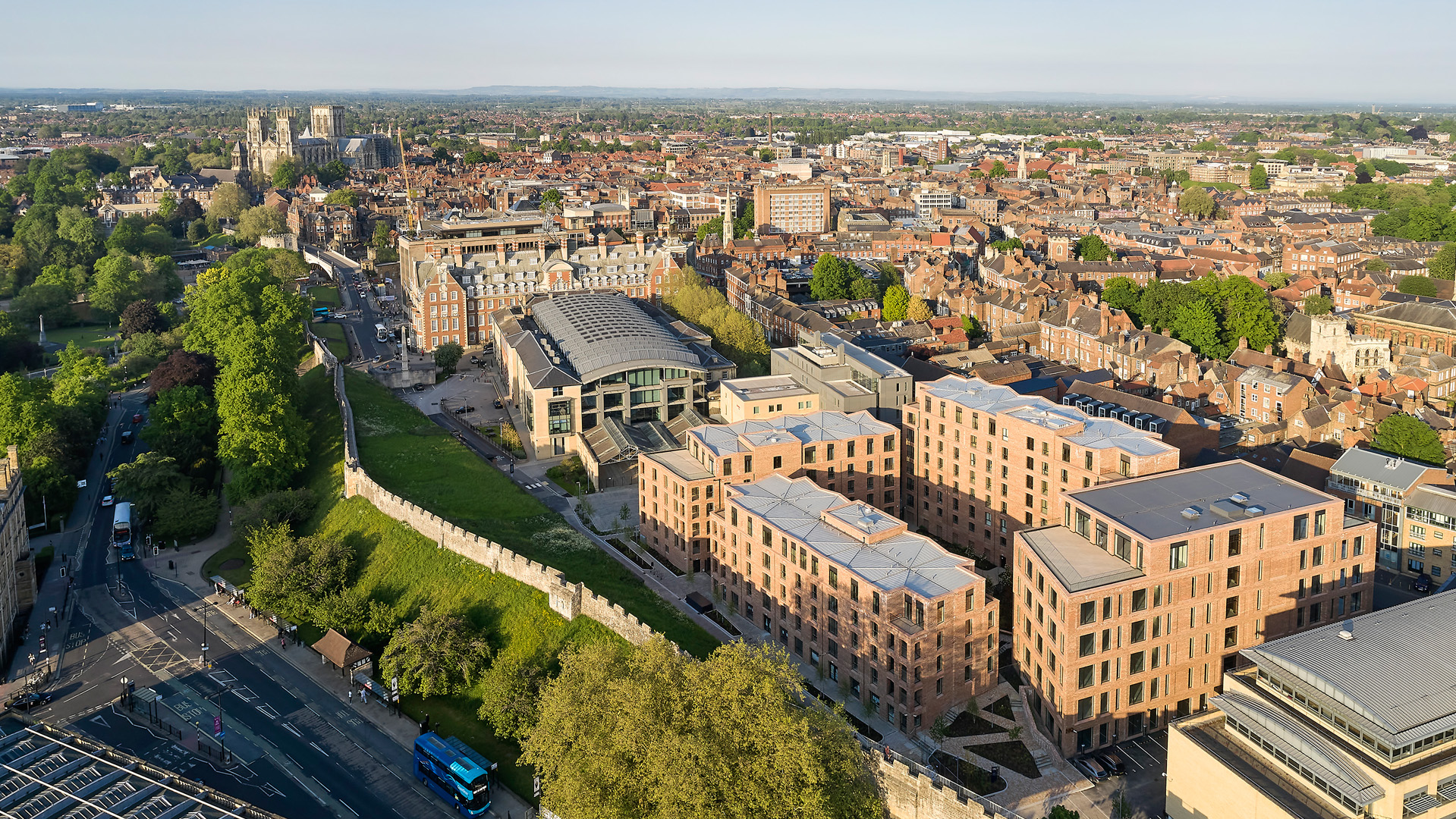
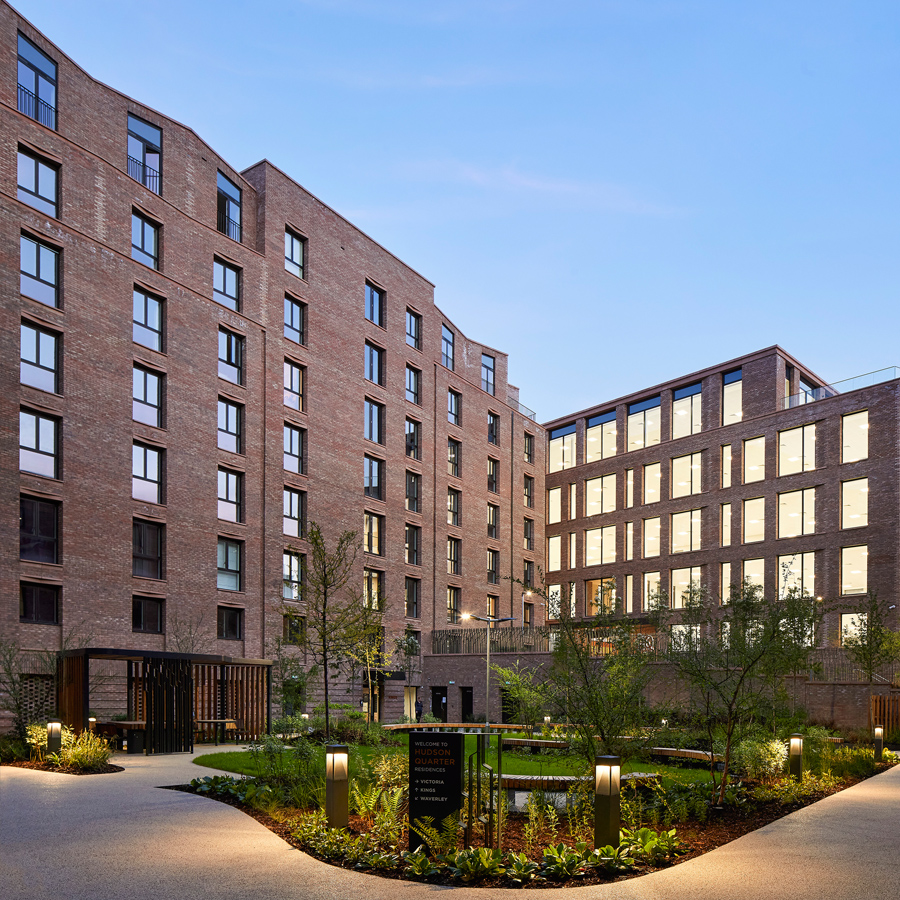
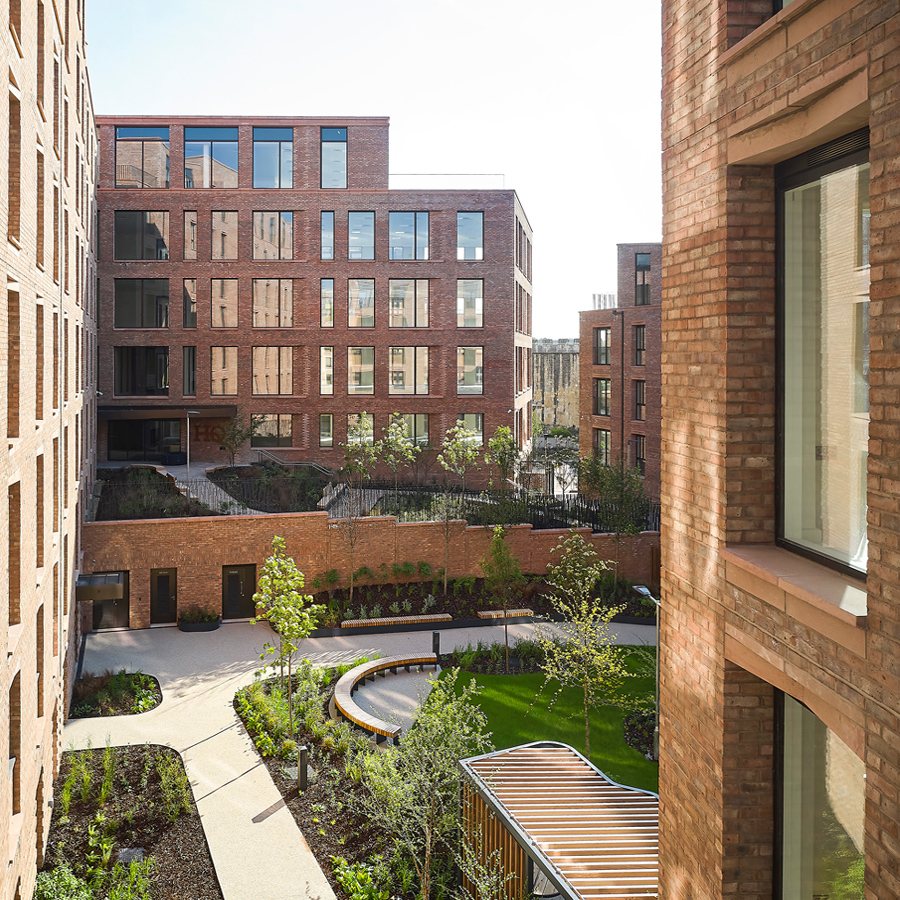
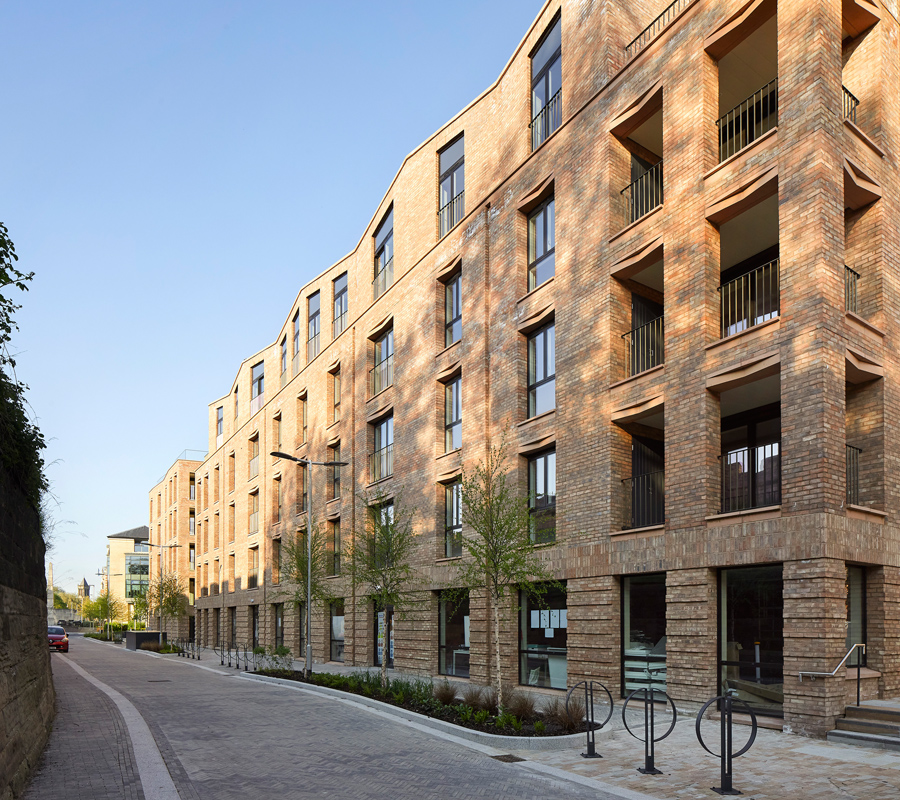
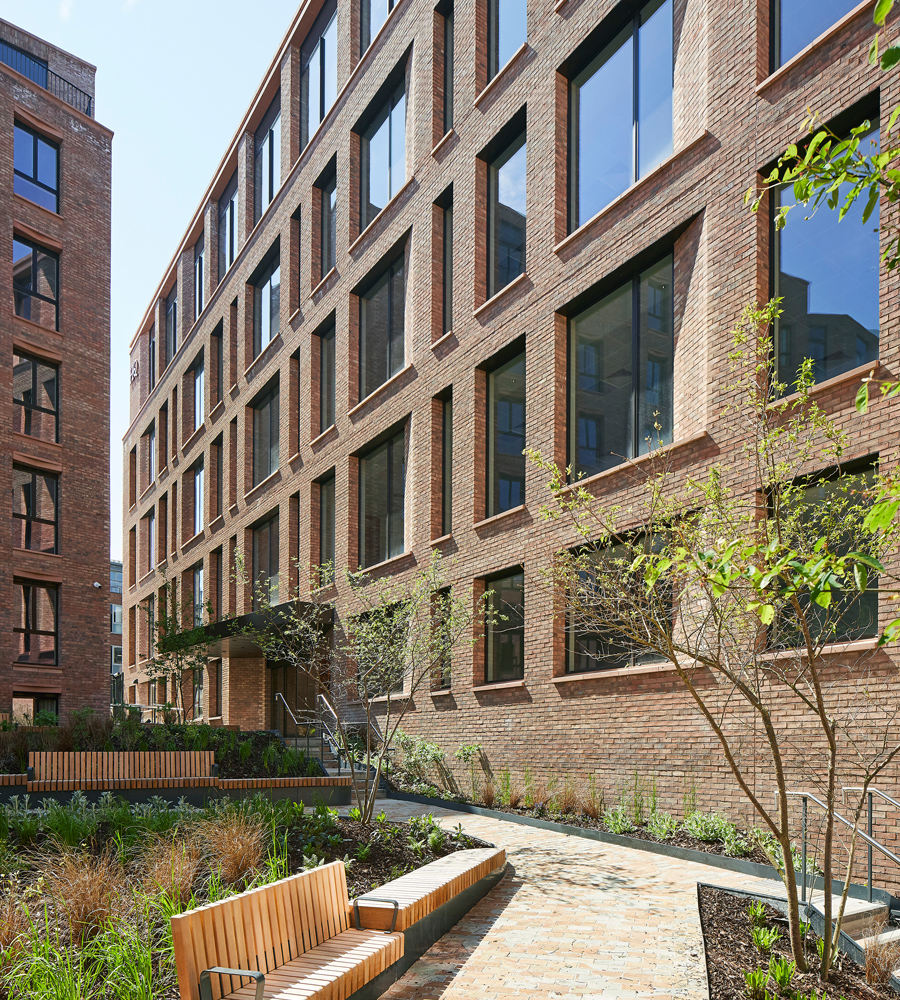
Hudson Quarter (HQ) is a mixed-use development of 127 apartments and circa 4,000sqm office space. The accommodation is housed in three residential buildings and one office, around a central courtyard. Fuse was appointed by Palace Capital plc in 2014 as architects and interior designers for this scheme and were later novated to Caddick Construction during the delivery stages. The project was fully completed in April 2021.
When Palace Capital plc purchased the property, it contained an existing 1960’s office building, Hudson House. Fuse was originally appointed to obtain a Permitted Development planning approval for the re-use of the building, which was granted in 2016. However, following discussion with City of York Council (CoYC) the client decided that a full redevelopment of the whole site would be of better long-term benefit for their shareholders and the city.
Fuse’s brief was therefore to maximise the development value of the site, whilst ensuring planning approval could be gained: not straight-forward when working in historic York and when the site borders the City Walls, is overlooked by the planning office and is a stone’s throw from Historic England’s office!
Client: Palace Capital PLC / Sector: Residential / Status: Complete / Photography: Hufton and Crow
Contextual Design Approach
The site is in a highly sensitive location, only a few metres from York City Walls, and required a very sympathetic design solution. Fuse and other members of the design team therefore undertook an extensive Pre-App consultation process. During this time Fuse worked collaboratively with the design team and officers from City of York Council (CoYC) to develop a scheme that positively responded to its surrounding context.
Furthermore, the officers of CoYC were keen to see a new public pedestrian connection between the nearby train station and the Micklegate area. Given there is a 5.5m level difference to overcome, this was quite a challenge! Working alongside re-form landscape architects, a new, fully accessible route was conceived.
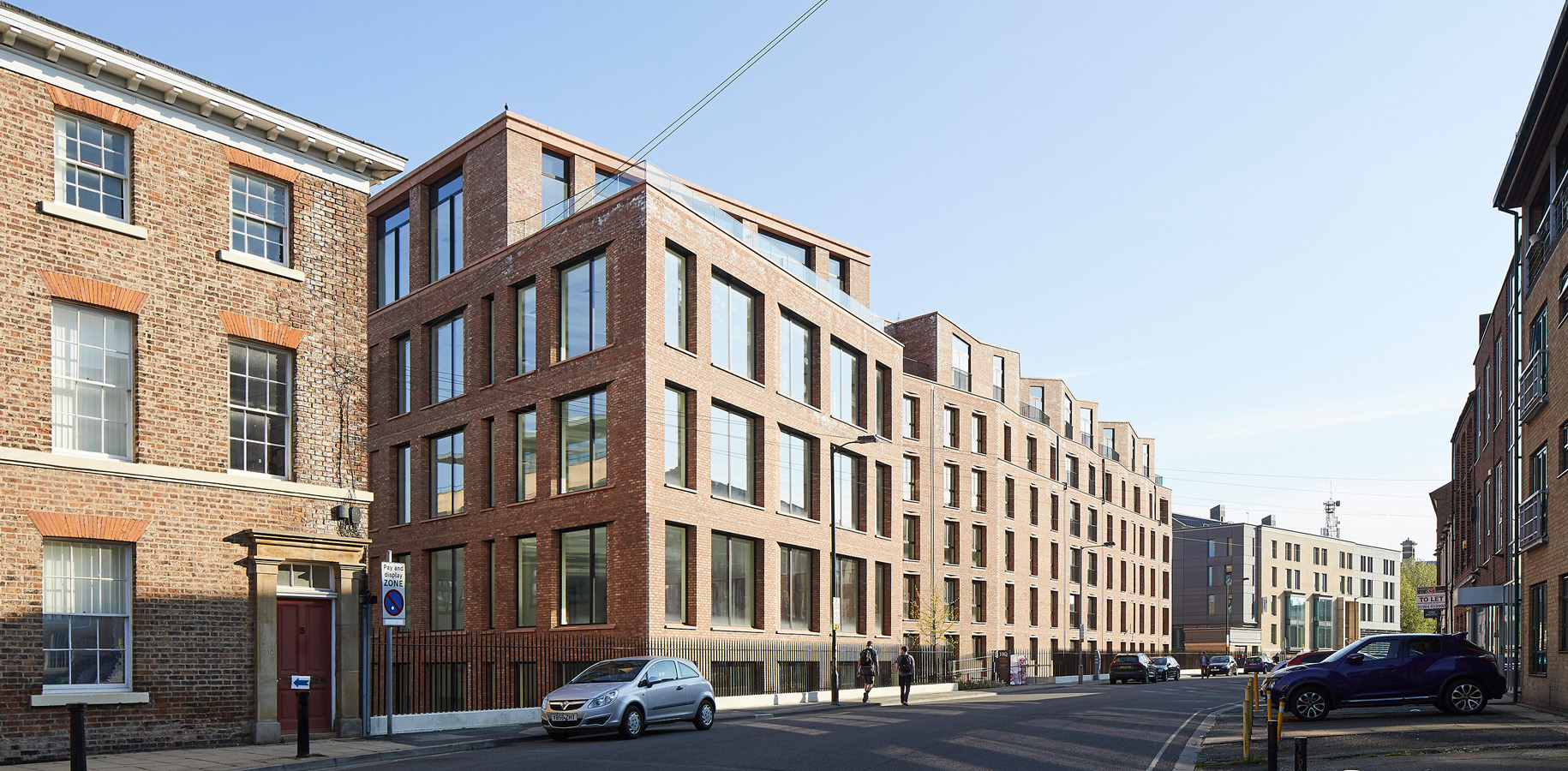
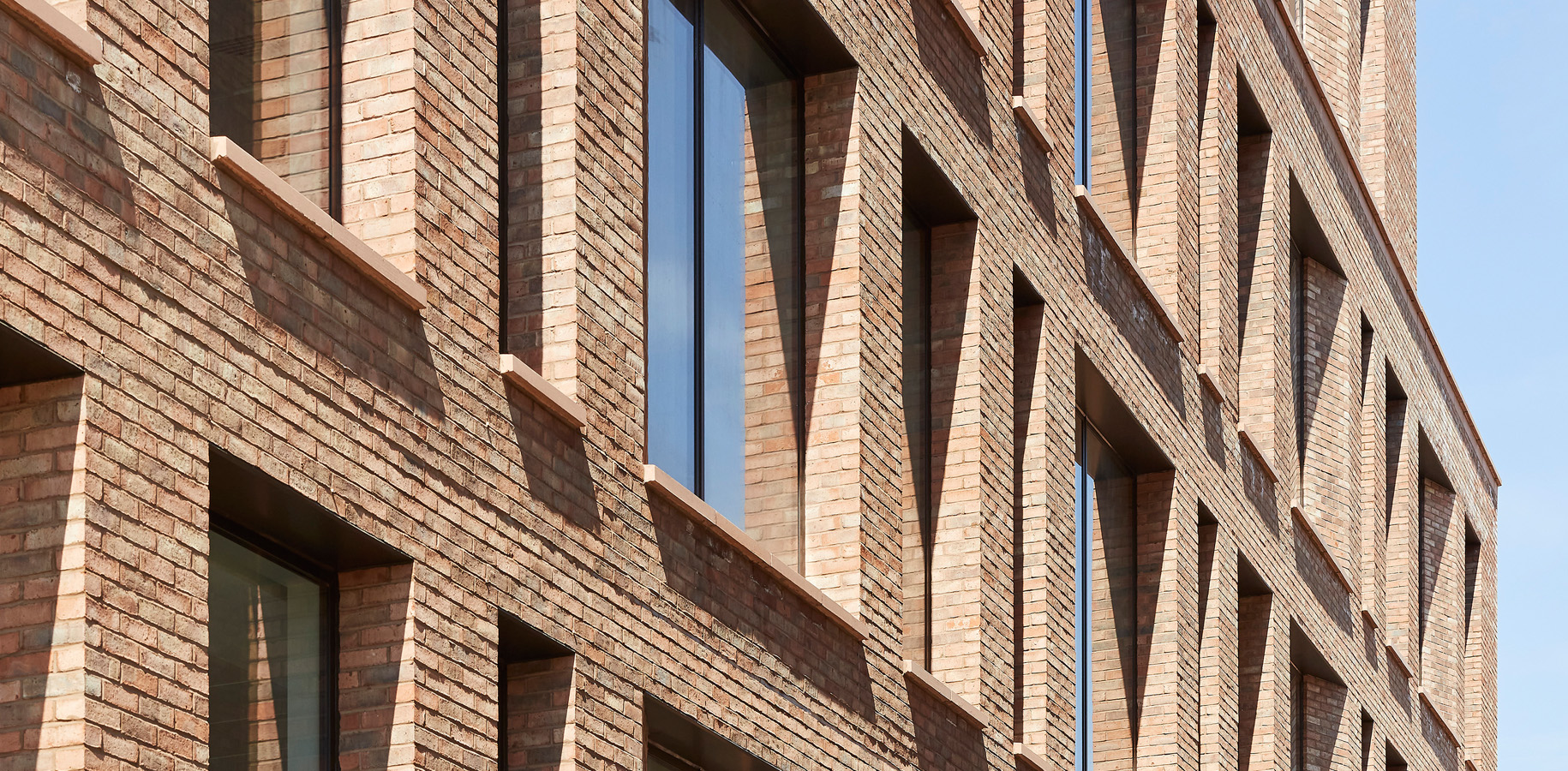
The massing of Hudson Quarter’s buildings was carefully designed to step down from Toft Green towards the City Walls, so as not to dominate the latter. A single brick type was used to clad the buildings: its selection key in tying the buildings to their location and providing the architecture with a calm, timeless quality.
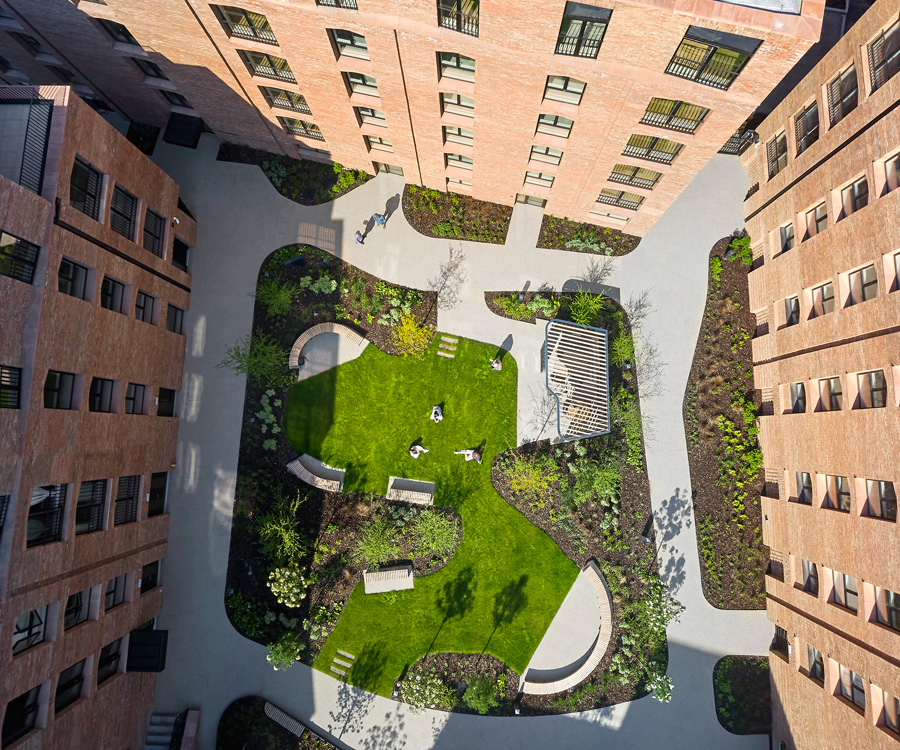
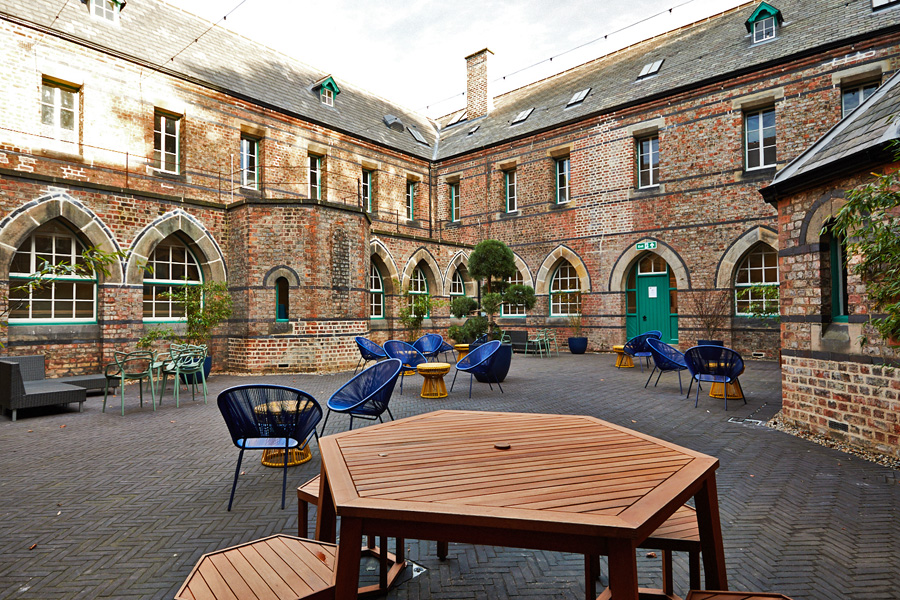
Central to this place-making approach is the residents’ fully landscaped courtyard, providing the apartment dwellers with valuable external amenity space and secure access to each of the residential buildings. The courtyard includes a gazebo with power and lighting, which residents can use when working (or playing!) from home.
The Office
Hudson Quarter boosts the first speculative office to be built within the City Walls in decades, HQ’s office has been designed to be let either to a single occupier or on a floor-by-floor basis. The office’s massing was carefully conceived to minimize the visual impact when viewed from outside the City Walls and be respectful to the adjacent listed Toft Green Chambers building. The result is a cut-back and roof terrace at both ends of the building.
The office achieved a BREEAM Excellent rating at completion and has the highest possible Wired Score rating (Platinum) for its connectivity and robustness. The first office letting, to law firm tenants Knights, has set record rent levels for York: testament to the design quality, location and specification.
“Yorkness”
Those familiar with working in the city will know that having a scheme with “Yorkness” written through it is particularly important. Hudson Quarter was designed with this in mind:
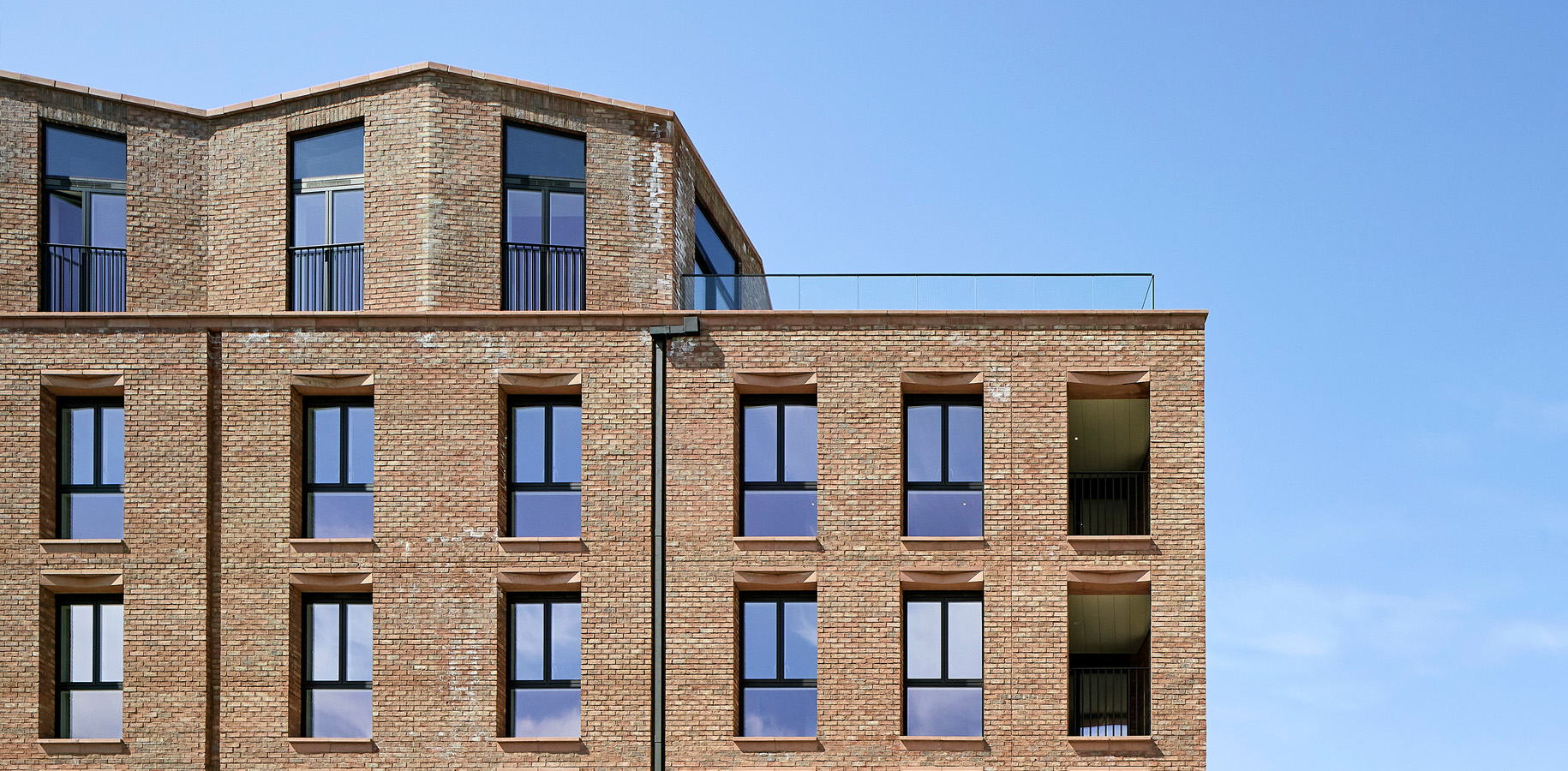
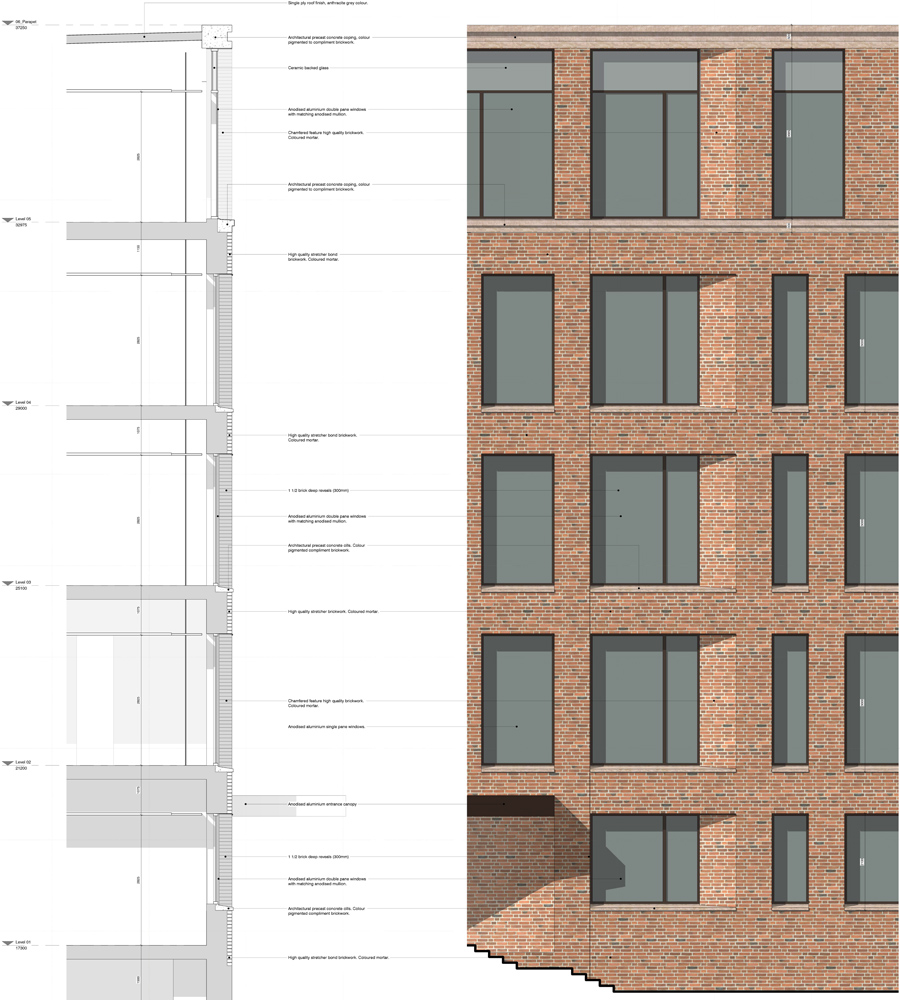
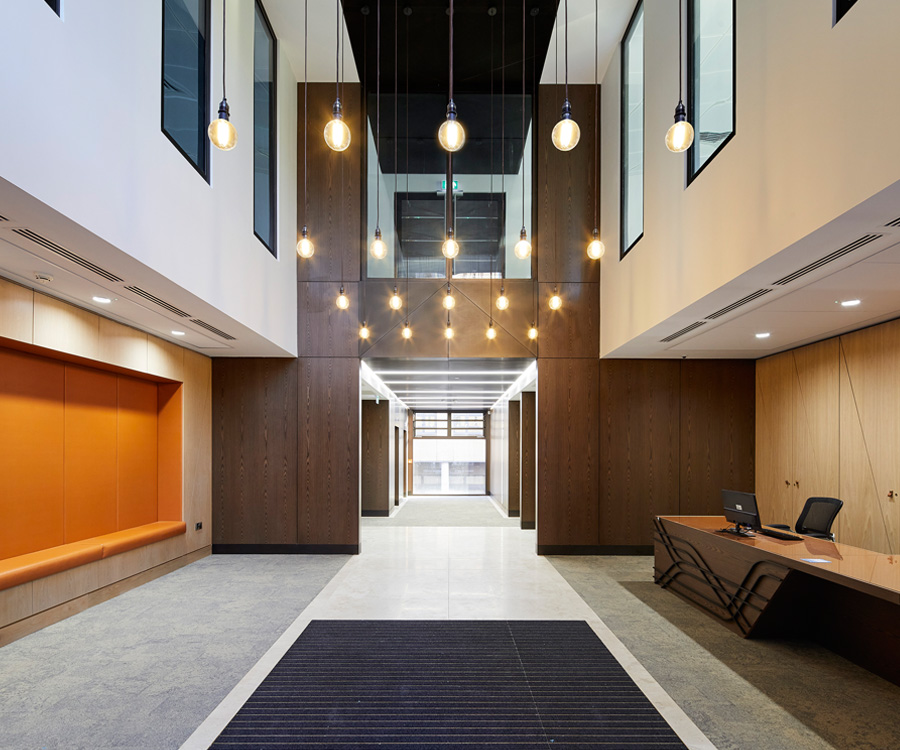
The buildings have been deliberately pushed close together, to mimic tight spaces in the city. Rooflines and upper floors of the buildings undulate, to reflect in a contemporary manner the organic roofscape of the Micklegate area. Furthermore the external walls are angled to reflect the organic nature of York’s core and the window heads are similarly angled, to ensure a consistency across the design. Lastly, the site’s connection with its railway past (it was once the site of the original rail station) has been expressed in design features, including track “motifs” in external balustrades, gates and even in the HQ Office reception desk.
The Team
We worked with a brilliant client, main contractor and locally based design team for this project. Even with the restrictions and complexities imposed by the Covid crisis, the team work ethic shone through and the project was a delight to work on. Significant team members noted below:
Project Manager: Emmaus Consulting / Main Contractor: Caddick Construction / Landscape Architect: re-form landscape architecture / Planning Consultant: Lichfields / Cost Consultants: Turner & Townsend / Structures & Civils: Roscoe / Building Services: Couch Perry Wilkes / Joint Residential Agents: Hudson Moody & Carter Jonas / Joint Commercial Agents: JLL & Sanderson Weatherall / Communications Consultant: Royal Pilgrim
Riverside Residential
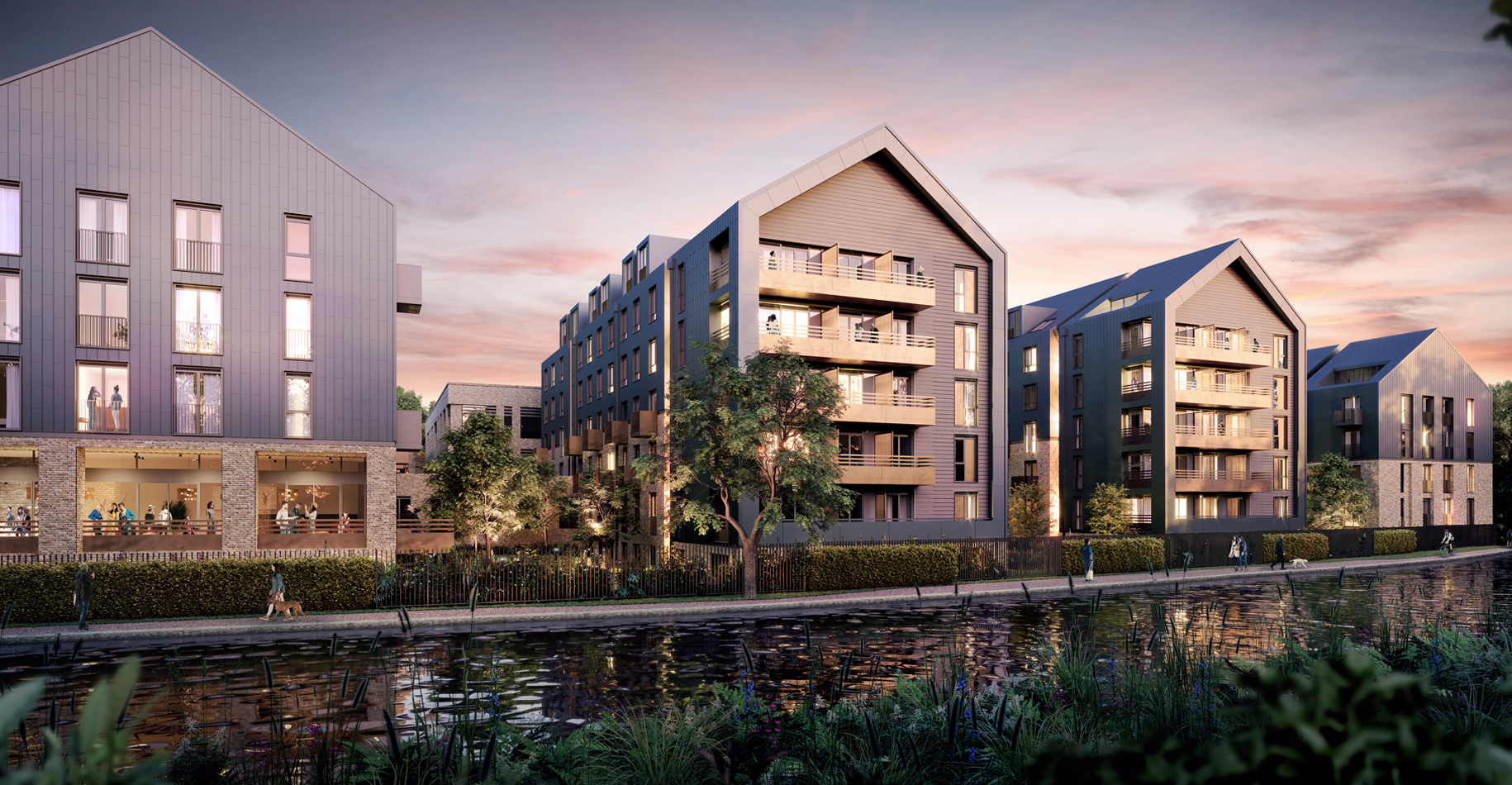
Fuse were appointed to design a contemporary residential scheme sited in a unique riverside setting. Our client’s brief called for mix of studios, 1, 2 and 3 bed apartments that looked to maximise the benefit of its location for all the residents, along with a small standalone office scheme ideal for small start-up businesses.
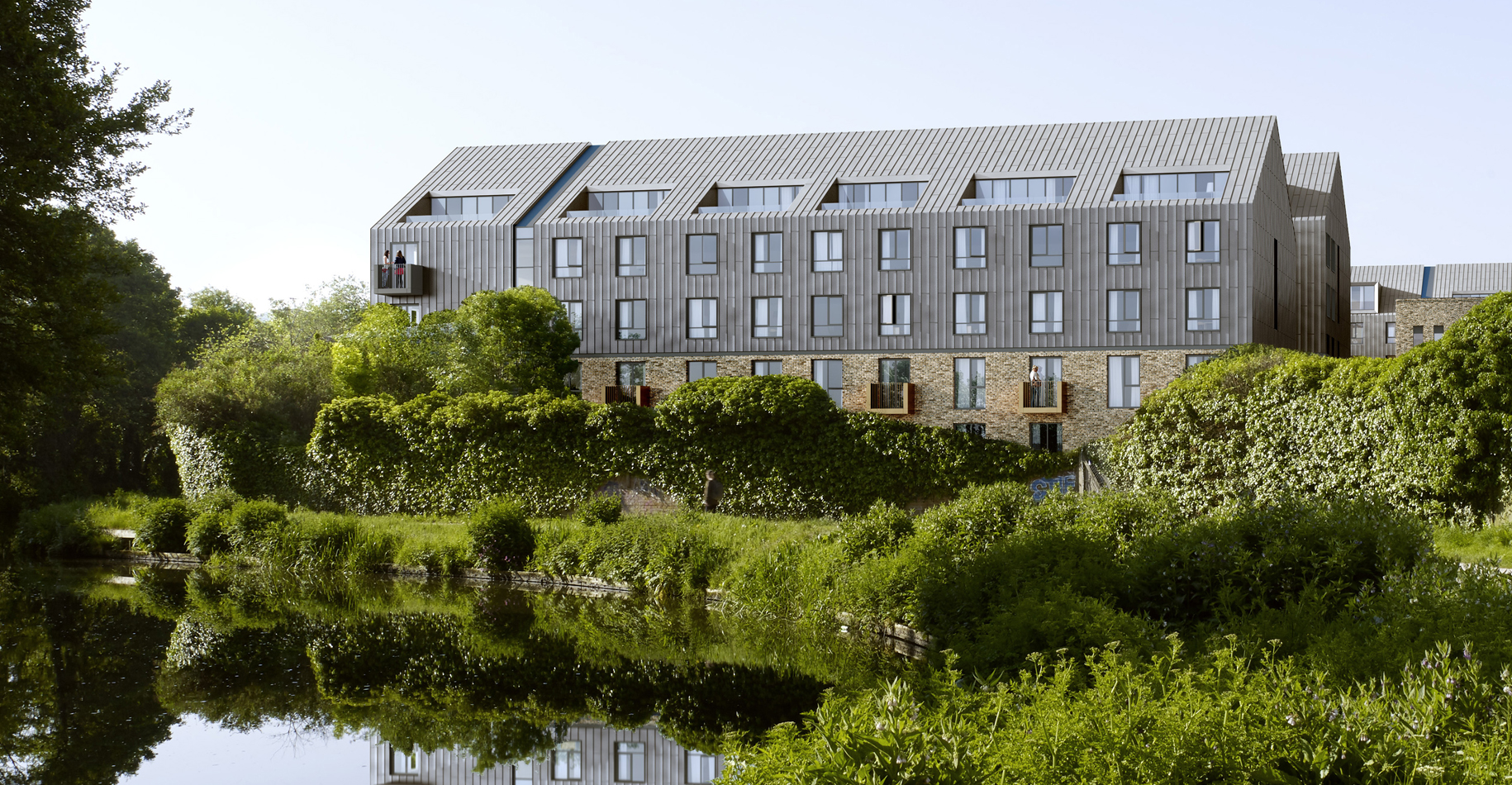
Our approach to the masterplan and the way the buildings would eventually be laid out, responds to the two different environments found on and around the site. The site divides itself in to two areas through its physical features: The distinctive natural ‘riverside’ of the River to the east and the more urban ‘street’ side facing west.
The massing approach to the site has been developed following site visits, studying the local context and building typology. The scheme requires a certain quantum of development to make it viable and out of this the massing starts to develop.
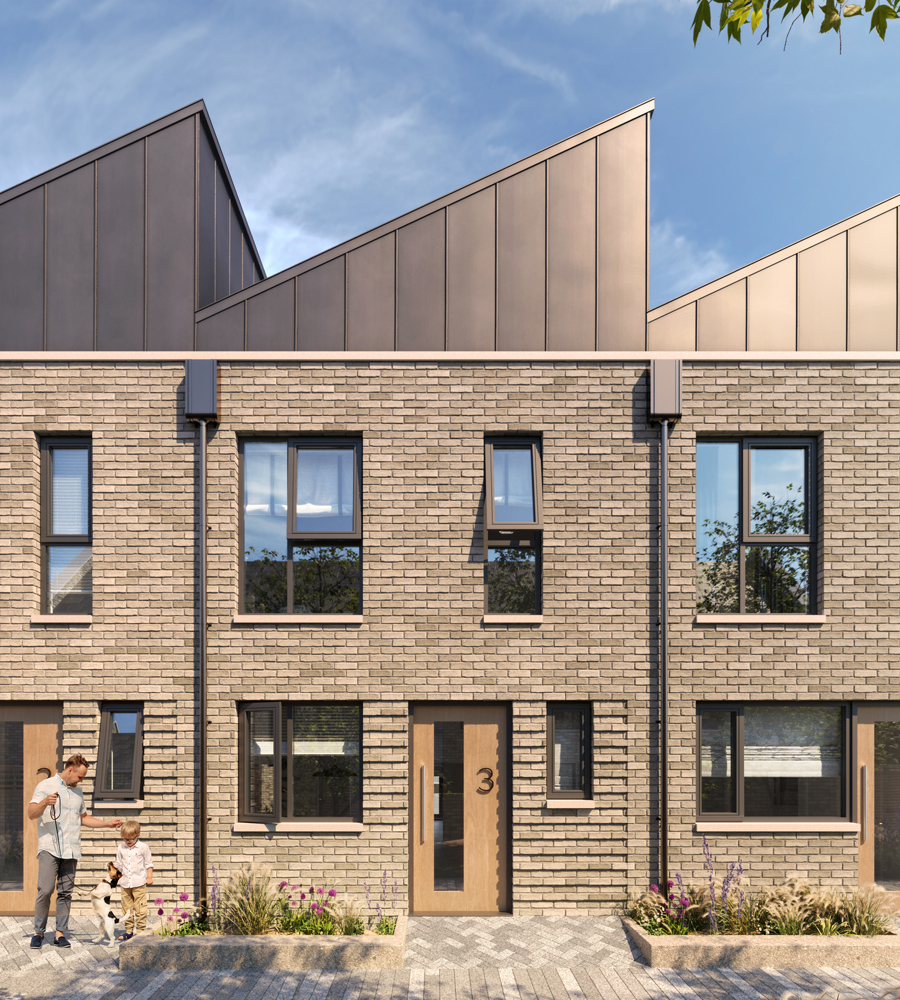
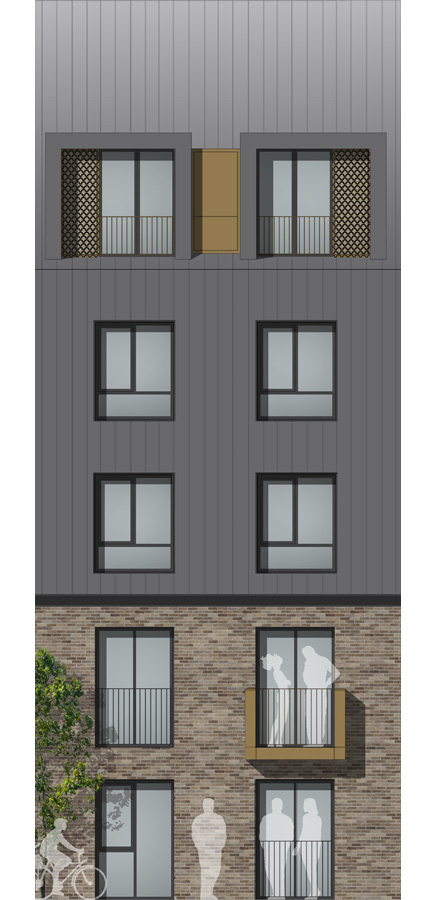
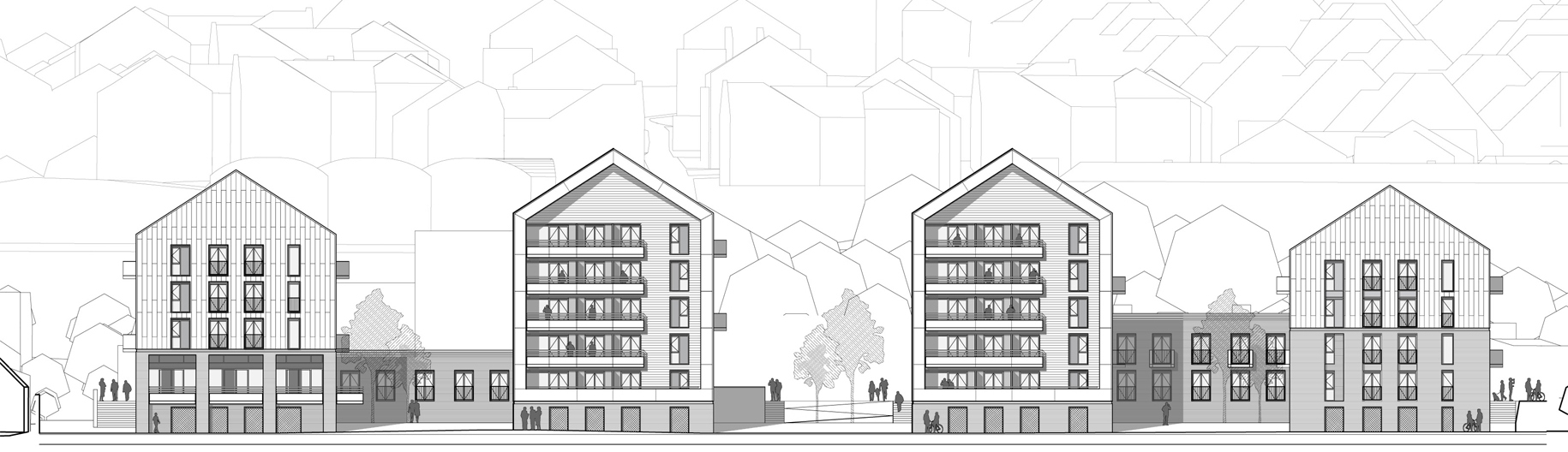
The striking pitch roof design was developed in response to the local context along with a desire for roof level dormers. The dormers allow the accommodation to be maximised, whilst adding architectural interest to the roof scape. The dormer rooms stop short at the Riverside elevation so that the overall height impact is reduced and the pure pitched roof form is prominent to the water’s edge.
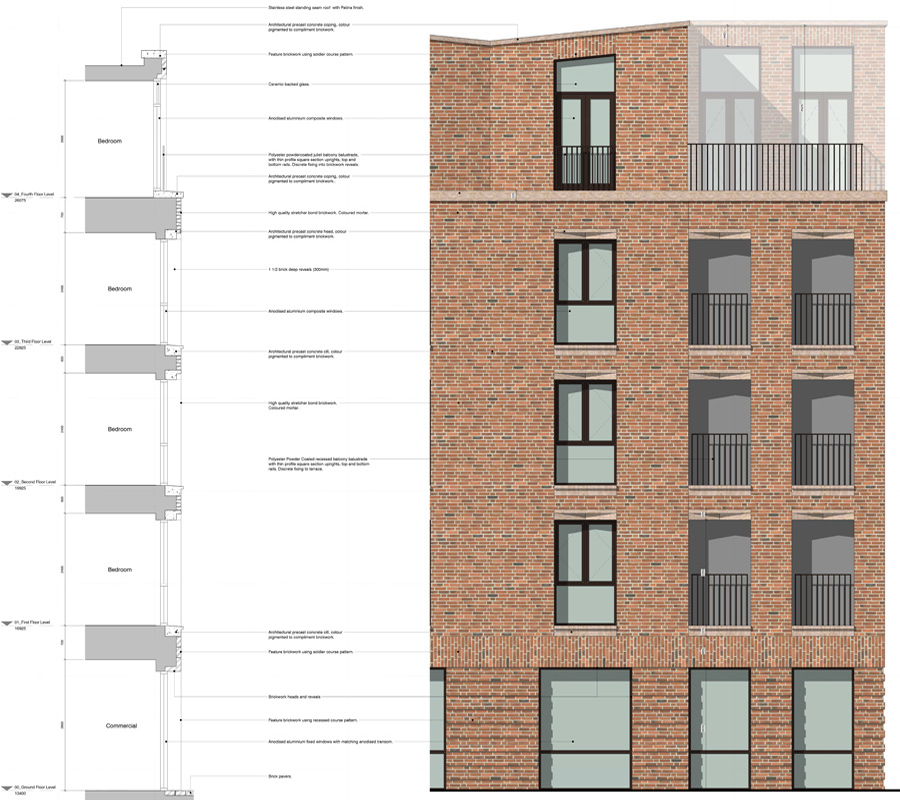
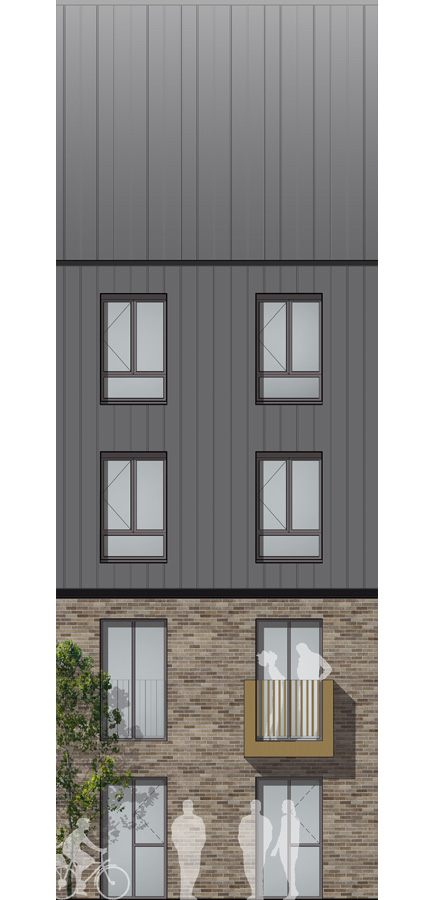
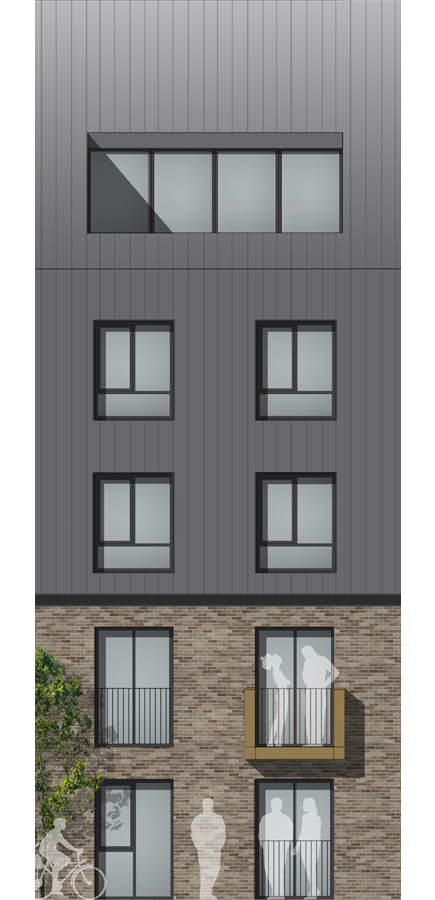
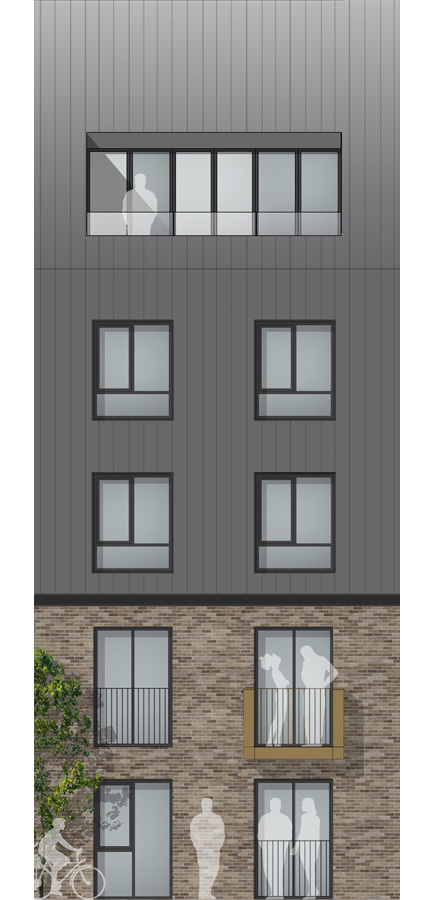
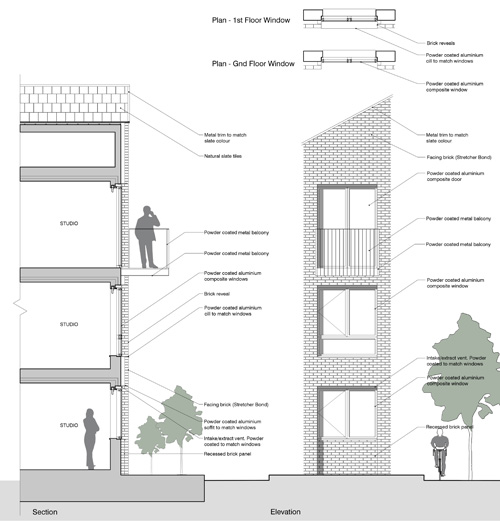
The other significant design move is the 50 / 50 split of material which is a very strong architectural language of this part of the UK. The ground and first floor are clad in brickwork, whilst the upper floors and roof are clad in metal standing seam.
When articulating the facades further the proposal was for the ground and first floor studios have full height windows whilst the upper floors would have a large window with opening light, thus offering visual interest to the overall façade.
A final layer of detail is added through balconies and Juliette balconies providing small outdoor spaces for the residents and interaction with the courtyard spaces below. Architecturally they add a level of relief to the elevations.
Elevation Study 01
Elevation Study 02
Elevation Study 03
Elevation Study 04
Eden Square Urmston
Manchester
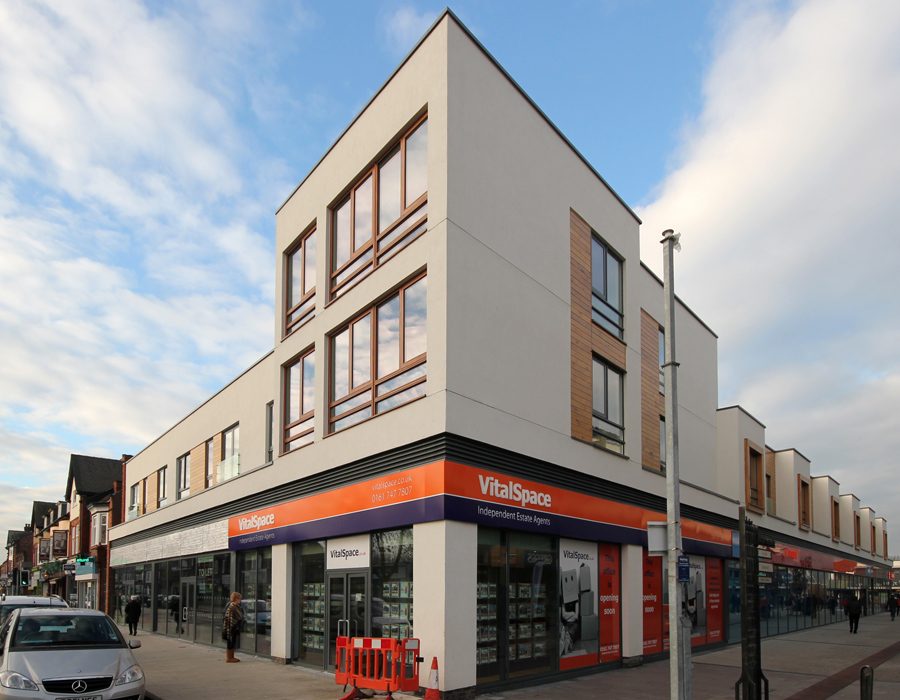
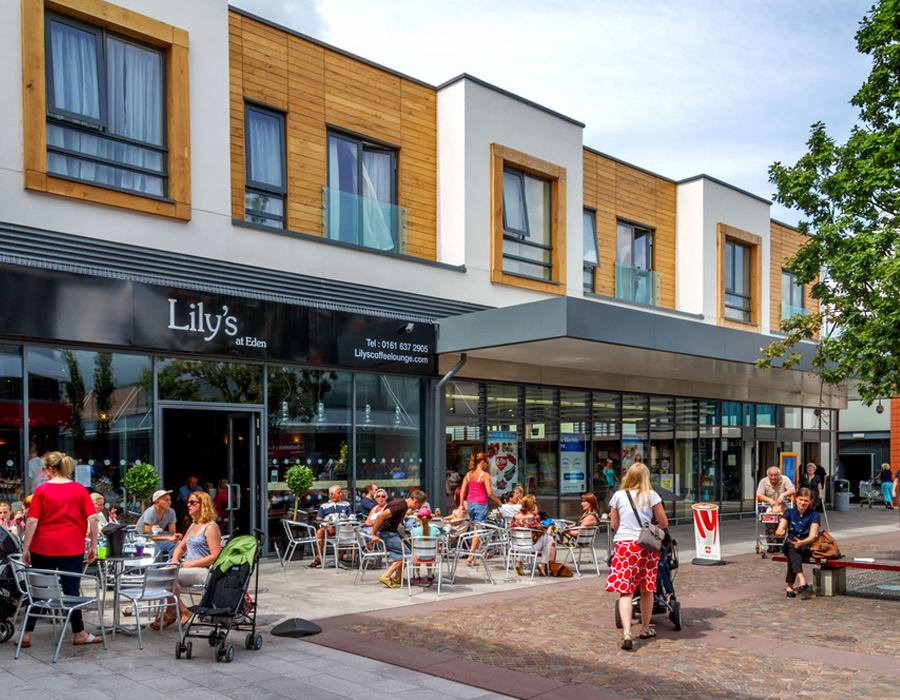
Fuse were appointed in 2010 by Ask Real Estate Ltd to re-design and deliver the final phase of the comprehensive redevelopment of Eden Square in the heart of Urmston, Greater Manchester.
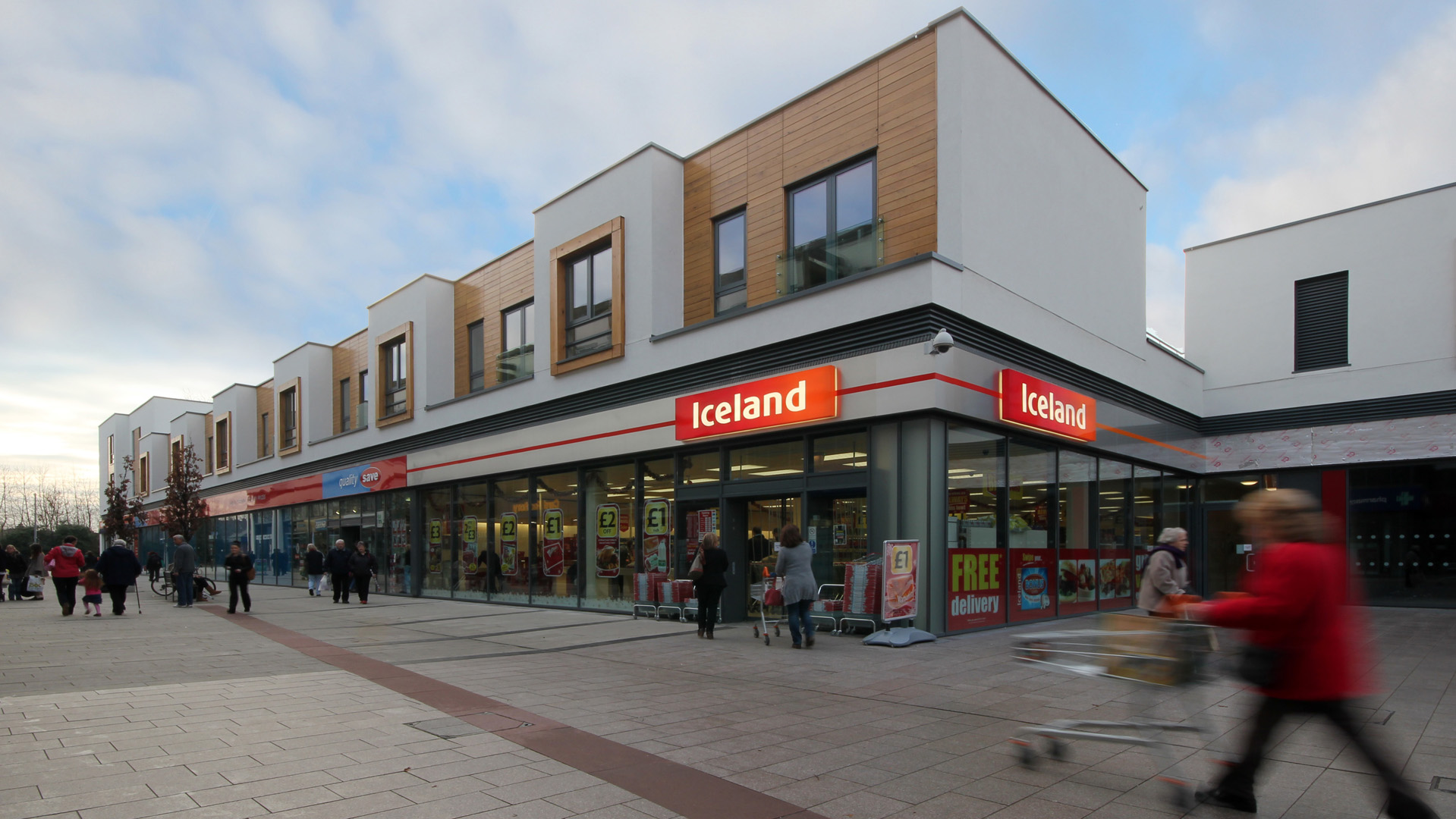
Located across from Urmston’s local railway station on Flixton Road, which is lined on either side with terraced houses whose ground floors are occupied by local shops. The scheme looked to emulate that architectural approach in a contemporary way.
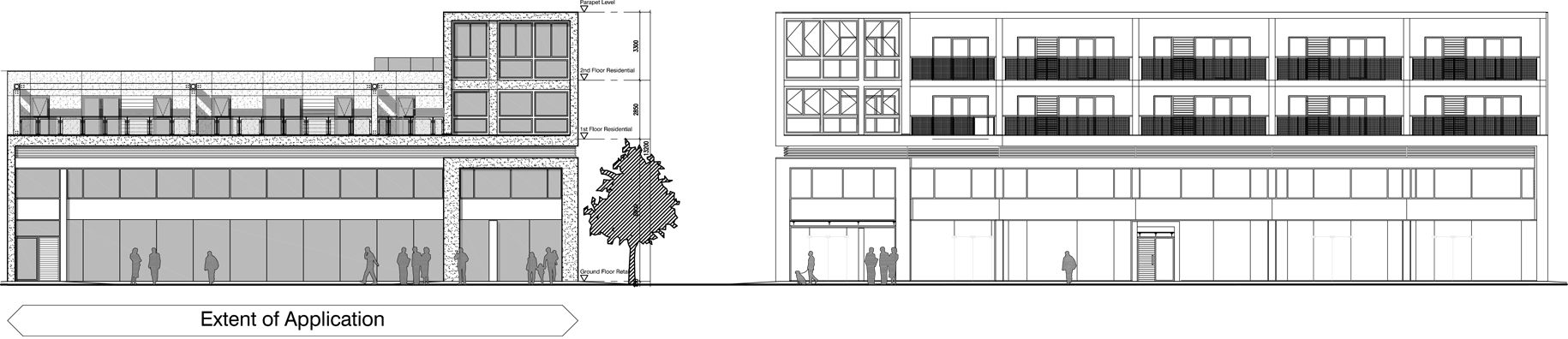
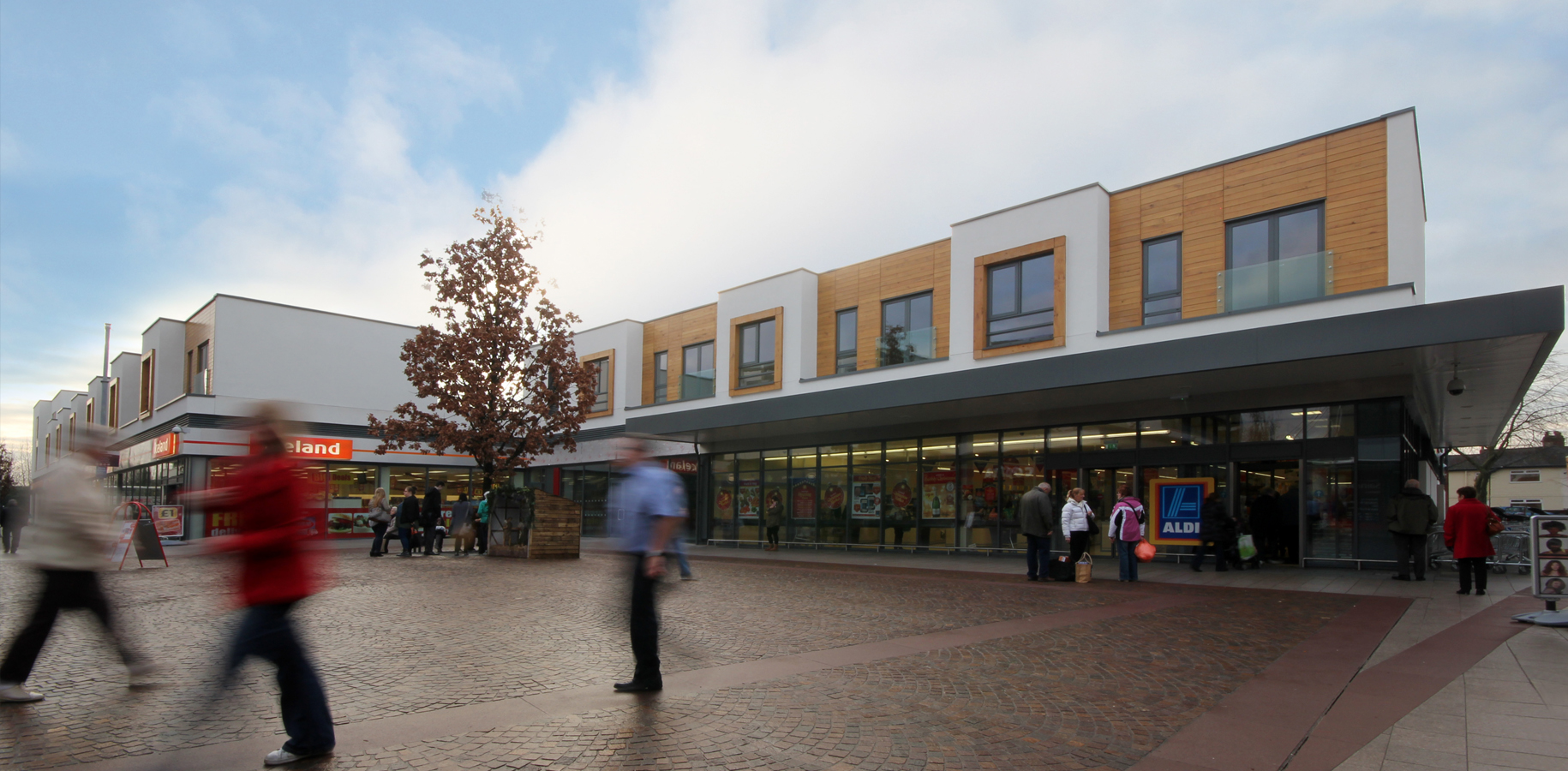
Fuse designed a ground floor comprising four large retail units providing 40,000sqft of space, ranging in size from 1,500sqft up to 15,000sqft, with 12 residential apartments above. The two main ‘active’ frontages of the development were to the south (Flixton Road) where the urban street frontage is complete and to the east, where the pedestrian ‘mall’ element of public realm unified the whole scheme.
The development delivered on its aspiration to enhance the existing town centre environment, create local employment opportunities, and spearhead the regeneration of the wider area by acting as a catalyst for further investment in the town. The completed scheme was the final quarter of the original Broadway Malyan designed masterplan.
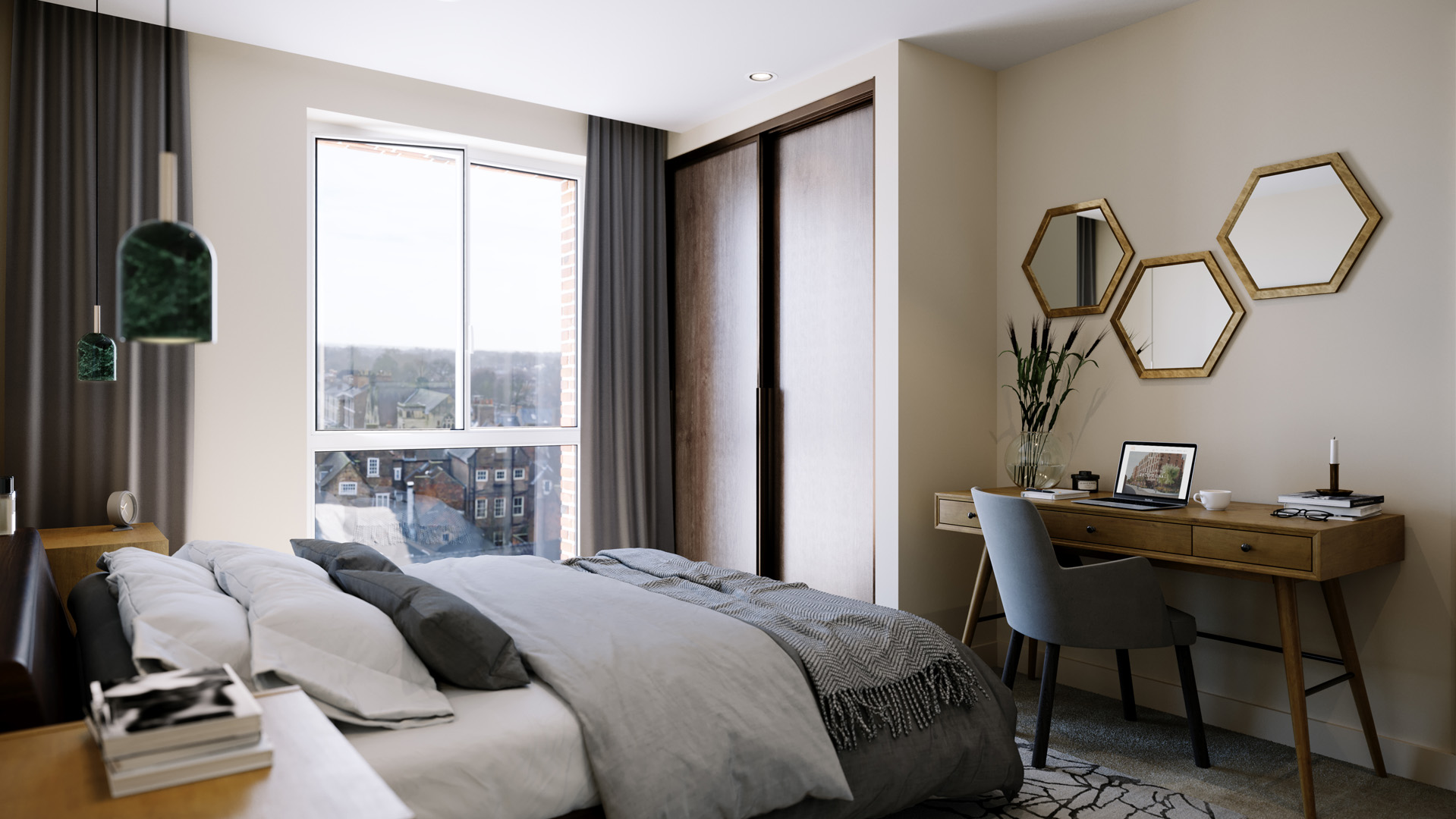
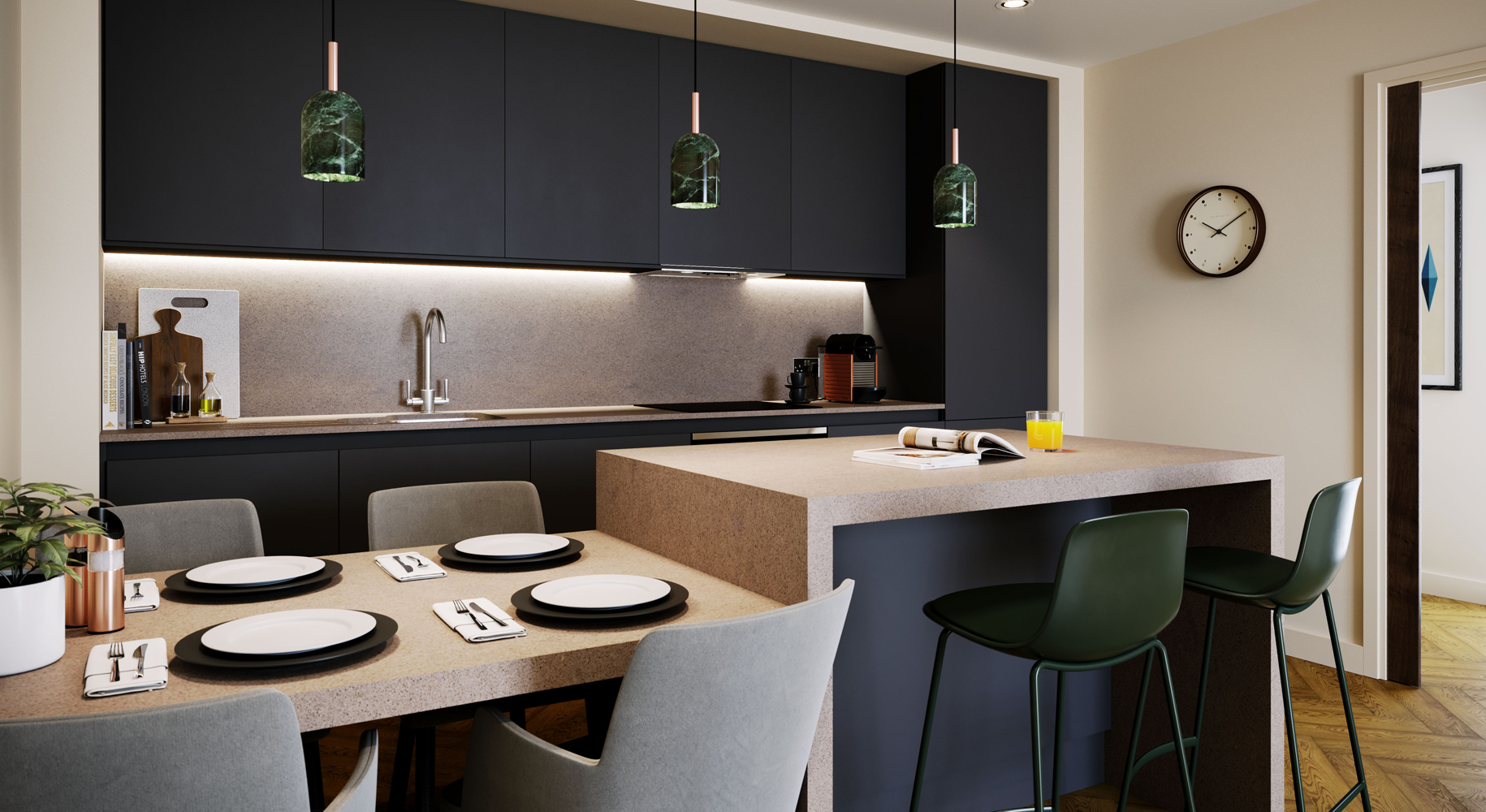
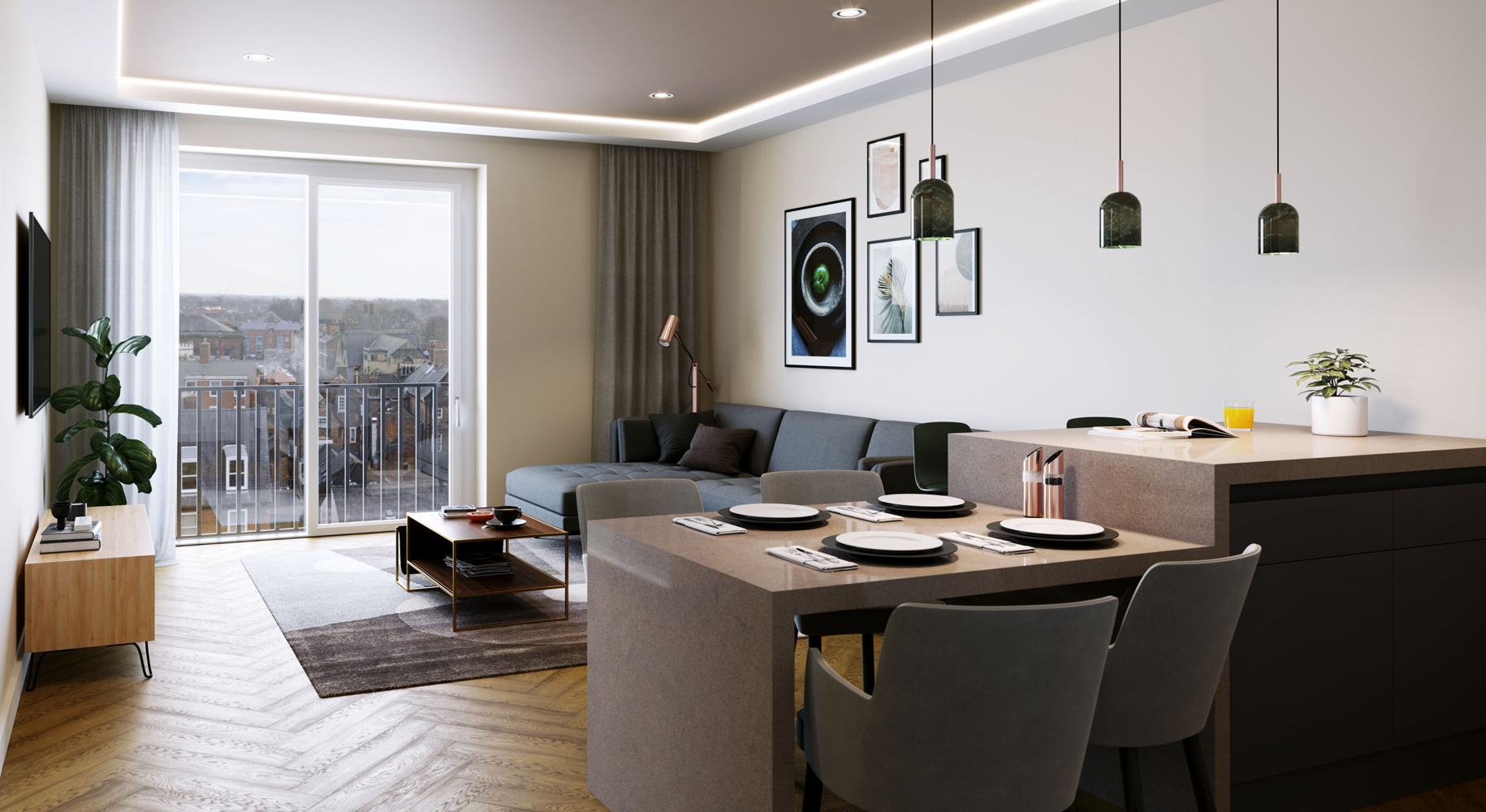
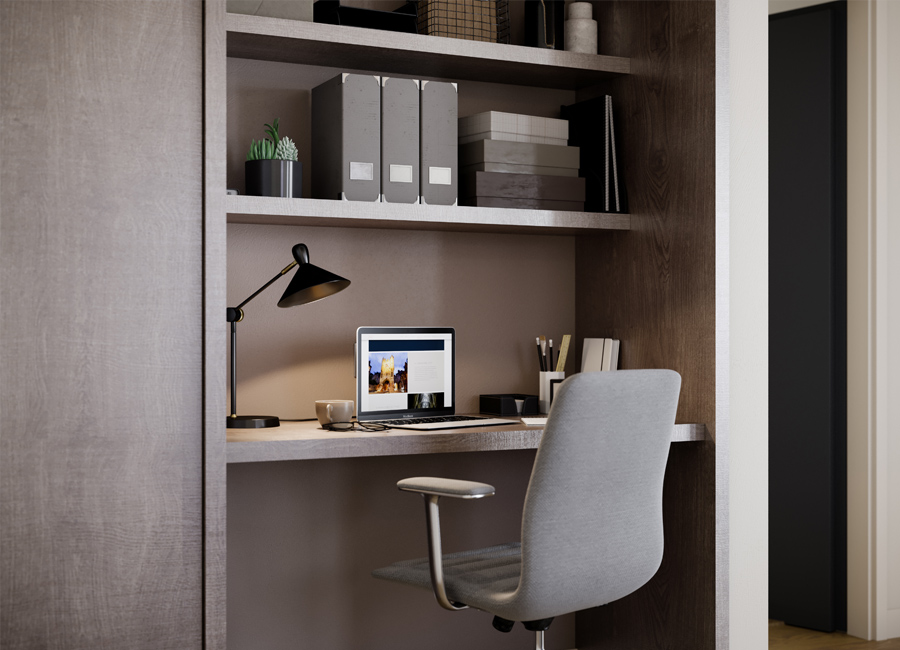
Following a competitive design process Fuse was successful in being appointed for the interior design of all communal spaces together with the 127 Studio,1,2,3 Bed Apartments and Penthouses. A detailed review of the existing drawings was undertaken with revised layouts submitted that focussed on residents’ wellbeing by increasing the visual connection to the external spaces wherever possible. In addition, bespoke joinery items were designed and detailed to become intrinsic to the apartment layouts allowing residents to work from home in a comfortable environment.
Designed with a sophisticated aesthetic and generous open plan living spaces with architectural features, Hudson Quarter utilises authentic, traditional materials to offer contemporary living within York’s historic city wall. Helping to cement the development strapline of ‘Redefining Exceptional’ the apartments have set a new benchmark for York’s city apartments.
The interior design scope included review and appraisal of all apartment layouts supporting the branding agency to establish a wider palette of materials, signage design, full FF&E selection and technical drawings of all the apartments and public space.
Client: Palace Capital PLC / Sector: Residential / Status: On site / Visualisation: IMA Global
Angel Gardens
Manchester
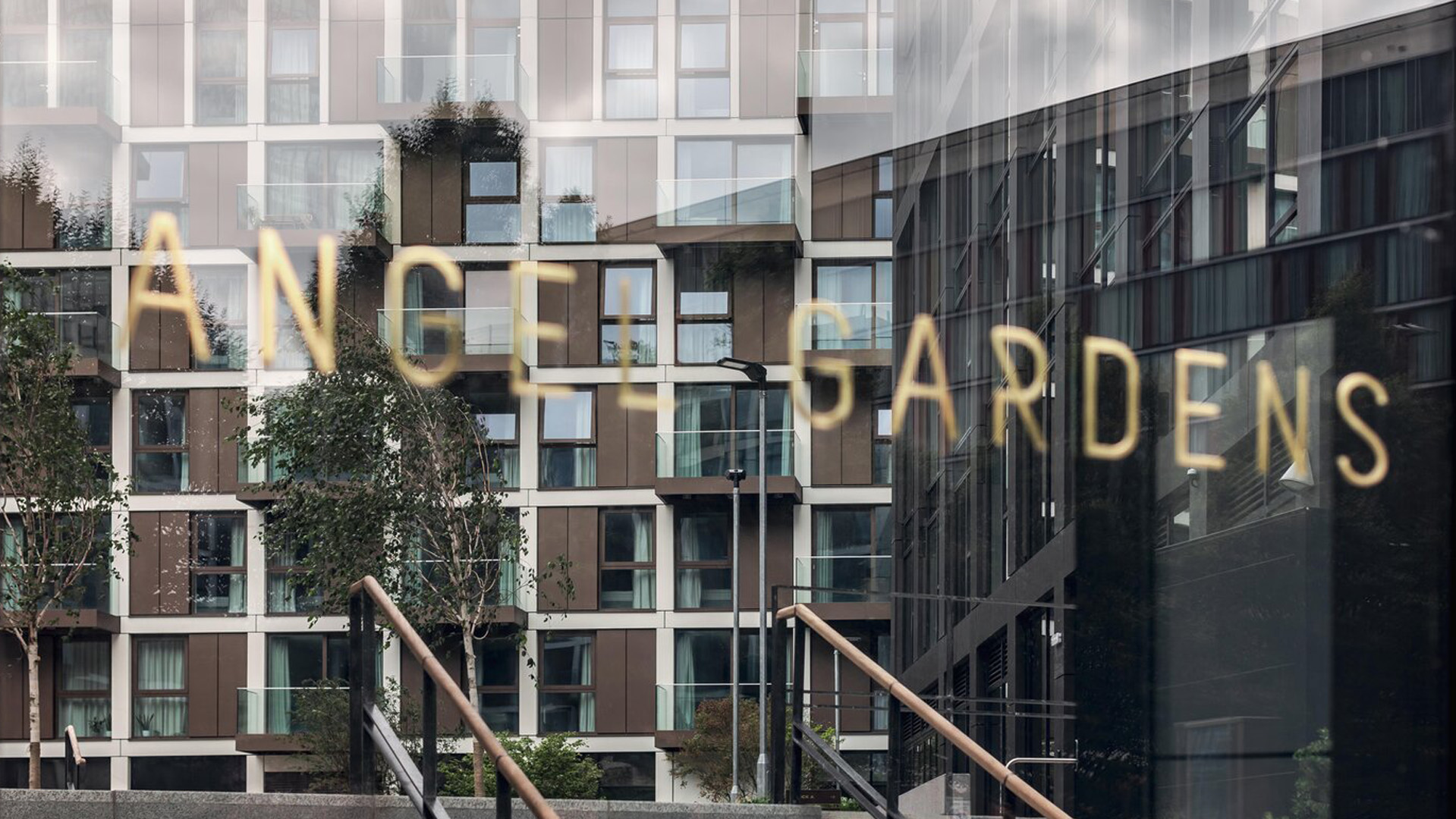
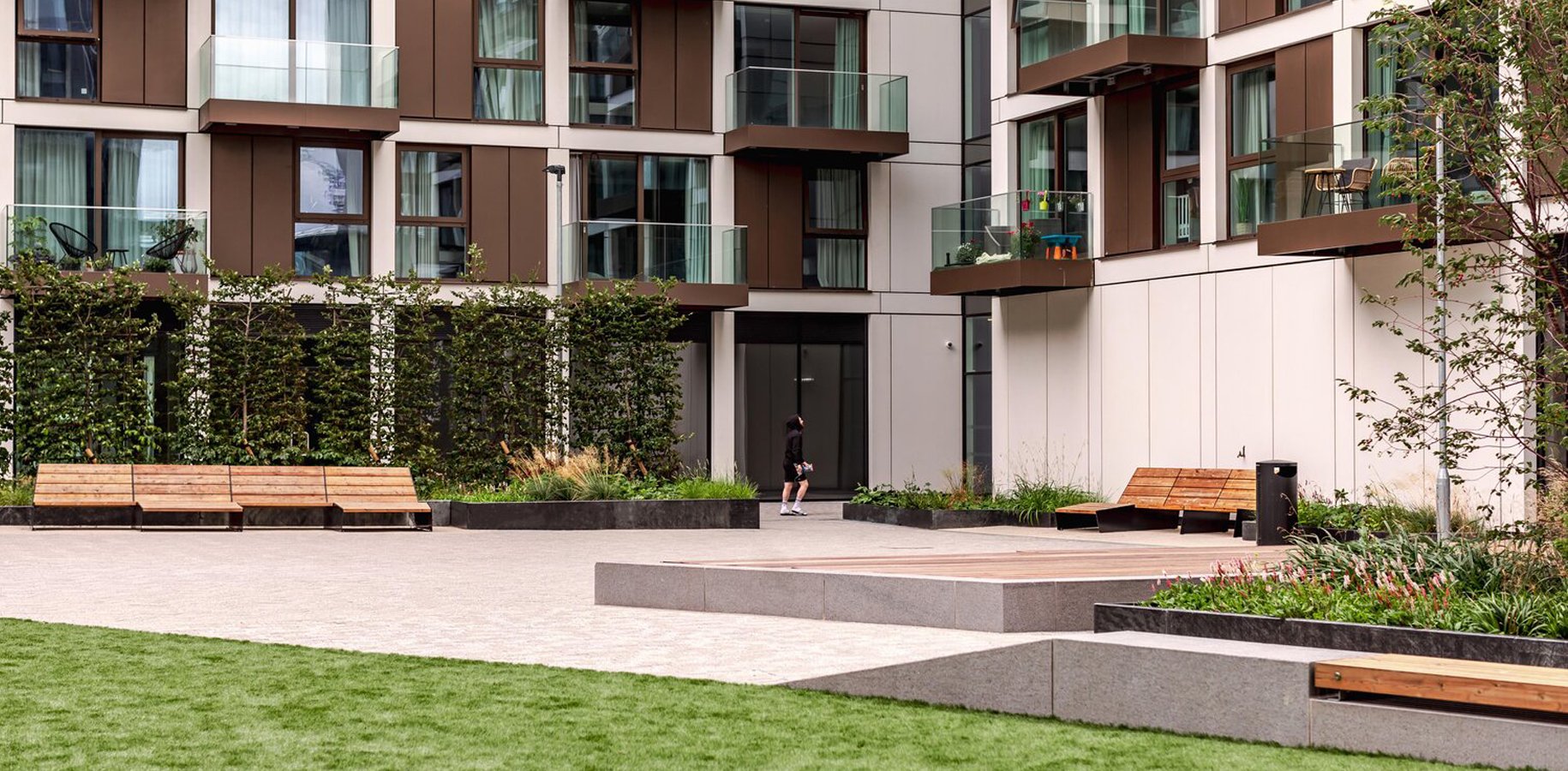
Angel Gardens includes an iconic 35 storey tower and provides a total of 458 one, two and three bedroom apartments set around semi-private interactive gardens alongside bars, restaurants and retail space.
The architectural designs for Angel Gardens were developed in partnership with Glasgow-based practice HAUS Collective. Comprising of 4 distinct volumes arranged in a pinwheel plan: a 35-storey tower (Haus Collective) addresses the key intersection between Miller Street / Rochdale Road / Swan Street / Shudhill; and three 7 storey blocks (Fuse Studios) address Miller Street, Angel Street and Angel Mews. In total the development extends to 530,000 Sq.Ft including two levels of underground parking. At ground floor level, 19,000 Sq.Ft of commercial restaurants and cafés will activate the street frontages and a new pedestrian street is to be created from Miller Street to Angel Street providing quality public realm faced with commercial units.
The building is arranged with a single main resident entrance and reception space from Rochdale Road, with secondary access via secured resident lobbies from the central garden space. For residents, facilities include a meeting space, a fitness studio, a cinema, sky lounge together with an outdoor roof garden providing space for BBQs, gym and fitness classes, Yoga and a sport court.
Angel Gardens is the flagship scheme of Moda Living, and is the first major residential component of The Co-operative Group and Hermes Investment Management’s NOMA masterplan.
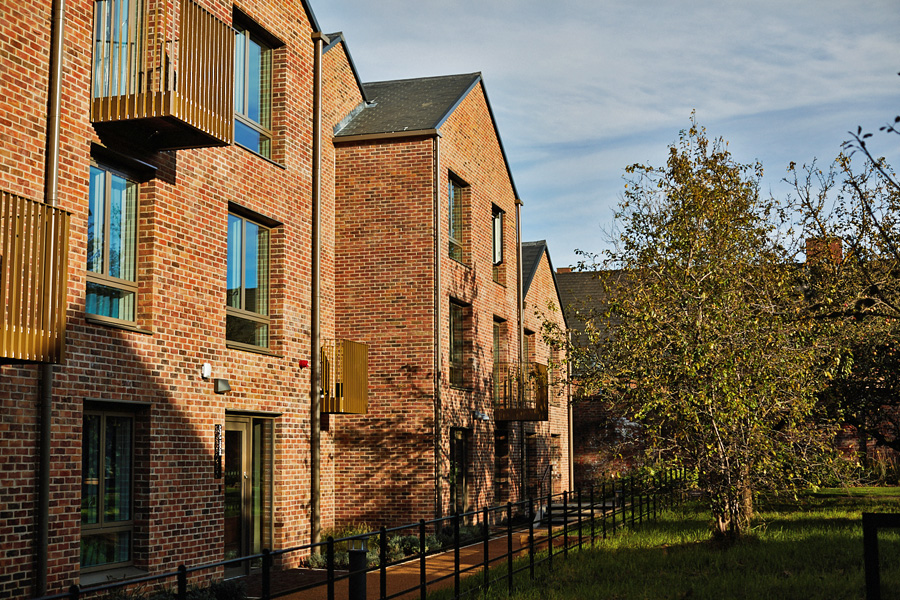
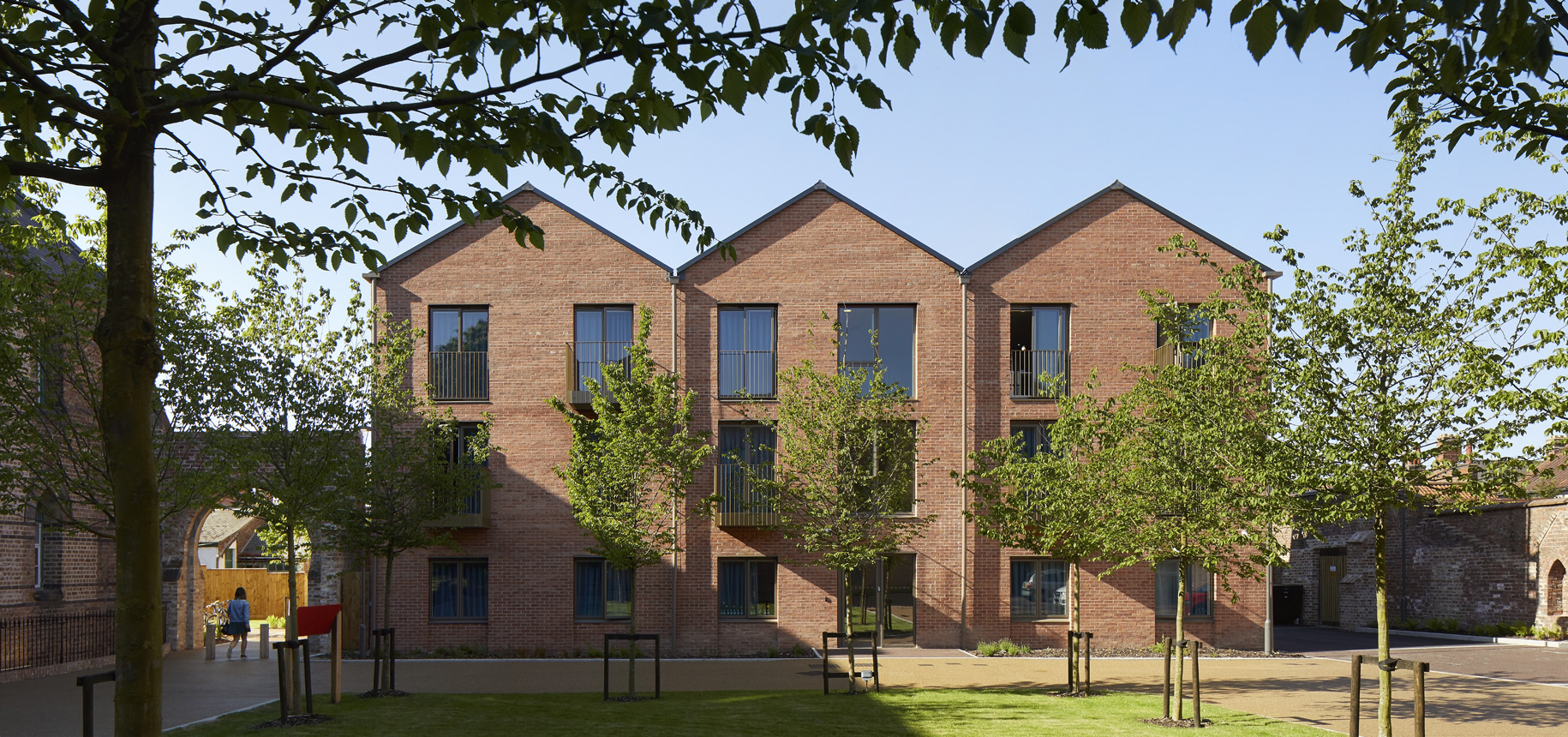
The Vita Student project at Lawrence Street, York, designed for Select Property Group by Fuse, was completed in September 2017 – on time and on budget and with a remarkable 99% occupancy. Located within the grounds of the former Grade II listed St. Joseph Convent, the new “Student Village” provides 644 bedrooms across 15 new and 3 listed buildings. The project is Select Property’s largest completed student development to date.
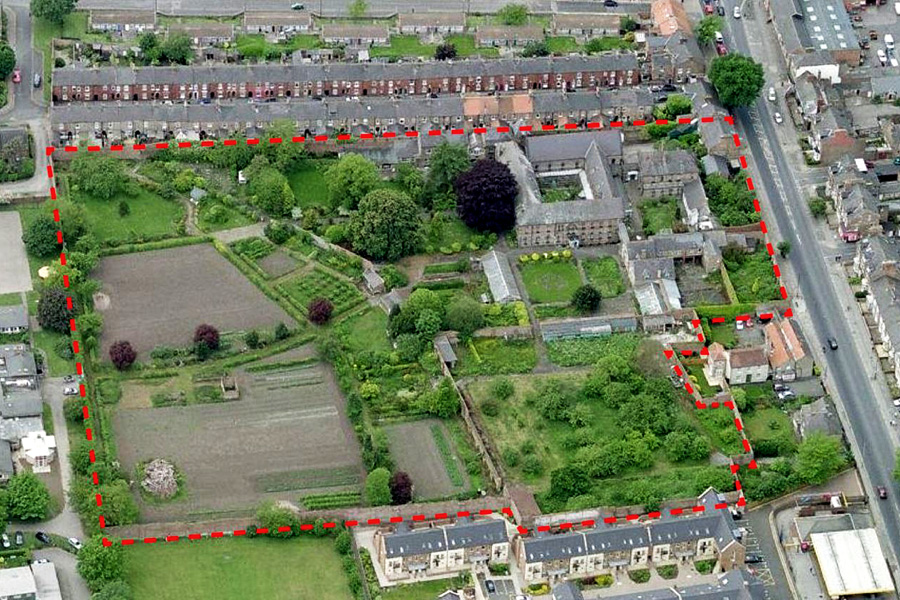
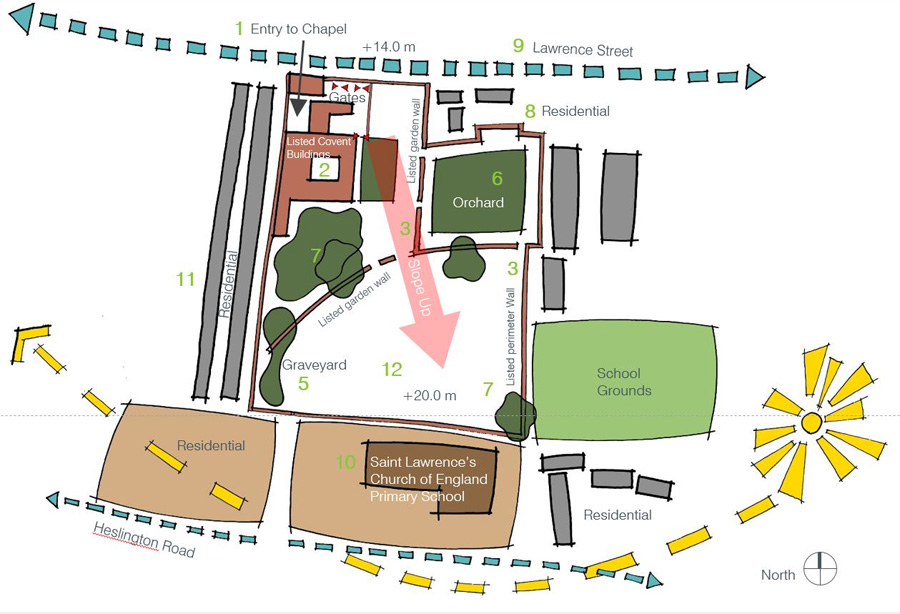
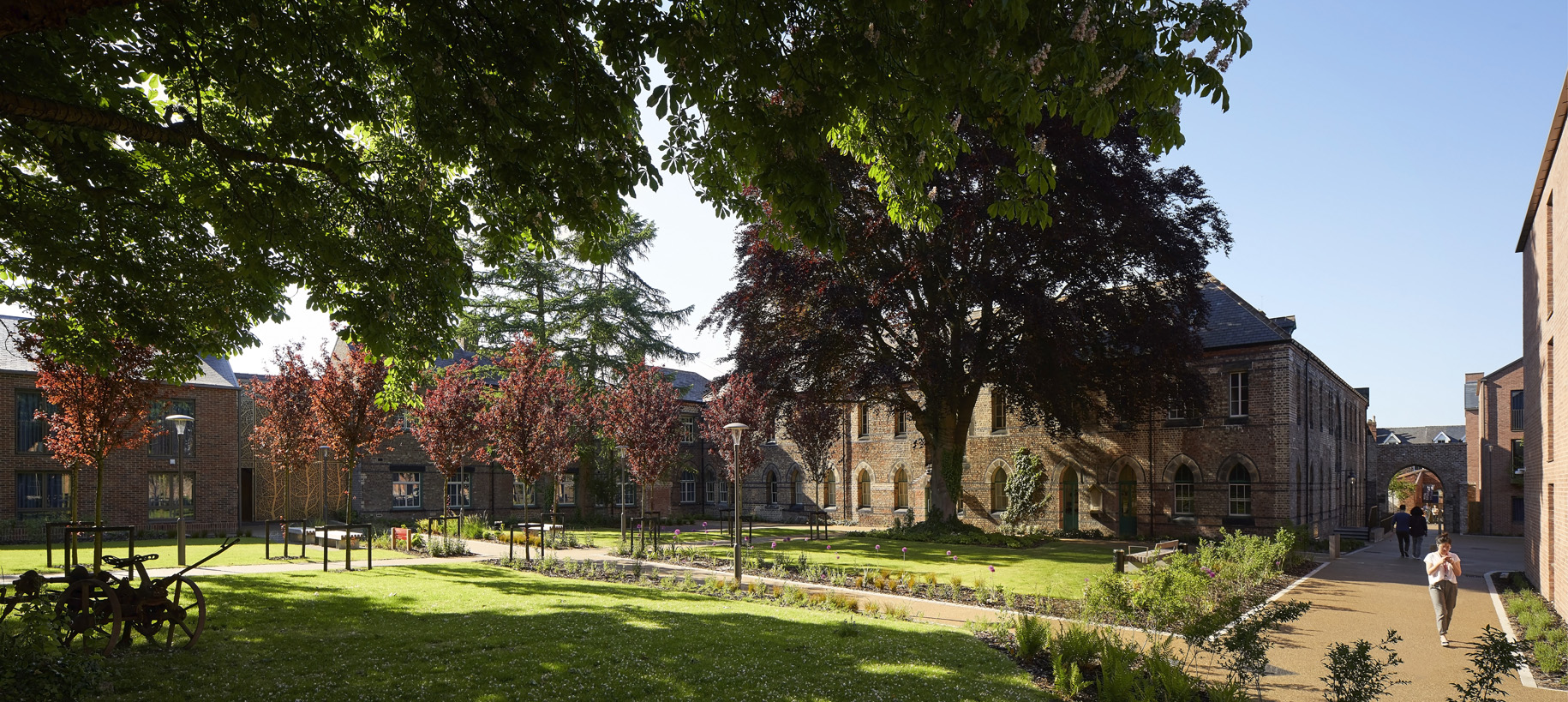
Fuse began design work on this exceptional site in 2014; when the remaining Sisters relocated to a smaller and more manageable property on the outskirts of York. The site presented a unique challenge: it is enclosed by a tall listed brick wall, contains a nationally registered orchard, numerous tree preservation orders, other listed buildings/structures and slopes approximately 7 metres from north to south, across its 200 metre length.
Working constructively with the City of York planning officers throughout the design period, the team were able to secure planning approval and listed building consent in February 2015. In particular, Fuse collaborated with Re-form Landscape Architects in the creation of a masterplan concept which responded to and respected the site topography and existing landscape features.
It was great working with Fuse.
They completely understood our requirements and successfully incorporated these into a stunning design which compliments this unique site.
We couldn't be more pleased with the end result.
Daniel Roberts
Development Manager, Select Property Group
• Winner Best Large Residential Development, 2018 York Design Awards
• Shortlisted for the 2018 RICS Awards • Shortlisted for the 2018 RIBA Awards • Shortlisted for the 2018 Construction News Awards • Shortlisted for the 2018 York Design Awards
Photograph by Hufton and Crow
Photograph by Fuse
Photograph by Fuse
Photograph by Hufton and Crow
Site Location
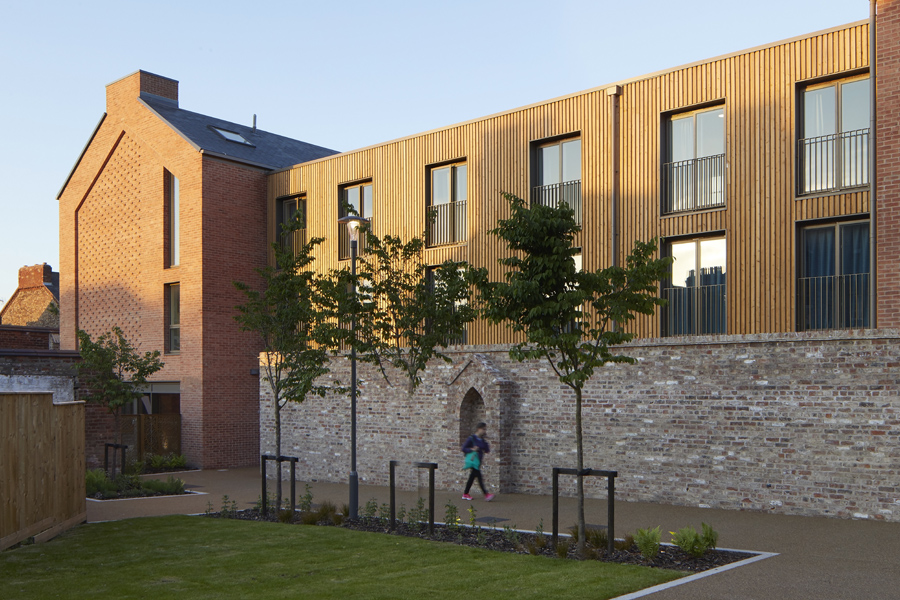
St Joseph’s Convent is located within sight of York City Walls and is therefore within easy walking of the city centre and its amenities. The surrounding area has predominately residential use, with buildings generally varying in height between 2 to 4 storeys. The 6.5 acre site is in a single ownership and its boundary is defined by a continuous listed brick wall: approximately 4.5m in height. Existing pedestrian and vehicular access to the site is taken from Lawrence Street, a local distributor road that runs from east to west into the city centre.
The site is well positioned to take advantage of public transport links and it is ideally located for student accommodation use: being central to and within easy walking and cycling distance from a number of the city’s higher education institutions. The site is also within easy walking distance of cafes, convenience stores and a large supermarket. Given its previous use and tall perimeter wall, the site benefits from not being overlooked by neighbouring properties.
This is therefore a perfect location for student housing.
Site History
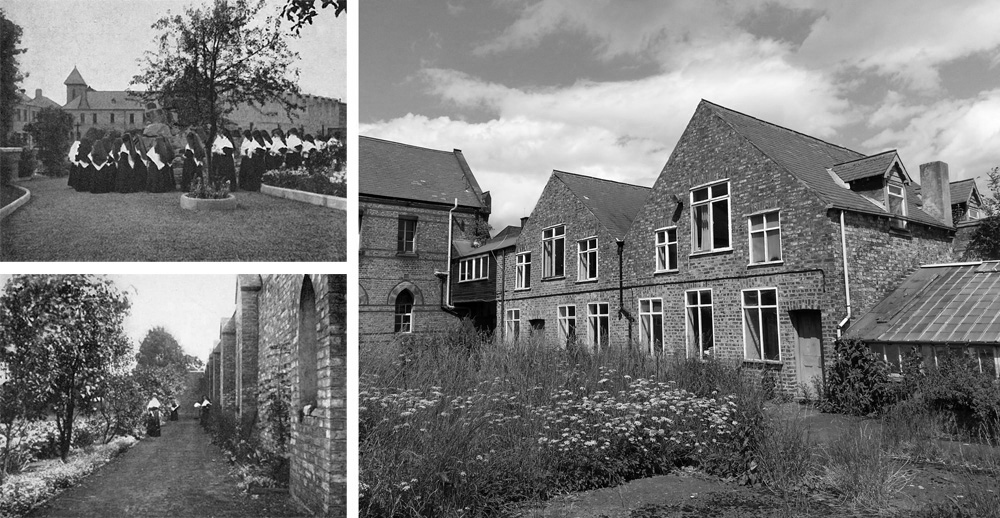
In 1864 the flourishing Order of Poor Clares in Bruges, Belgium, were asked by Lady Herries of Everingham Hall, York to establish a convent in the City. In 1870 Lady Herries obtained and gifted land on Lawrence Street to the nuns for the site of a new, purpose-built convent.
Work began in 1870 and the north range was complete by June 1872, along with the walls. By 1873 the main cloister building was complete, up to the Chapter room on the east range. Between 1873 and 1874 the remainder of the three sides were complete. In 1874, a Chapel was added and completed with additional funds from Lady Herries and in 1875 the Priest’s House and Extern House were built.
Between 1875 and 1911 the site was expanded three more times:
In 1884, the orchard was added and by the late Nineteenth Century the extension of the infirmary wing, the east range of the workshops and glasshouses were constructed.
In 1902, land was purchased to prevent urban development from threatening enclosure and to increase self-sufficiency. By 1909 the OS map shows a number of sheds and outbuildings had been built.
In 1911, an additional strip of land was added to the east and tennis courts were created to prevent further urban encroachment.
The 1930’s saw the convent at its most self-reliant, with approximately 70 nuns living there. Since that time, the convent’s population had steadily fallen until the upkeep of the buildings and land became unsustainable and a new use was required.
The property was marketed for sale in 2013 and Select was selected as the preferred developer at the beginning of 2014.
Top, the site before redevelopment. Left, the convent in its heyday. Right, eventually, poor quality extensions were added to the listed buildings and the site deteriorated as the number of nuns in the community fell
Photograph: Fuse
Photograph: Vita Group
Project Brief
The overriding brief given by Select to Fuse and the rest of the design team was to create a sustainable new student village that would become an important and complementary part of the existing neighbourhood. For the city, the site was an opportunity to create a scheme that houses students in one managed and secure environment, which could help decrease the number of students living in private housing in the Fishergate and Hull Road wards.
The project brief called for a comprehensive and sensitive re-development of the whole former convent site; including full re-use of the existing listed buildings. High quality student accommodation was to be provided in the existing grounds in two forms: self-contained studio apartments and groups (clusters) of study bedrooms around communal kitchen/living facilities. The proposed new buildings on the site were to complement the setting and scale of the listed buildings and surrounding housing; whilst also being representative of the Vita Student brand in their contemporary architectural language.
At the outset, part of the brief given to the design team was to place the main existing convent building at the heart of the development by refurbishing it to provide student living accommodation and importantly, to house The Hub, the main communal and social space within a Vita Student development. The client asked the team to design a new student community that would enjoy a car-free environment. Vehicular access to the site was to be limited to general servicing and emergency vehicle access only. The ability to manage the beginning and end of term time drop-off and pick-up by car within the site boundary was required but no full time parking on the site for students (other than a small number for those with disabilities.)
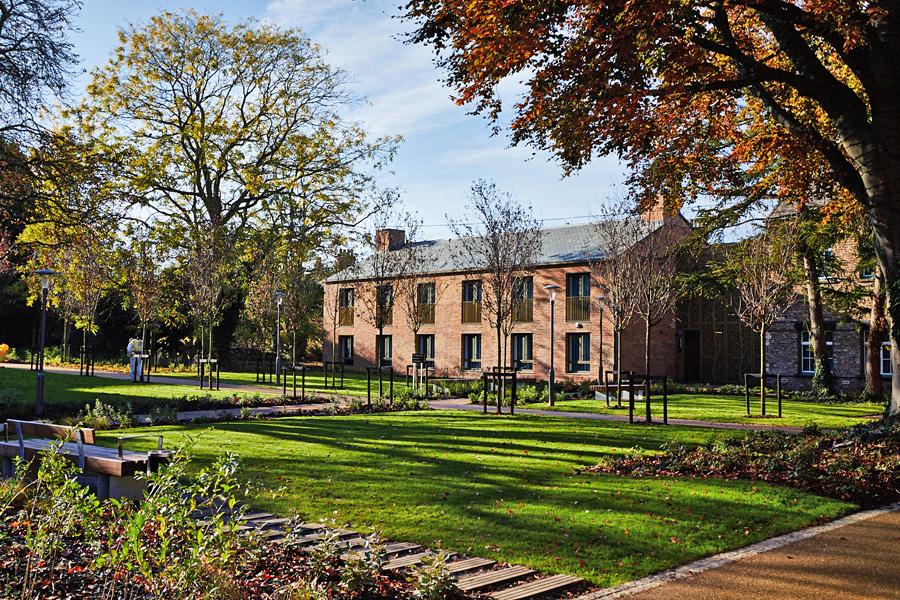
The wonderful existing mature landscaping was seen as a hugely important asset for the site and neighbourhood. The client wanted to retain as much of the existing planting as was practical and feasible, as this would help provide a sense of “maturity” to the site from the outset. It was also anticipated that a strong landscaped setting would provide excellent amenity use for future students and a clear differential within the local market.
Collaboration
Fuse worked collaboratively with Re-form (landscape architects) and Purcell UK (heritage and conservation architects) to develop a coordinated design approach across the site; harnessing the skills of each, with the input of several other specialist technical consultants. The master plan design evolved through a series of design workshops and importantly, through direct and constructive dialogue with planning officers and other stakeholders, such as Historic England.
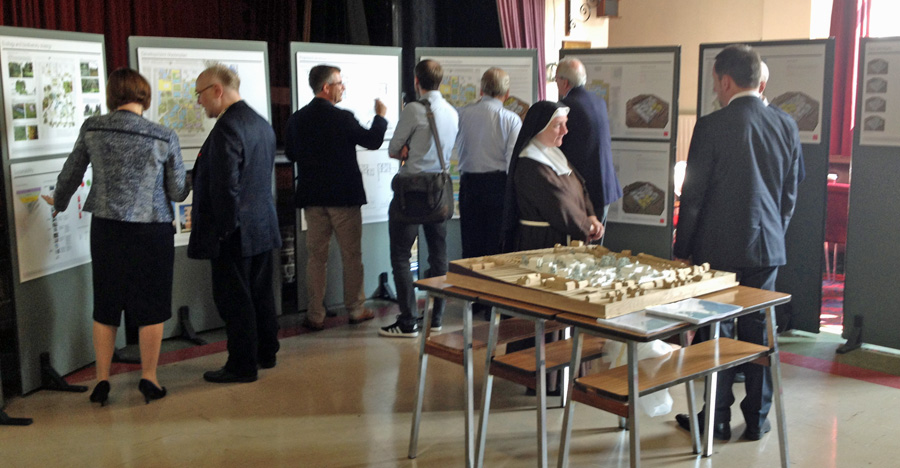
This collaborative process included a public consultation event held near the site in September 2014. Here parties from the CYC, the Diocese of Middlesbrough, York Civic Trust and surrounding neighbourhood were invited to view the design proposal and raise any questions with Select Property and members of the design team.
Comments from attendees were collected and most were generally favourable. The master plan design also evolved as a consequence of some comments that were made, including reducing the height of some of the new buildings in certain locations.
Following the grant of planning and listed building consents, the project was competitively tendered and the building contract was awarded to Wates Construction, under a Design & Build contract. Work commenced on site in early 2015 and was successfully completed at the end of August 2017: ready for the start of the new academic year.
Photograph: Fuse
All 4 photographs: Hufton and Crow
Site Analysis
Design Drivers
1 Constrained existing vehicular access; 2 Recently Grade II listed buildings; 3 Perimeter & internal listed walls to be retained The existing perimeter wall is to be retained, as are a number of those that define spaces within the site. 4 Current sense of order & enclosure; 5 Retain access to Cemetery in south west corner; 6 Existing fruit orchard; 7 Formal convent gardens & mature trees; 8 Close proximity of residential areas; 9 Influence of site on Lawrence Street; 10 St Lawrence C of E Primary School; 11 Growing numbers of students inhabit Fishergate & Hull Road wards; 12 Existing biodiversity
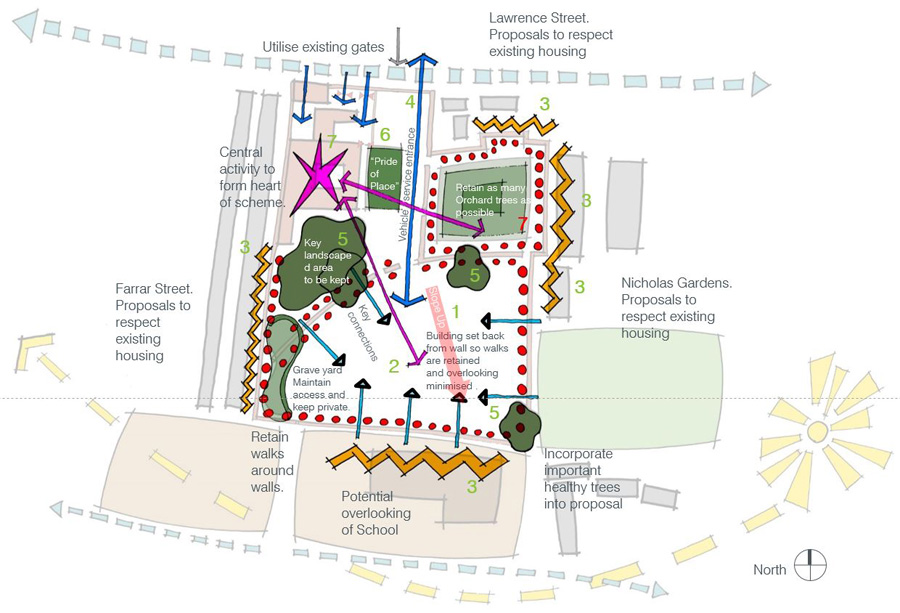
1 Use existing topography; 2 Maintain containment of the site; 3 Sensitivity to proximity of residents; 4 Location of vehicle access; 5 Retain landscape features/trees; 6 Preserve internal walls; 7 Make best use of internal spaces within retained buildings; 8 Deliver high quality accommodation synonymous with Vita Student; 9 Provide range of studio sizes to accommodate singles, couples & friends; 10 Student facilities & Hub space providing meeting spaces, work rooms, gym, coffee shop
Photograph: Hufton and Crow
Design Concept
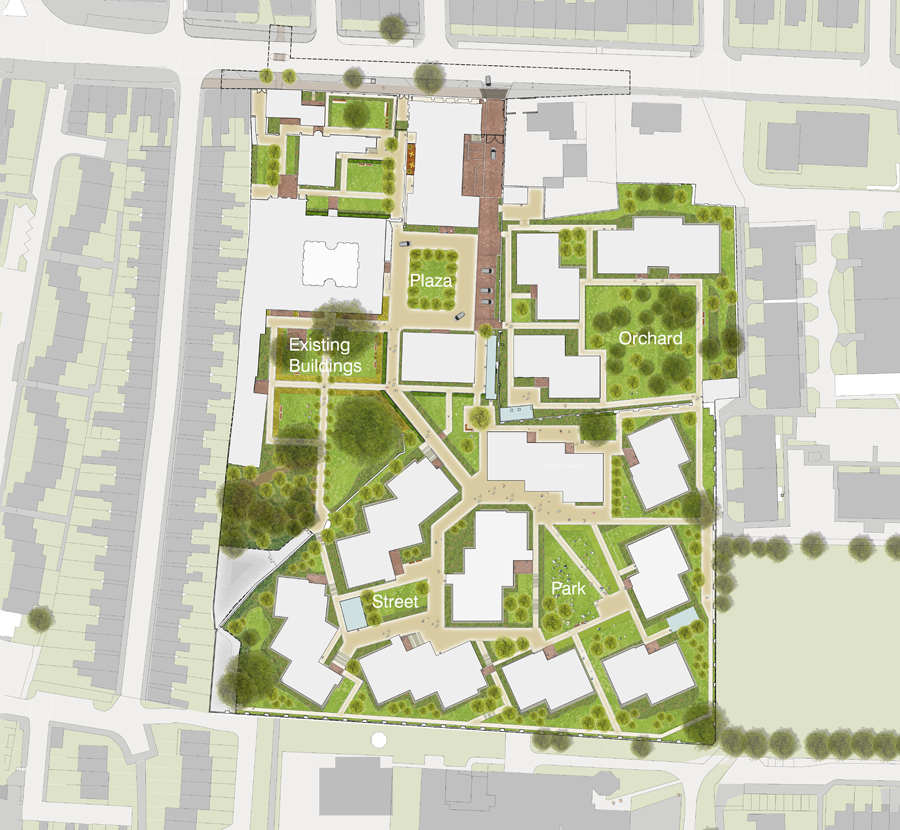
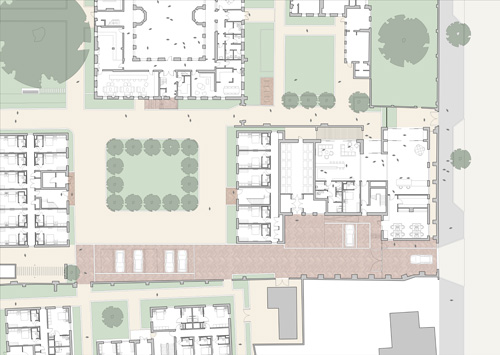
An early design decision made was to use the site’s natural and existing features to sub-divide it into a number of “zones.” Each of these zones would have a distinct character to help give the masterplan legibility and give the residents a sense of place. Each character zone would be connected to others through existing routes or newly defined ones. Each zone is intended to be its own smaller community within the overall student village. This zonal arrangement gives the opportunity for an informal site arrangement, which complements existing features. In massing terms, the taller buildings are positioned away from the site boundaries and the existing buildings. The slope of the site to also used to reduce the potential impact of the taller buildings.
Creating Individual Zones Across the Site
In order to reduce the perceived scale of the development and to help retain the individual character of the different areas of the site, distinctive developments zones were created using the existing topography to define their boundaries. These zones are intended to provide a collegiate sense of place. Wherever possible an informal building plot arrangement was adopted within each zone, to marry with existing features and topography (see masterplan right). The site is divided into five zones:
Plaza
The Orchard
The Park
The Street
Existing Buildings
Materials
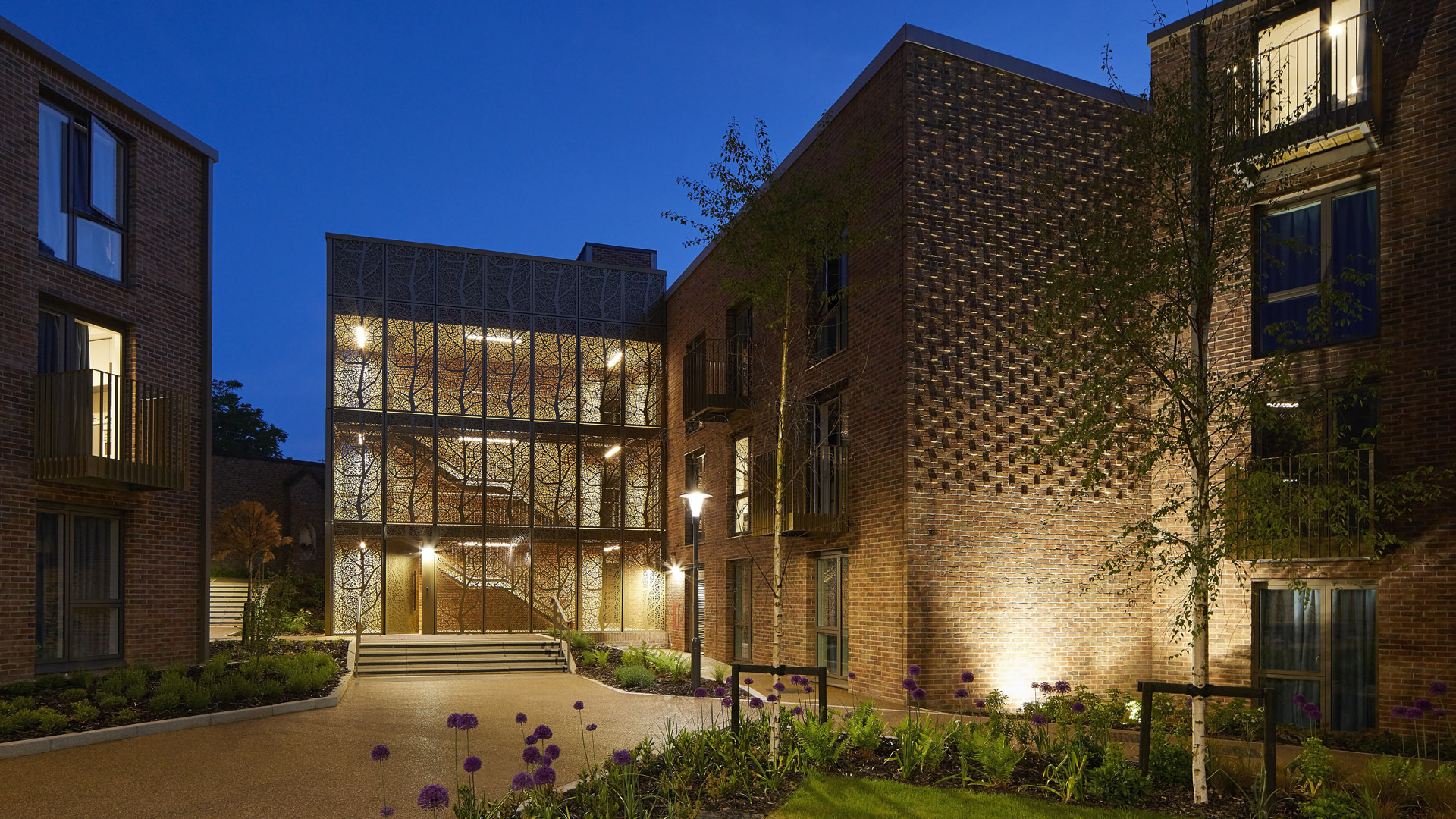
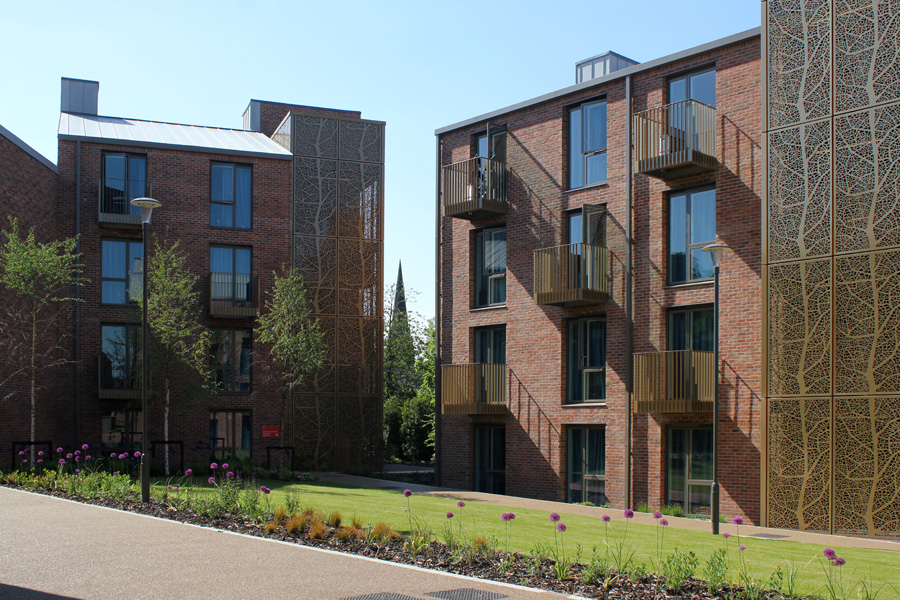
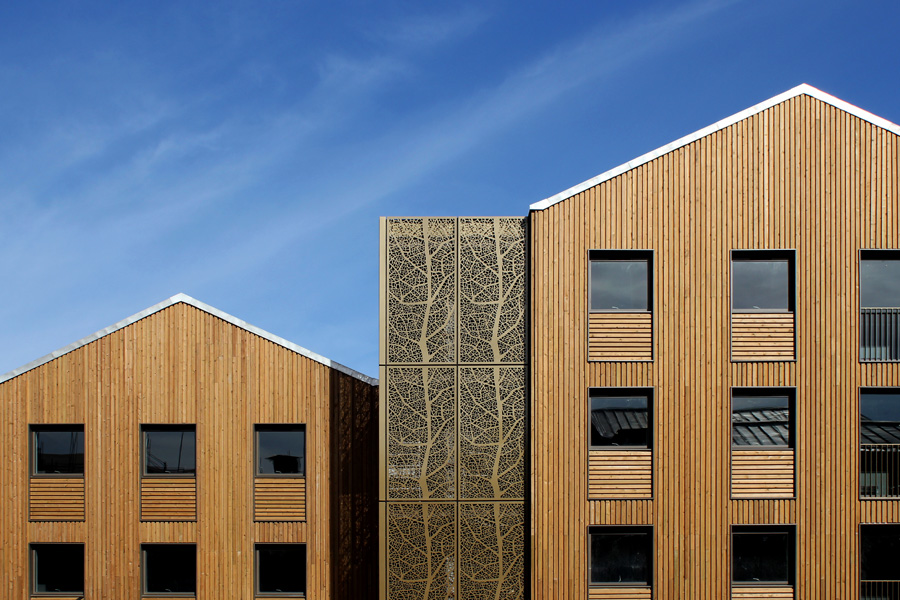
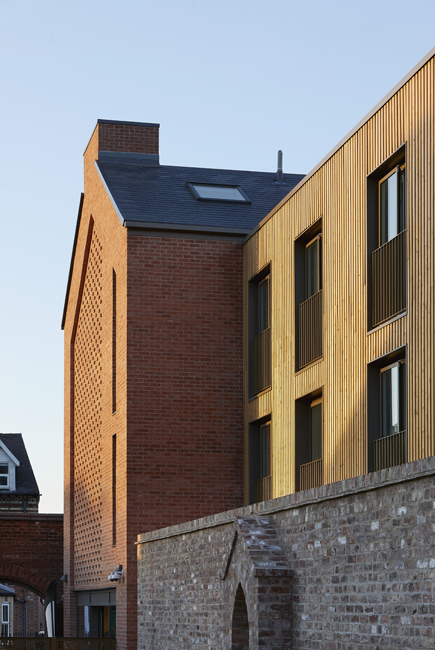
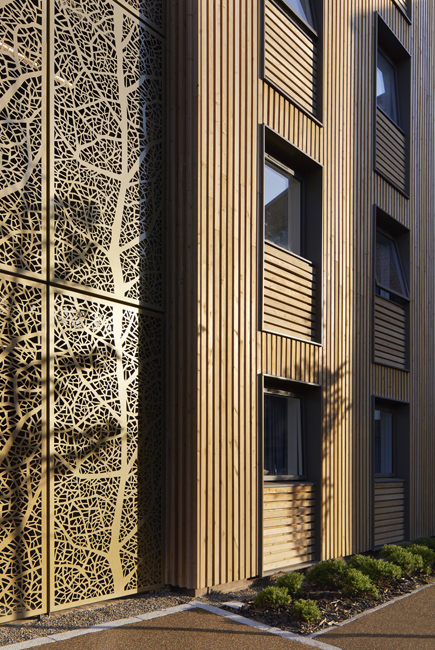
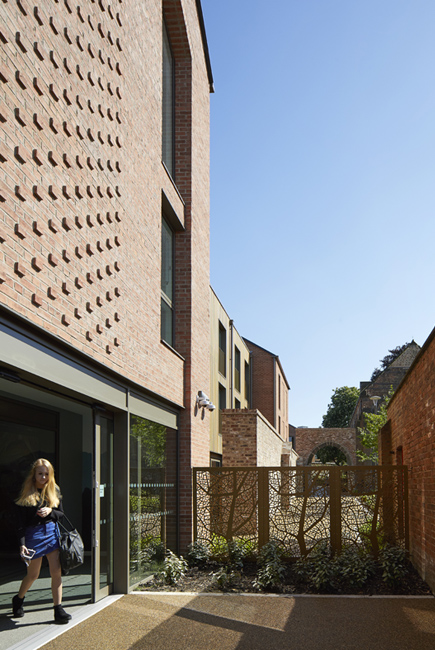
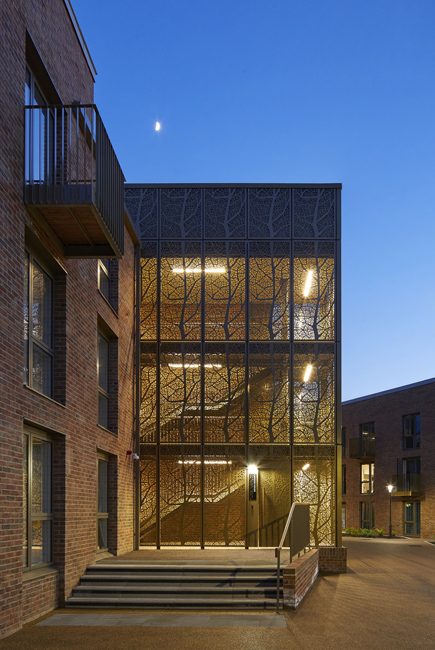
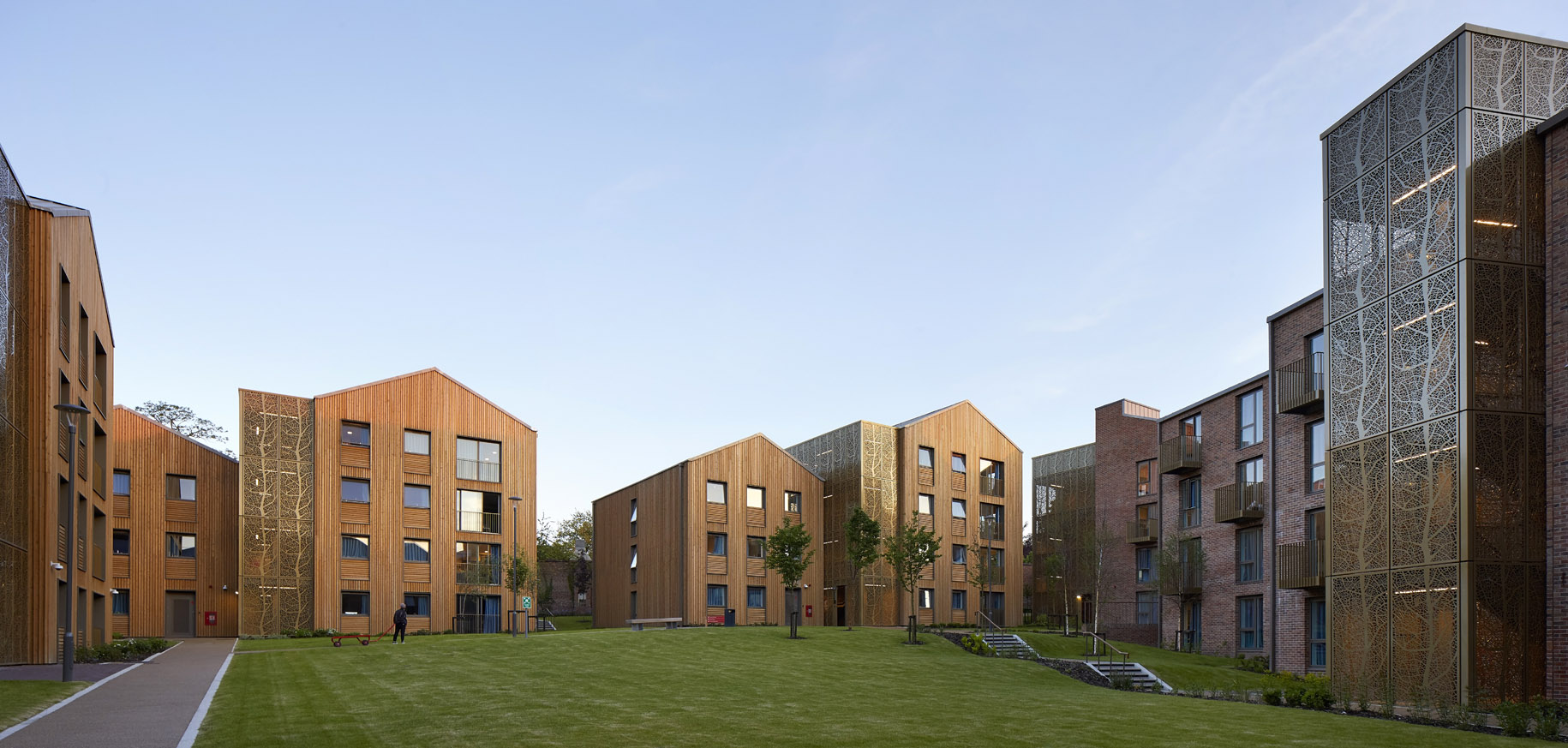
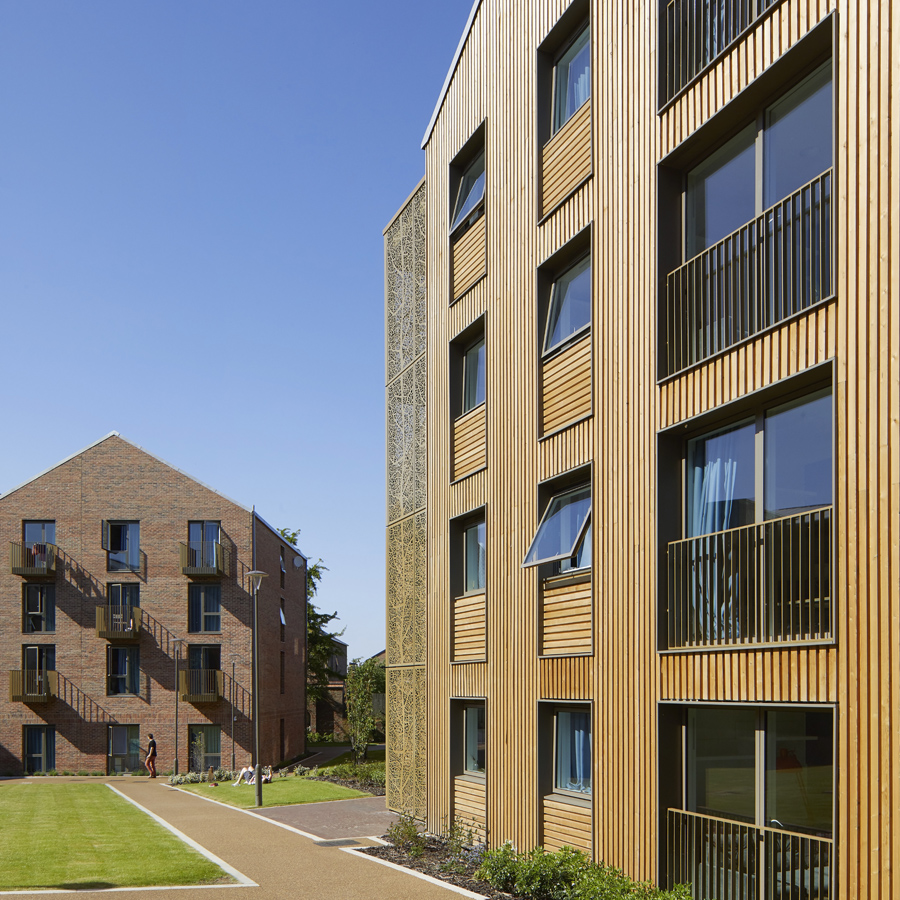
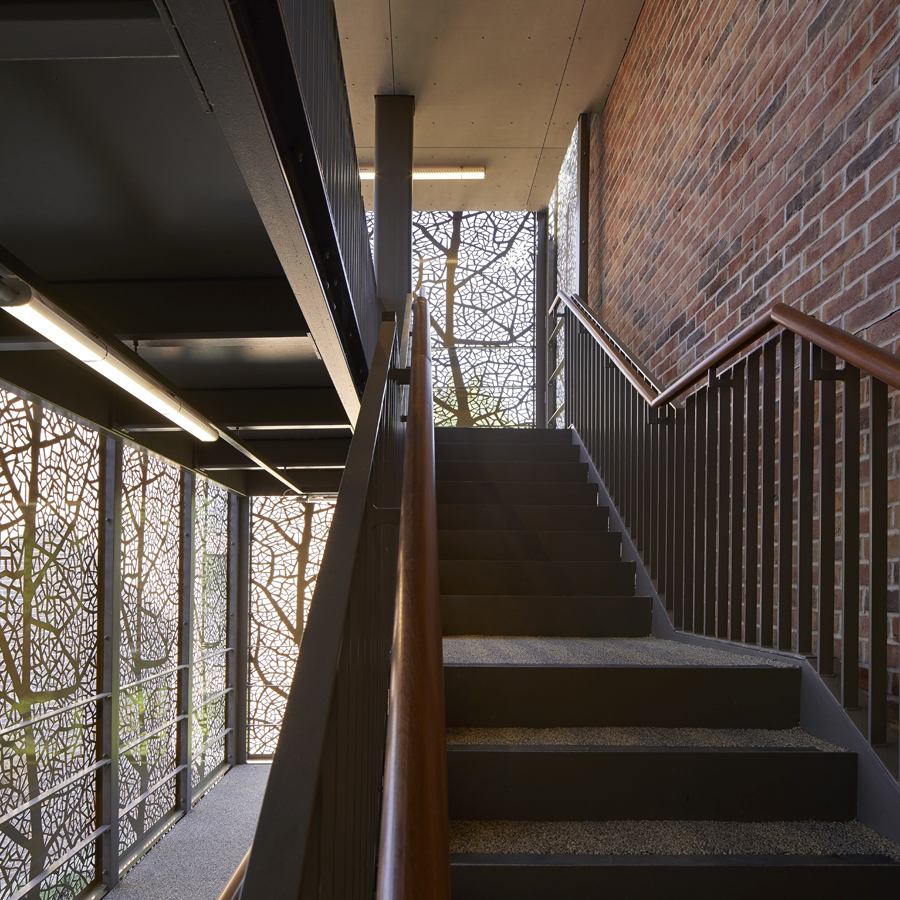
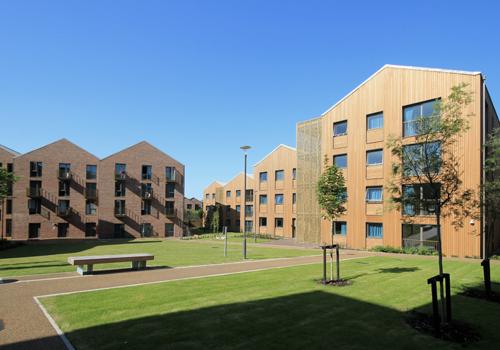
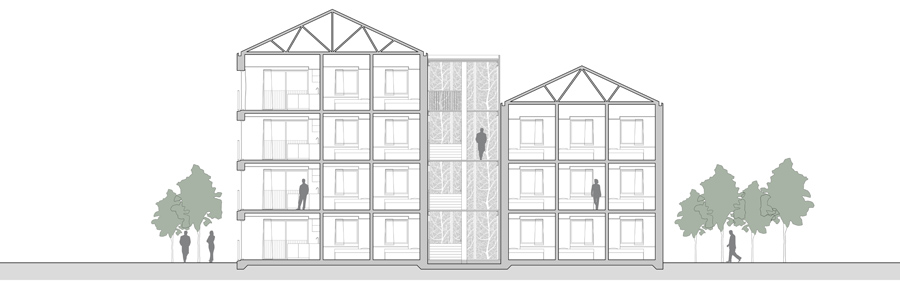
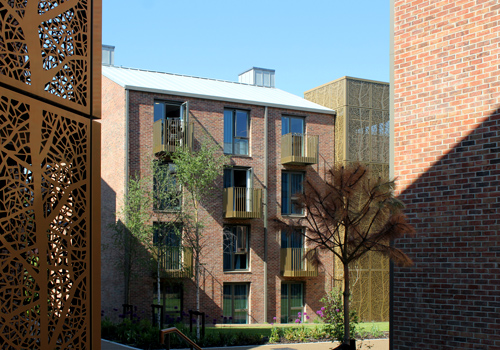
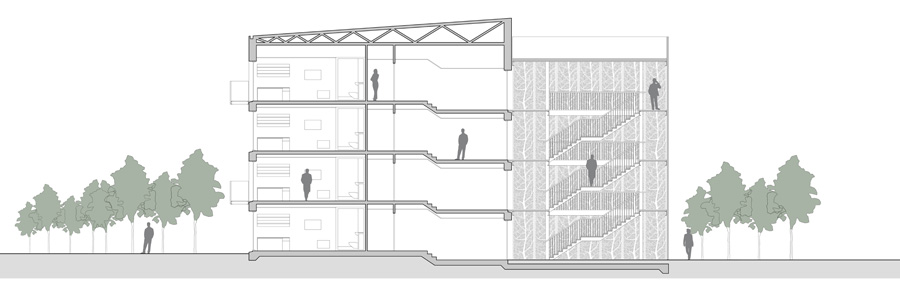
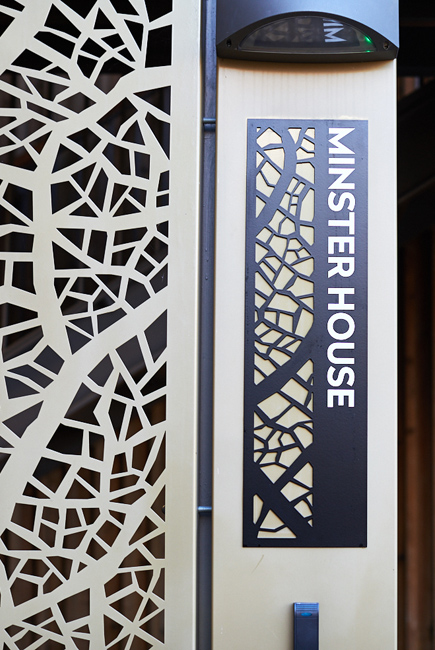
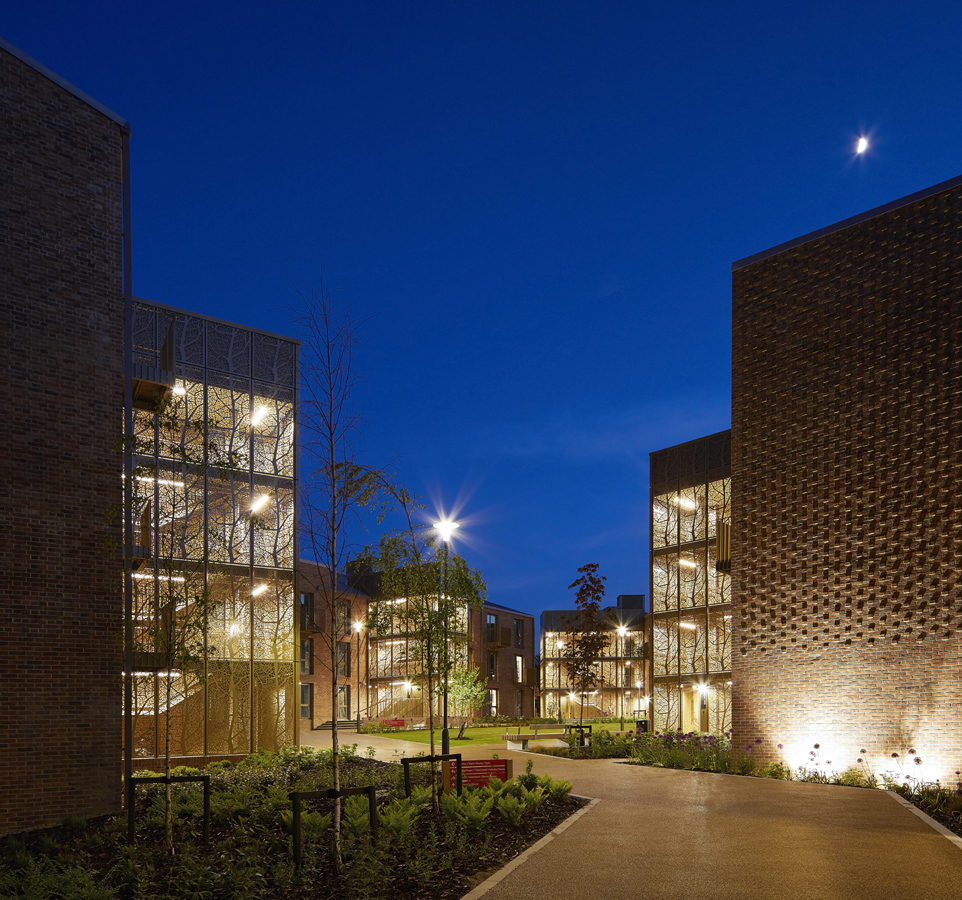
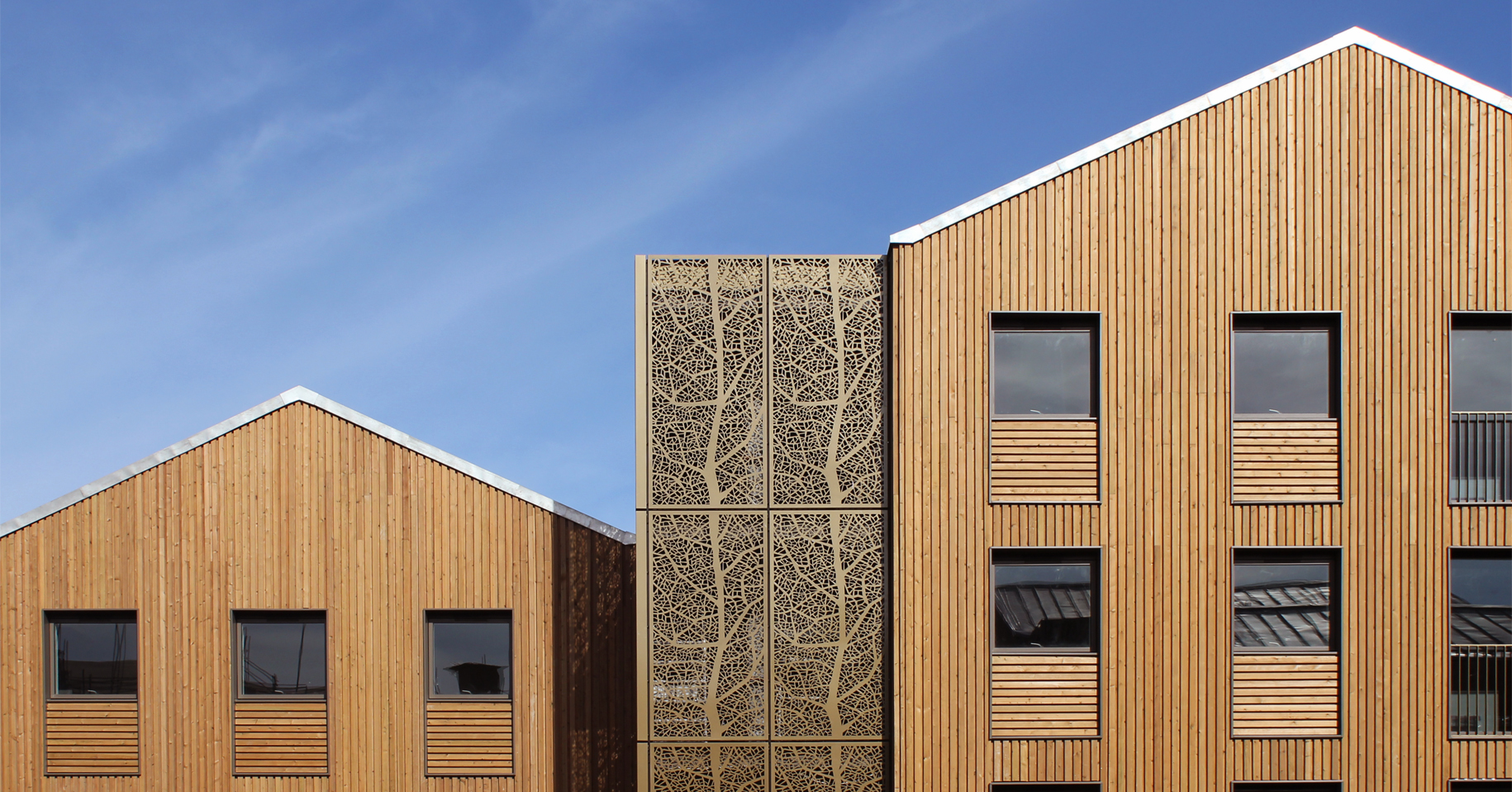
In order to help subtly define the different character areas, whilst maintaining an overall cohesiveness, a number of complimenting external cladding materials were selected for the buildings. The majority of the new buildings are clad in high quality facing brick work; with the exception of the Park buildings which are clad in pressure treated Scandinavian Redwood. The treatment helps retain the original timber colour and prevent the natural greying which the client was keen to avoid. The protected nature of the student village allowed an opportunity to develop distinctive external staircases for each block which allow the residents to experience the landscaping and views across the city of York. Full height powder coated aluminium leaf pattern panels partially enclose the stair.
Photograph: Hufton and Crow
Photograph: Hufton and Crow
Character 1 - The Plaza
The Plaza is the first area encountered by the visitor and a large open space has been preserved to provide a fitting setting for the listed convent building.
A new vehicular access has been provided from Lawrence Street – utilising an existing opening in the listed wall. This serves as the student drop-off and pick-up at the beginning and end of term, and as service vehicles and emergency vehicle access.
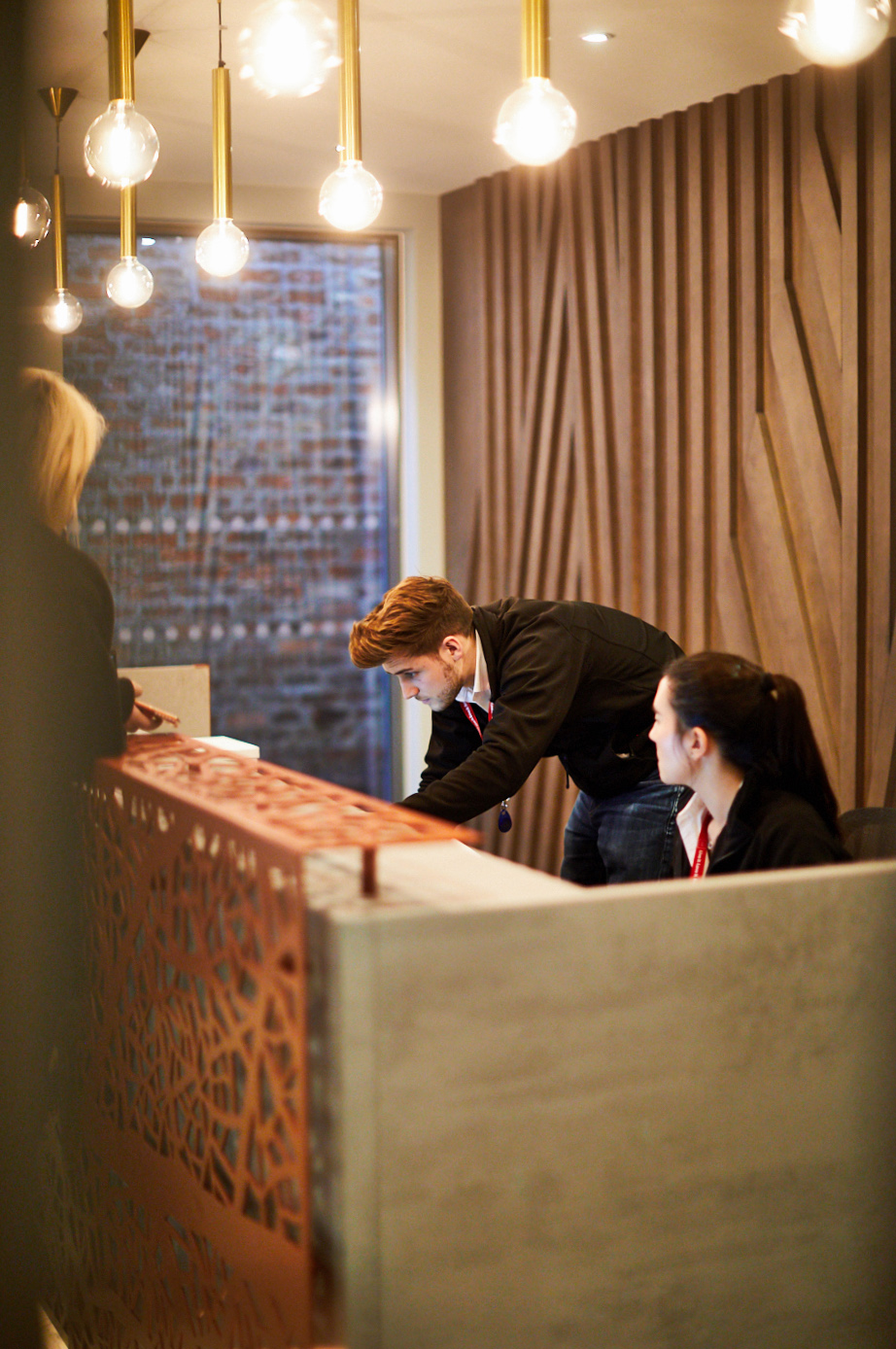
A security and management suite sits between the pedestrian and vehicle access points, facing Lawrence Street, providing 24 hour, 365 day security across the site. Vita’s interaction with their residents is paramount and the front block to the site, Colletines House, was designed to ensure all students interact with the reception. A central refuse collection point and energy centre is also provided close to the site entrance.
Character 2 - The Orchard
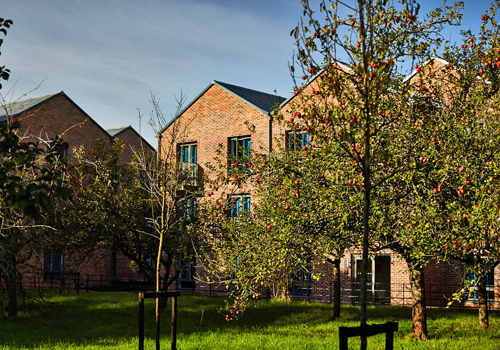
New buildings have been introduced into the north and west perimeter of the existing orchard area. In this way, a large part of the existing orchard area has been maintained for biodiversity, amenity and visual benefit. Hard surfaces in this area have been kept to a minimum. Due to the proximity of existing buildings, rooms are orientated within the Orchard buildings to prevent overlooking of existing residential dwellings.
Within this area, internal and perimeter walls are fully retained and the existing Apple Store has been converted into a secure and enclosed bicycle store. A number of existing fruit trees and other key trees are also retained within the orchard.
Photograph: VIta Group
Character 3 - The Park
Photograph: Fuse
A large landscaped area within the site’s south-east quadrant provides opportunities for students to relax and play in an external setting. A secondary Hub facility (a gym) acts as an alternate meeting space for students within the centre of the site. In good weather, it is proposed that facilities here will compliment external uses nearby.
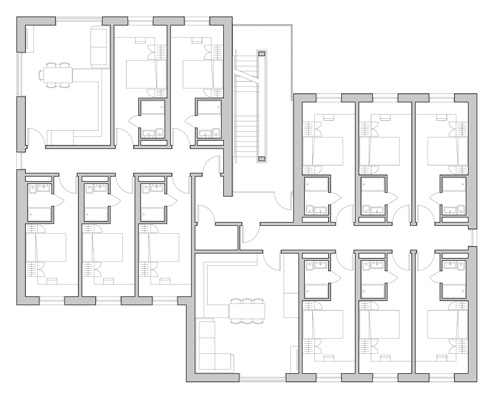
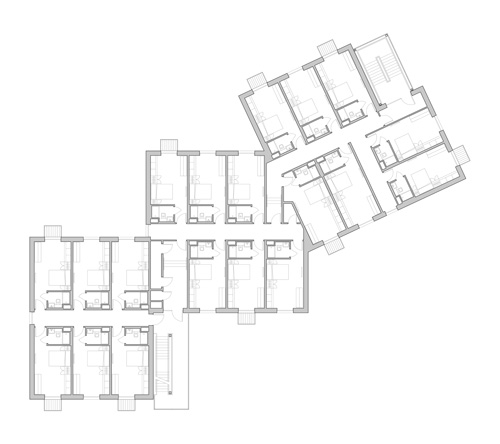
Whilst the majority of student accommodation on the site is self-contained studios; the residential offer has been widened by providing cluster type living, where student bedrooms are grouped in 4, 5 and 6 bedroom “clusters” with a shared kitchen/dining/living spaces for each cluster (see plan below left).
The cluster buildings are located in the south-east corner of the site and vary in scale from three to four storeys.
Character 4 - The Street
Photograph: Fuse
A tighter urban grain has been generated in the south-west corner of the site. The buildings here have been carefully positioned to create a series of informal landscaped areas facing existing walls to the perimeter and a harder street zone within the centre of the space. Responding to the existing site’s geometry and topography creates building forms that enhance the village concept.
The buildings here are 3 and 4 storey in height. In contrast with the Park buildings, the Street accommodation is in the form of individual studios.
Character 5 - The Existing Buildings
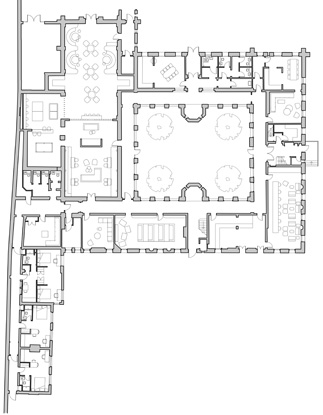
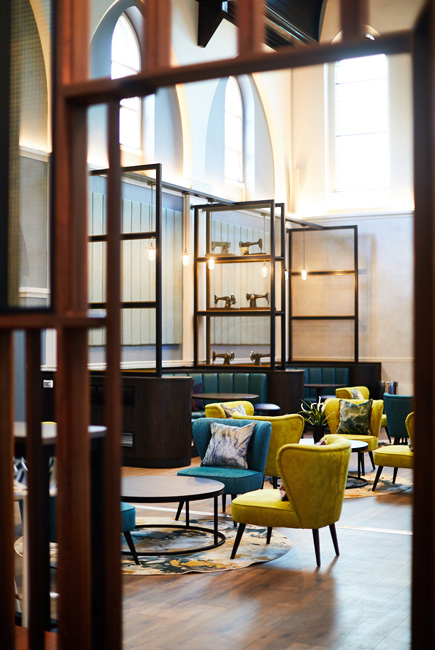
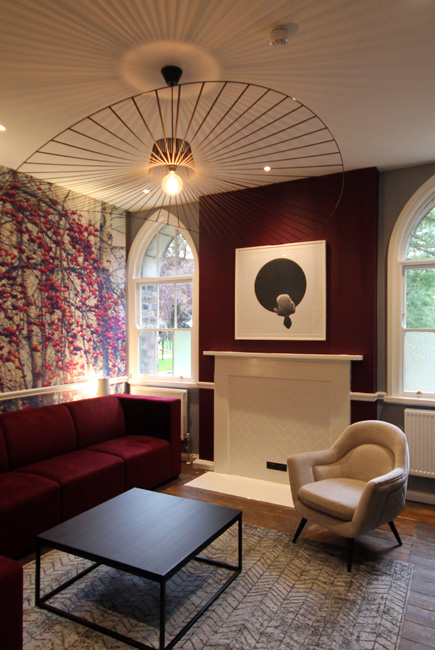
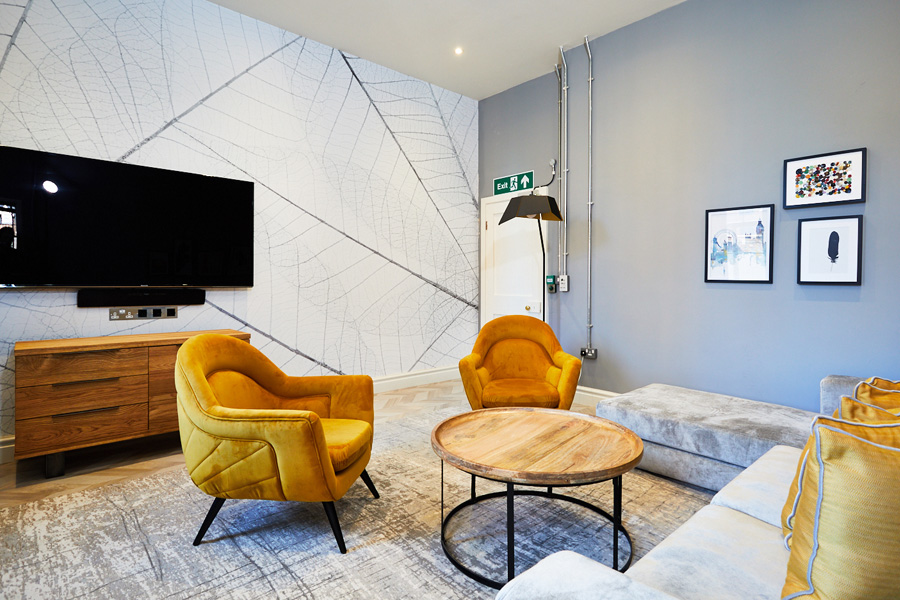
The main communal student space, “The Hub” is located within the ground floor of the existing main convent and chapel building. The Hub provides a range of accommodation including group and individual study rooms, movie rooms, gaming rooms and private dining rooms, arranged around the original cloistered courtyard (right). The building also contains a small number of studios which enhance the mix and variety of accommodation offered on the site. Fuse worked with Select’s own in-house designers on the eye-catching design and delivery of the refurbished listed building.
A poor existing utility building to the south of the convent has been replaced by a new building Goldie House) housing student studios. Students living in these studios enjoy a marvelous landscaped setting and views over the retained formal gardens.
Key mature trees and other significant landscape features are retained and enhanced with new planting in a restored formal garden to the south of the main convent building. This offers a different, more reflective/contemplative external space for students.
Photograph: Vita Group
Photograph: Hufton and Crow
All interior photographs: Vita Group
And Finally... a Thank You!
A big thank you goes to Fusiliers David Hall, Tom Smith, Stephen Brewer, Nathan Sykes and Rob Moules, who were largely responsible for all the design work on the project. Occasionally our Director Mike Harris tried not to get in their way!
We would also like to thank the other members of the design team, Select Property Group and Wates Construction, in what was the successful delivery of an outstanding project.