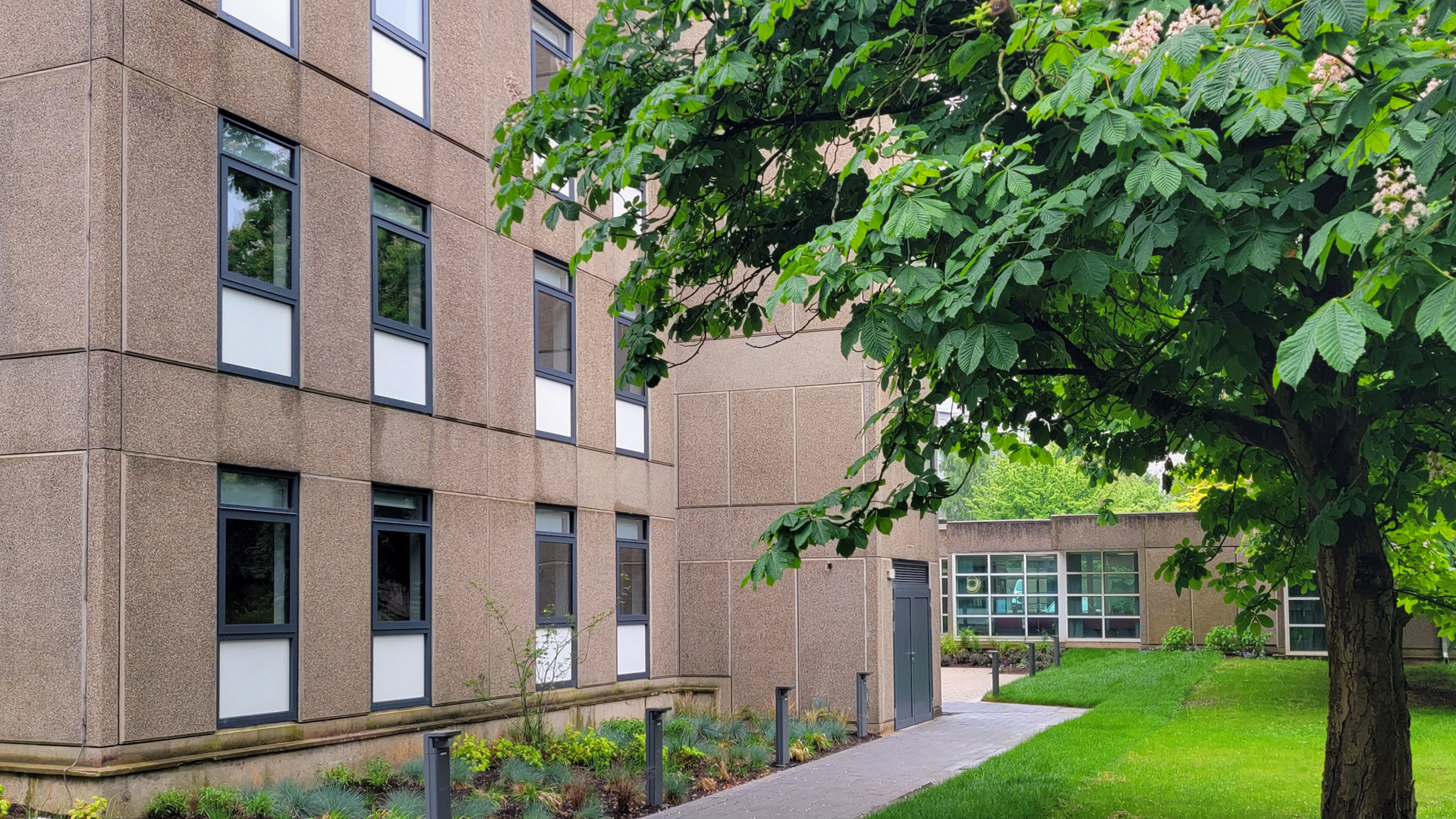
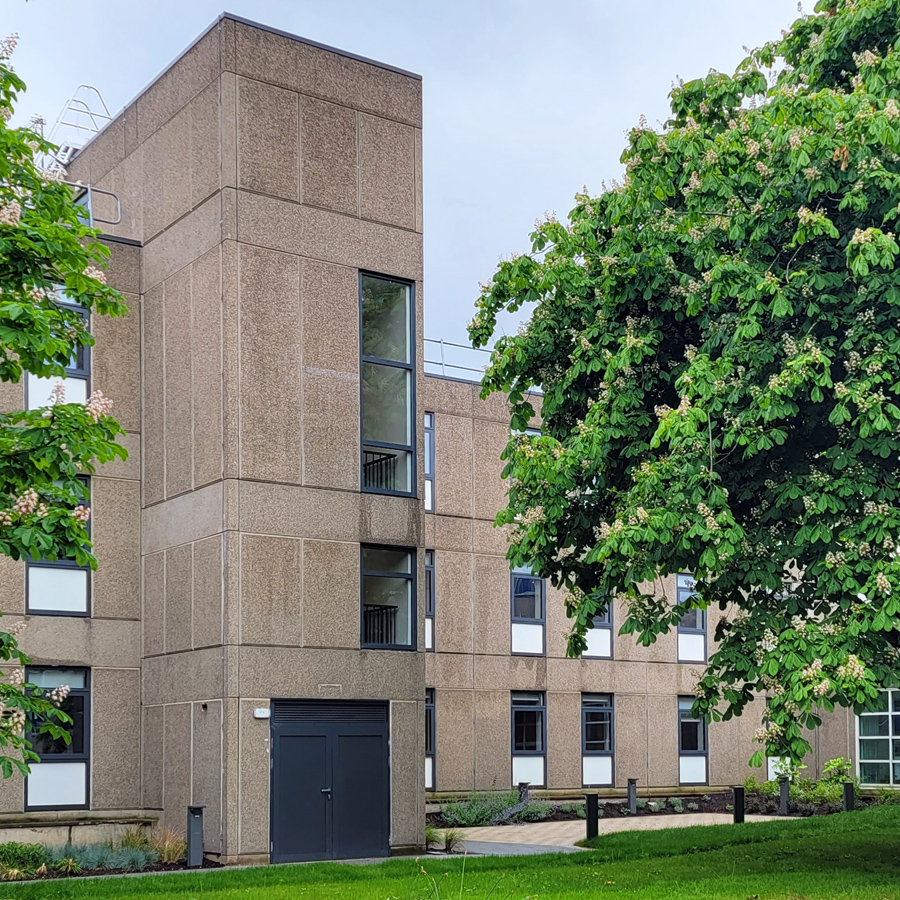
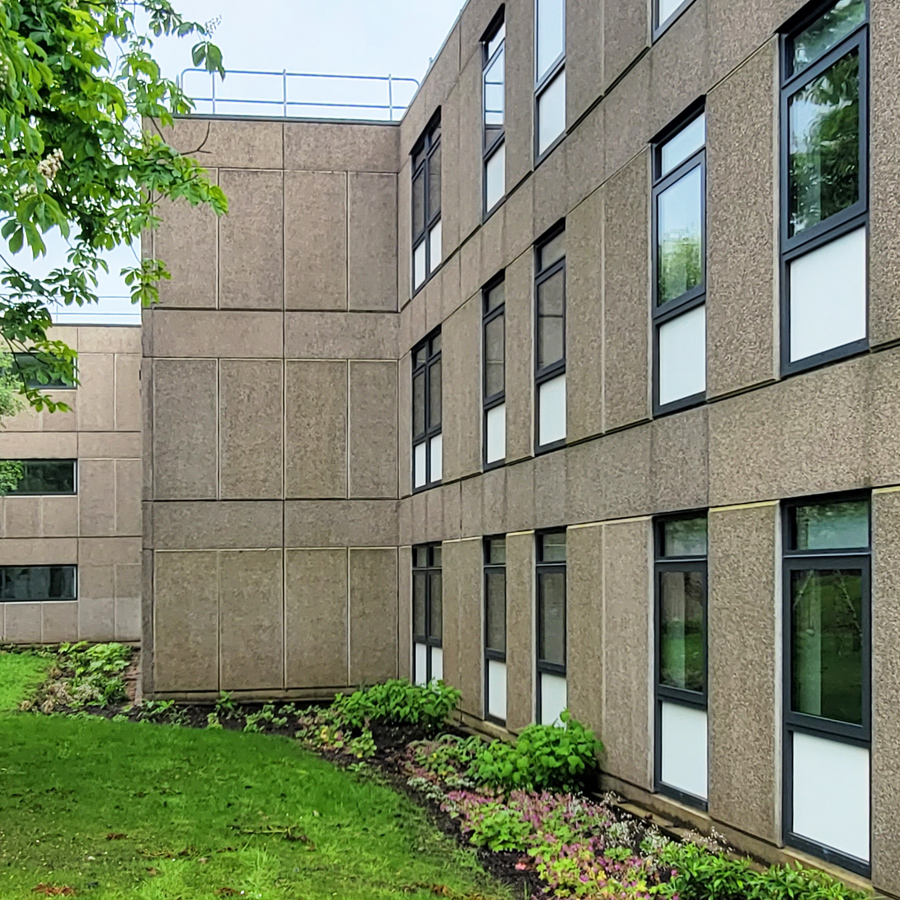
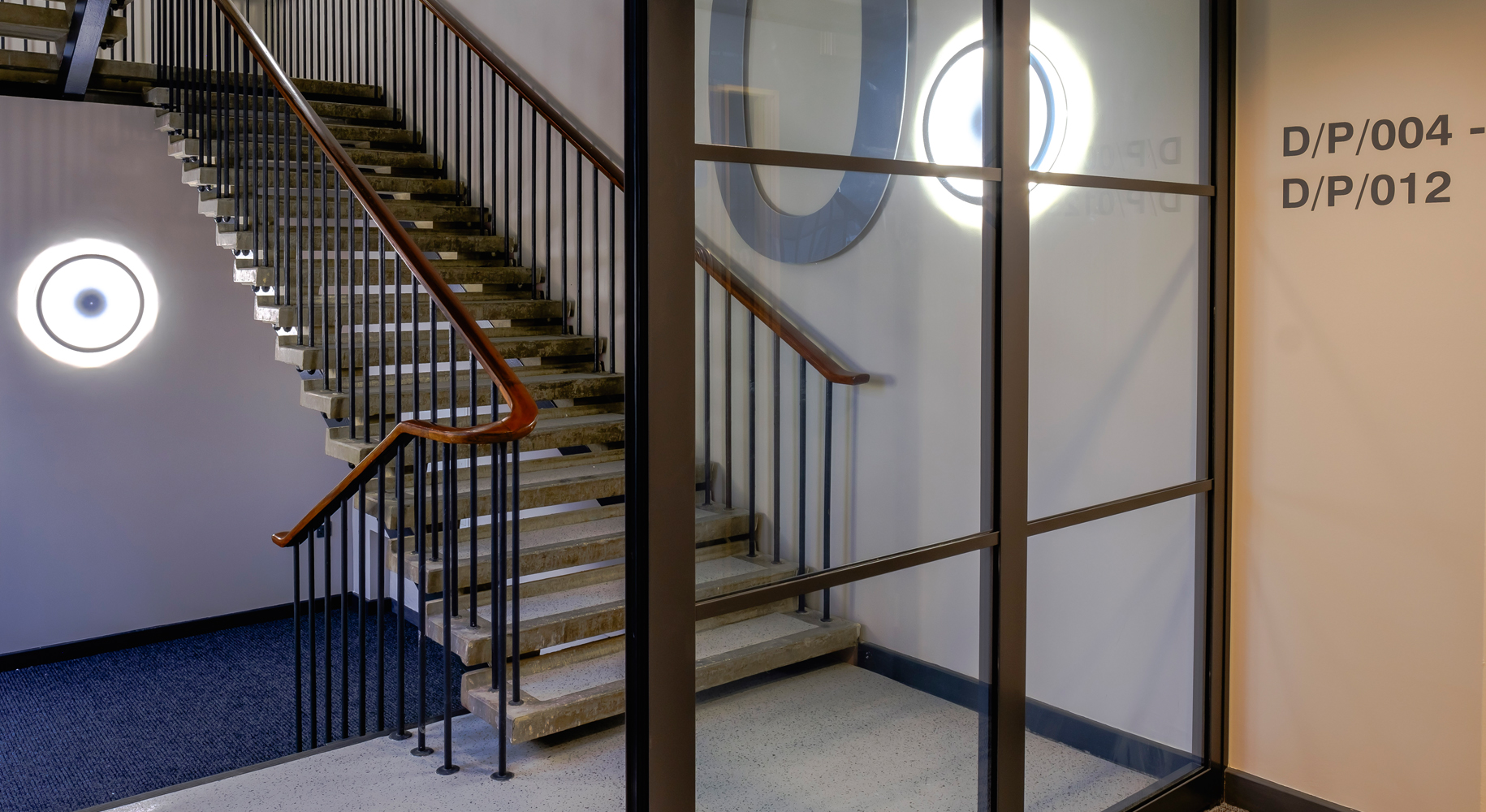
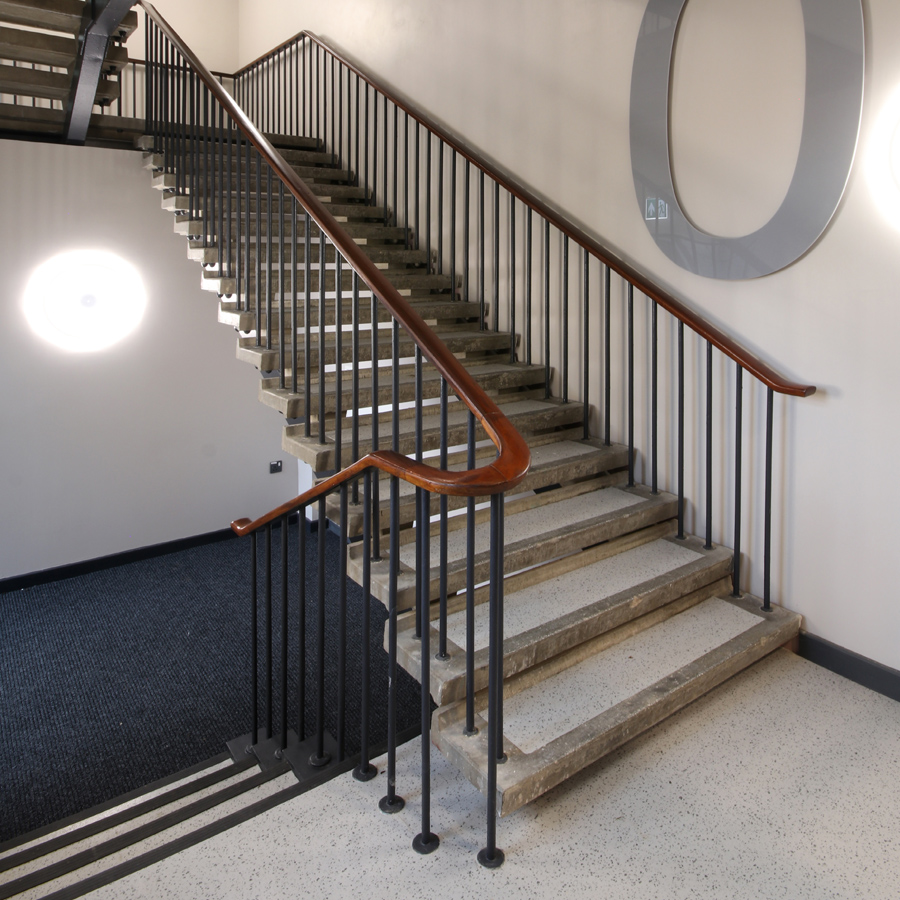
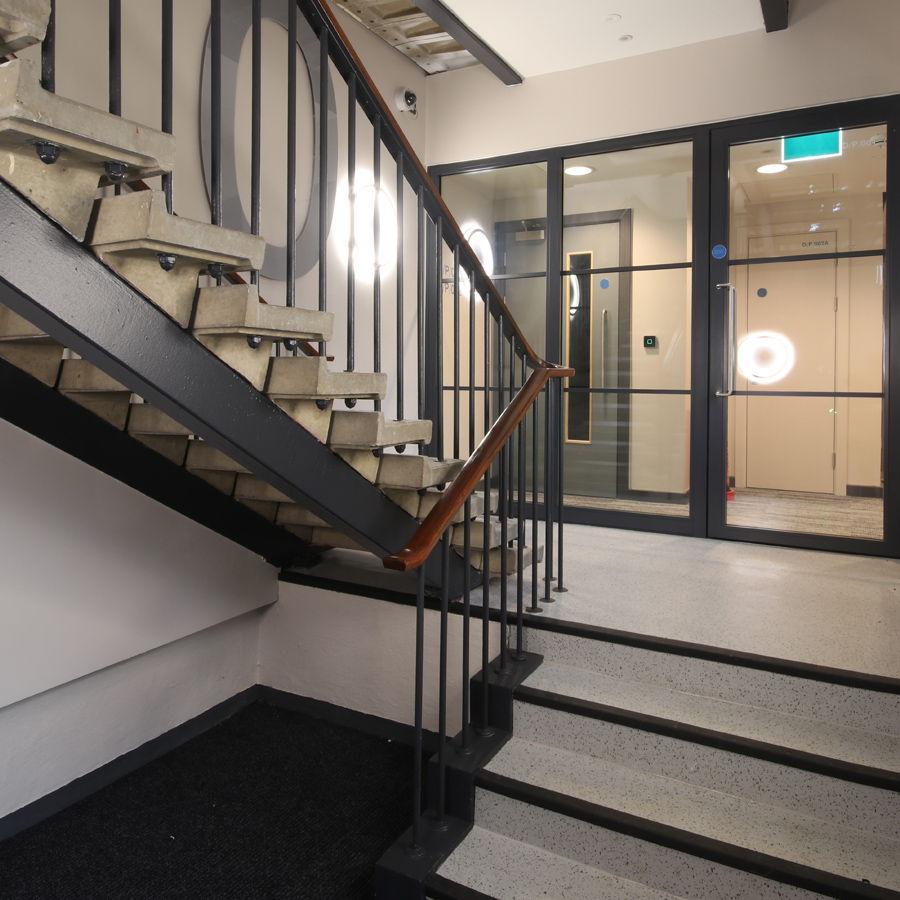
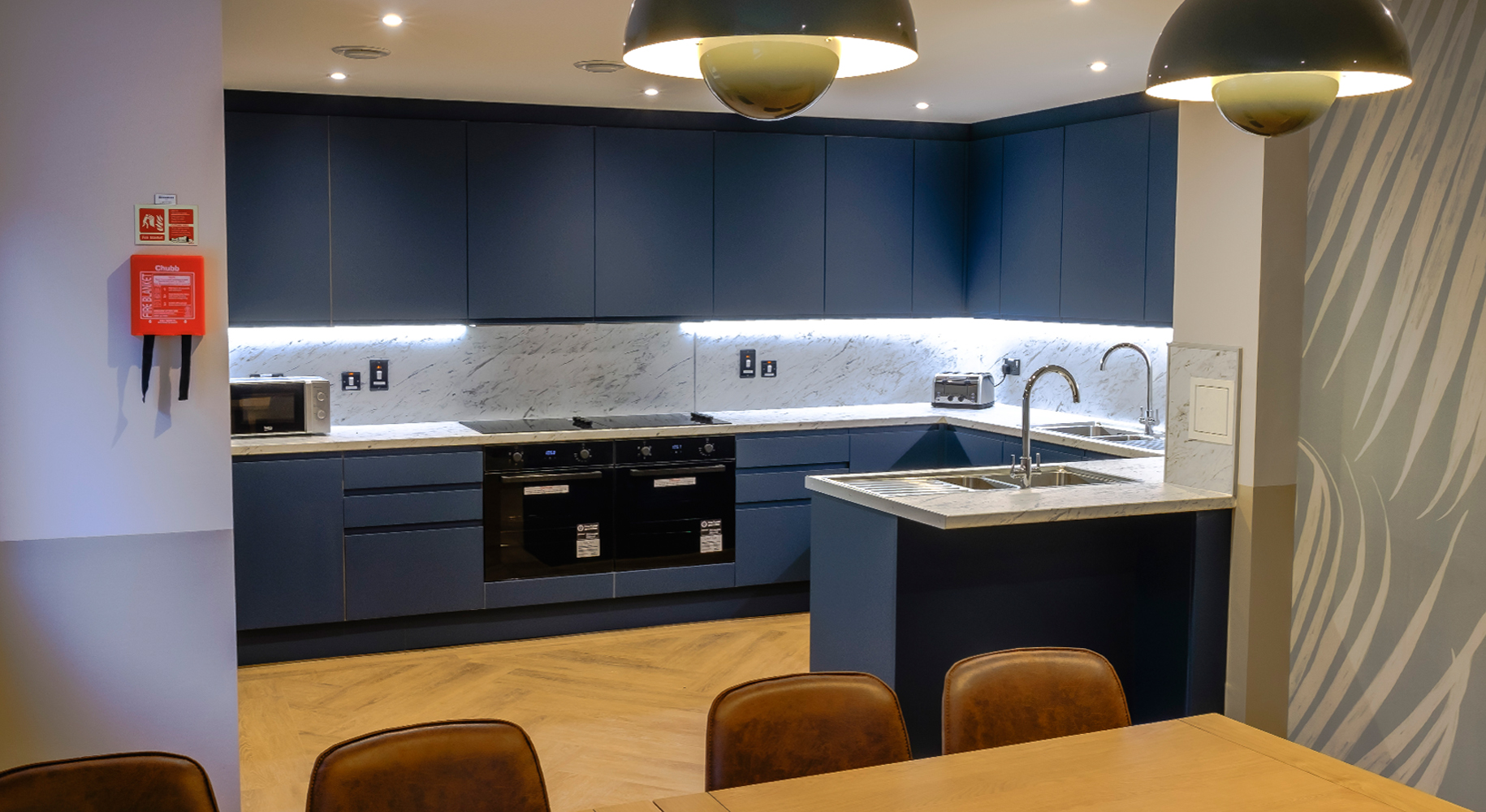
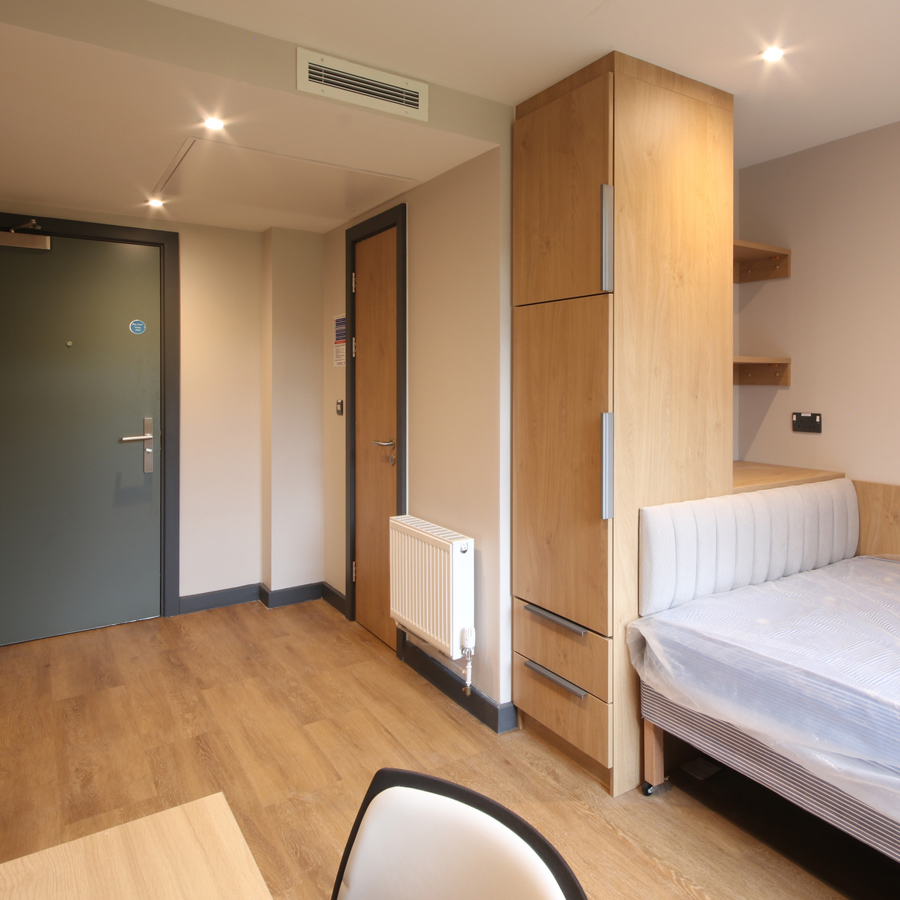
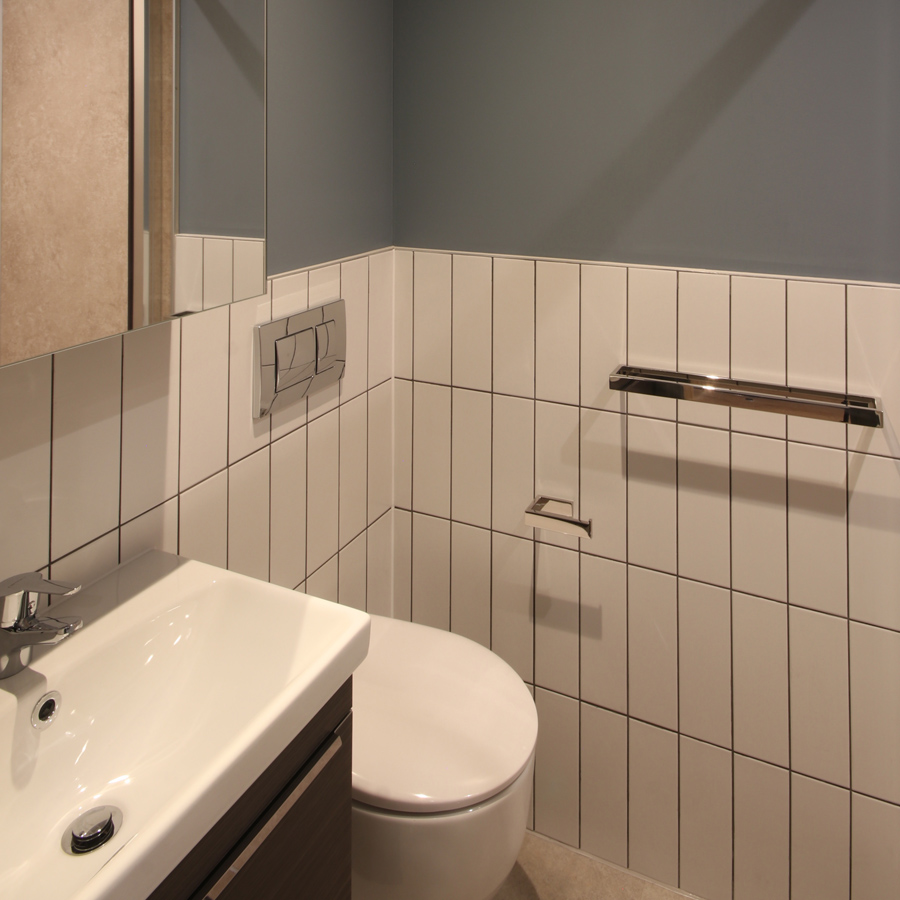
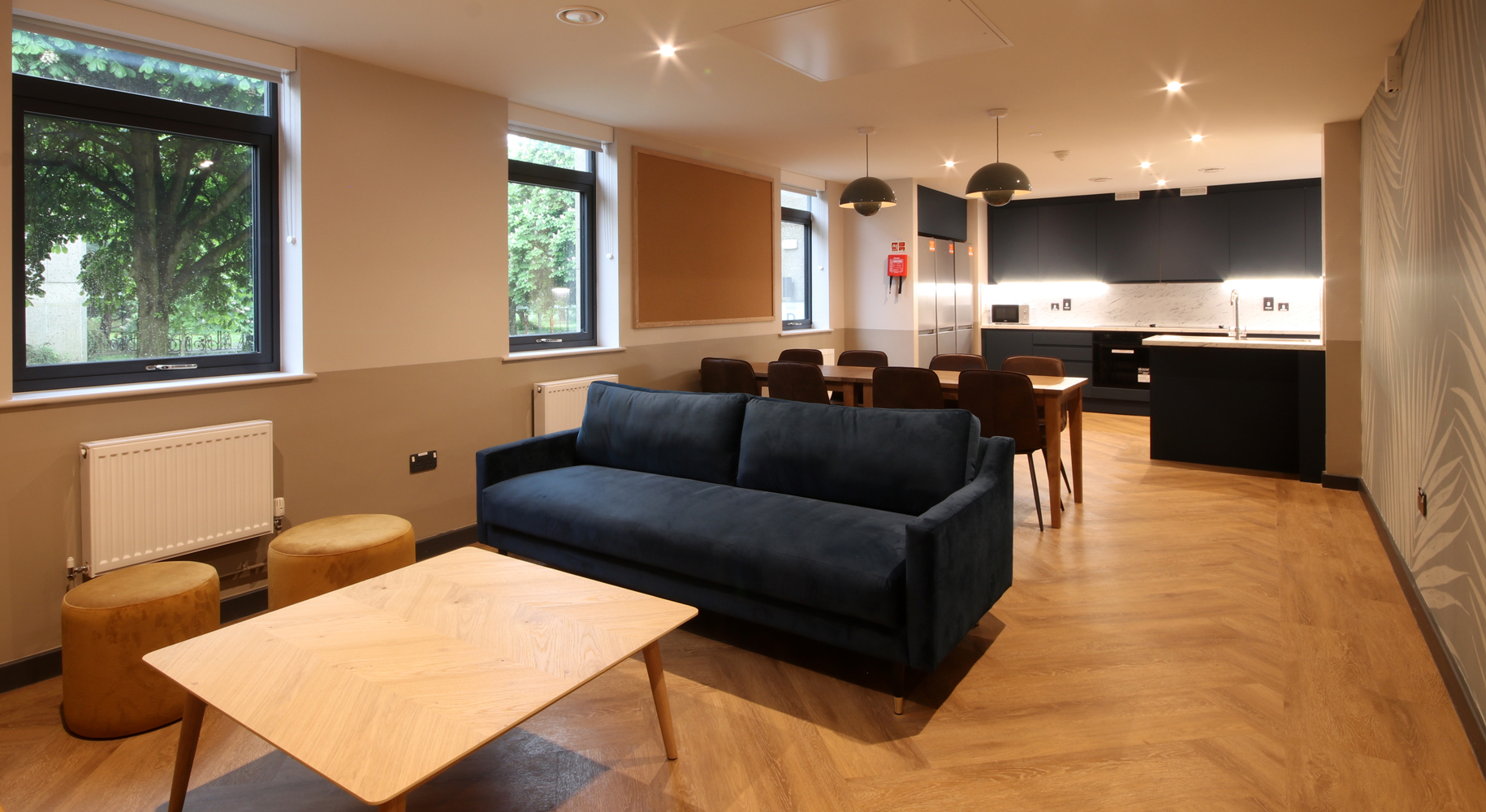
Fuse was appointed by the University of York to convert the Grade II listed Derwent P Building into new student accommodation. The scheme comprises of 57 new one bed ensuite rooms, with shared communal kitchens, the accommodation is provided within 6 cluster groups, across 3 floors.
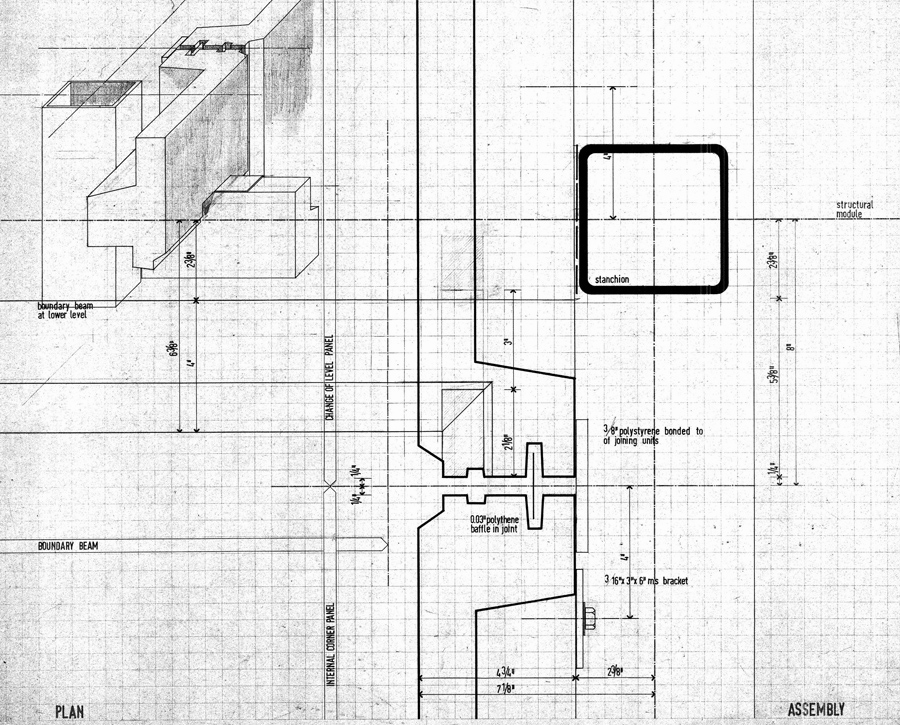
The Former Langwith (Derwent) College was built from 1963 to 1967, the majority of which was completed by 1965; with Block P added as an extension in 1967. The college was built using Mark 3B of the CLASP (Consortium of Local Authorities Special Programme) system. This was a prefabricated, modular system using cold-rolled steel frames clad in pre-cast concrete panels.
Designed by architect Alan Crawshaw (the architect also responsible for Derwent), Block P was built across three floors on a similar layout across each floor. The steel frame supported a felt-covered flat roof, and in communal areas, pyramidal skylights were used to provide light and add interest. Bedrooms facing onto the lakes also had some projecting ‘oriel’ windows to increase light, although more of these are found in Derwent. The concrete wall panels were finished in a grey Trent River Gravel exposed aggregate. The original windows were in softwood, with aluminium opening lights and coloured vitreous enamel panels below.
Client: University of York / Sector: Student Accommodation / Status: Complete / Photography: Fuse Studios & Lindum Group
Due to the nature of the building fabric, the building’s listed status, the location of the project in the wider University campus surroundings, and the stringent wildlife stipulations set out by the local authority environmental department, the project had to be meticulously planned from the Pre-Construction phase, right through to handover. This ensured the overall scheme was delivered with minimal fuss, ensuring several critical Planning and Heritage Conditions were addressed and factored into the programme.
Our approach to upgrading the existing façades thermal and acoustic performance, was guided by an understanding of the original construction methodology, which the Fuse team gained from trawling through hundreds of the 1960’s detailed drawings! To add to our challenges, significant changes to the Building Regulations were brought in to play during the detailed design of this project, including changes to Part F (Ventilation), changes to Part L (Conservation of Fuel and Power) and the introduction of the new Part O (Overheating) regulation.
It quickly came apparent that we would need to fully refurbish the external wall build up from the inside, leaving the external concrete panels in place, being integral to the overall structural stability of the building. Fuse had to work with specialist manufacturers to ensure the right products were selected for this unusual building typology. Full fill Knauf RockSilk was proposed as the primary insulation product, which had to be secured to the rear face of existing concrete panels with aluminium self-adhesive stick pins – ideal for this project type.
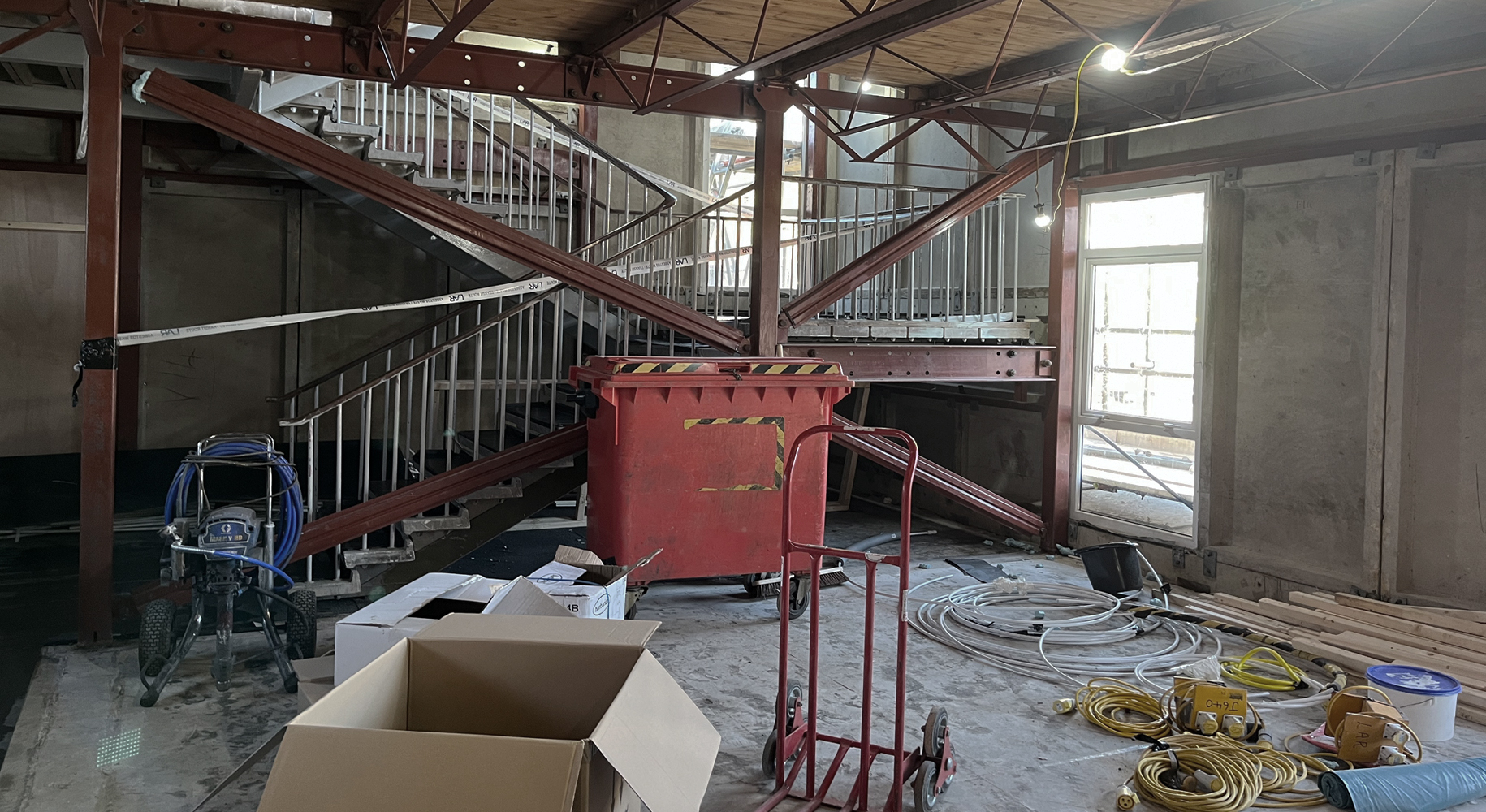
Tackling the existing floors to upgrade their fire and acoustic properties resulted in us fully under-drawing the entire floor with Fireboard and encasing the steel floor joists as part of the fire protection strategy. The timber flooring on top acted as a secondary cross bracing between the joists and where the timber flooring met the external wall, as you would imagine, it did not form a perfect seal to the rear of the concrete external wall panels! Additional support angles were introduced to pick up the new internal wall studs, along with the introduction of fire stops at every floor level.
There were of course still various challenges along the way but one of the more notable ones was the presence of bats during the Construction Phase. Following a delicate but intrusive survey, bats were found hidden deep within the building fabric, which meant sufficient time was needed to plan, design and build the scheme, ensuring the welfare of the bats was not compromised. Temporary re-homing of the bats was undertaken by specialists, while care was taken to ensure the existing areas of habitation were not damaged or disturbed in any way, so the bats had their homes to return to – being creatures of habit!

Following the extensive strip-back to the building shell, works to clean, repair, and make good the listed concrete panels was completed, along with the installation of new triple-glazed windows throughout, replacing the original single glazed windows. The external windows replicate the original design intent of the ‘Off-White’ enamel panels used in the oriel windows and adjacent Derwent College, which compliments the colours of the interior and the original design intent.
The sustainable energy proposals for Derwent P focused on the construction of an energy efficient building, with a focus on substantially increasing the existing building’s thermal mass, and a passive approach to the fabric improvements. This included detailing the external walls to greatly improve the air leakage rates. The completed refurbished building benefits from a reduced energy output and improved internal environment for the building’s occupants. The mechanical services have been designed with automation in mind, to reduce energy wastage, whilst utilising high efficiency low energy motors, and sub-metering throughout.
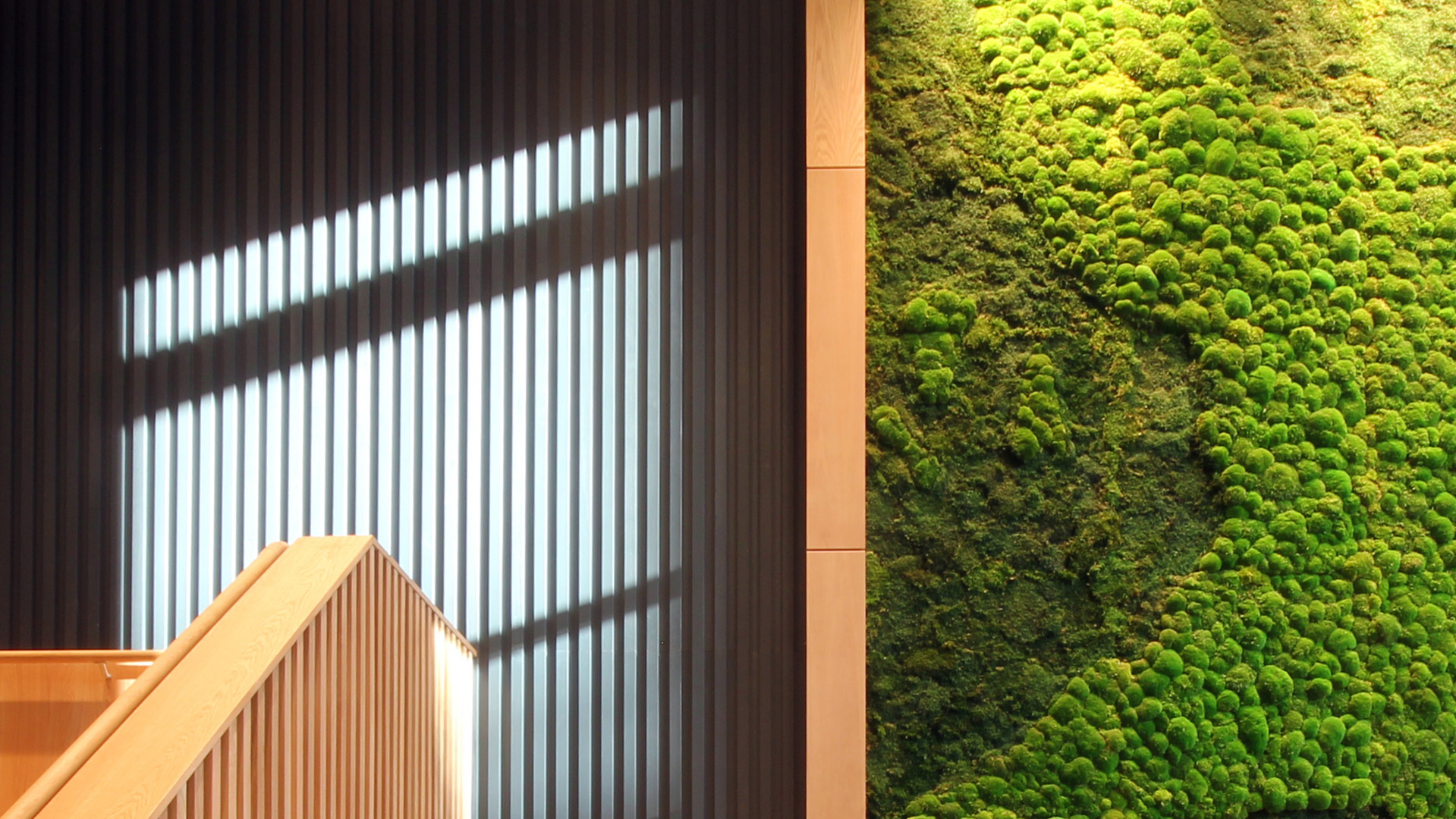
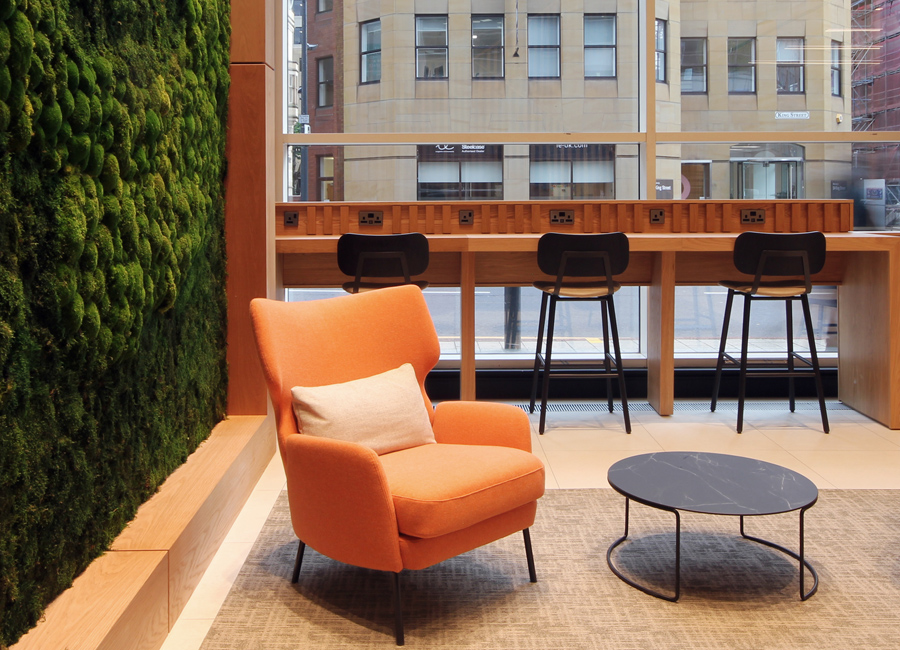
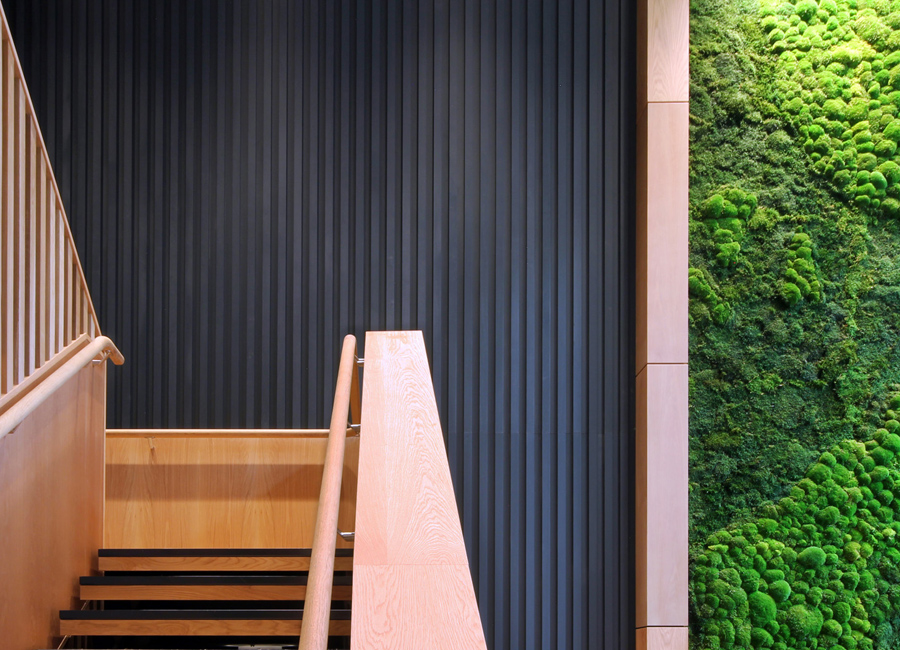
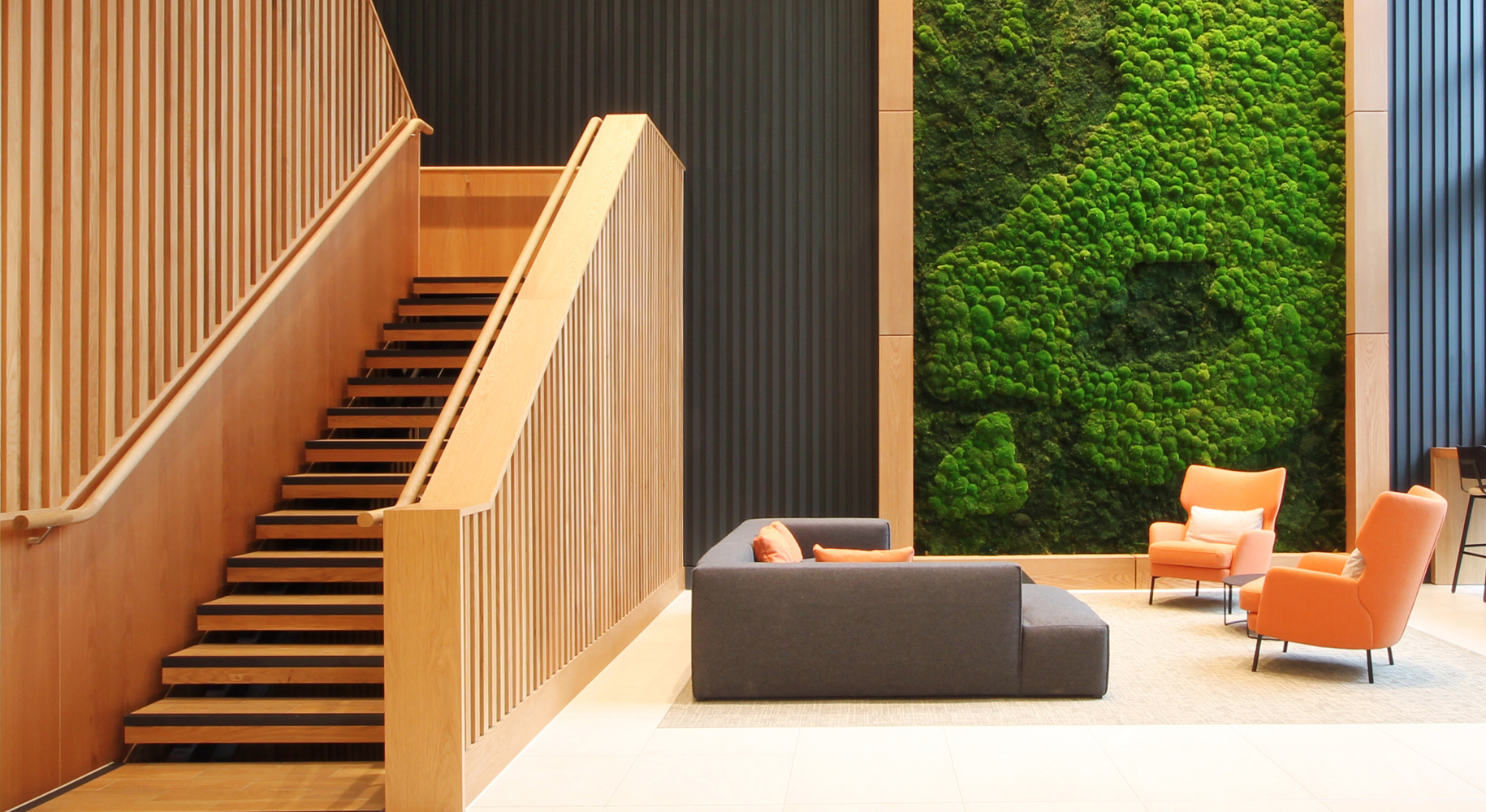
The new interior design concept took inspiration from the original 1960’s interior, to create a simple/ stripped back interior using a neutral colour palette and natural materials influenced by its surroundings. The communal areas within the building have a muted palette of contemporary colours to define the private and public spaces. Natural light was maximised internally through widening the corridors and glazing the central staircase.
A technically challenging project created a very rewarding final scheme. It was a pleasure working with our client, the University of York, main contractor, Lindum Construction and the rest of the design team. The Project Team included:
Structure & Civils: BWB Consulting Ltd / Mechanical & Electrical: CPW / Quantity Surveyor & Project Management: AtkinsRéalis / Landscape Architects: Smeeden Foreman / Heritage Consultant: Lanpro Services / Planning Consultant: O’Neill Associates
Fuse were appointed by CBRE Global Investors to upgrade and reposition the building previously known as City Point. Originally built in 2005 the 62,000 sqft building is located in the heart of Leeds professional core. The challenge for Fuse was to create a cost effective solution that would sit alongside a number of emerging corporate offerings. The result has transformed what was once a hidden and awkward reception area into a prominent reception space of the scale and quality its occupiers deserve. A new ‘portal’ wraps the existing glazed entrance increasing the buildings street presence on what is arguably one of the city’s busiest road junctions, whilst inside lounge and break out spaces have been created in what feels like a calm a serene lobby space. Works also included the upgrade of cycling facilities including showers and drying area.
In addition to the above the prominent ground floor suite was returned to a ‘Cat A’ environment
Client: CBRE / Sector: Workplace / Status: Complete / Photographer: Fuse Studios
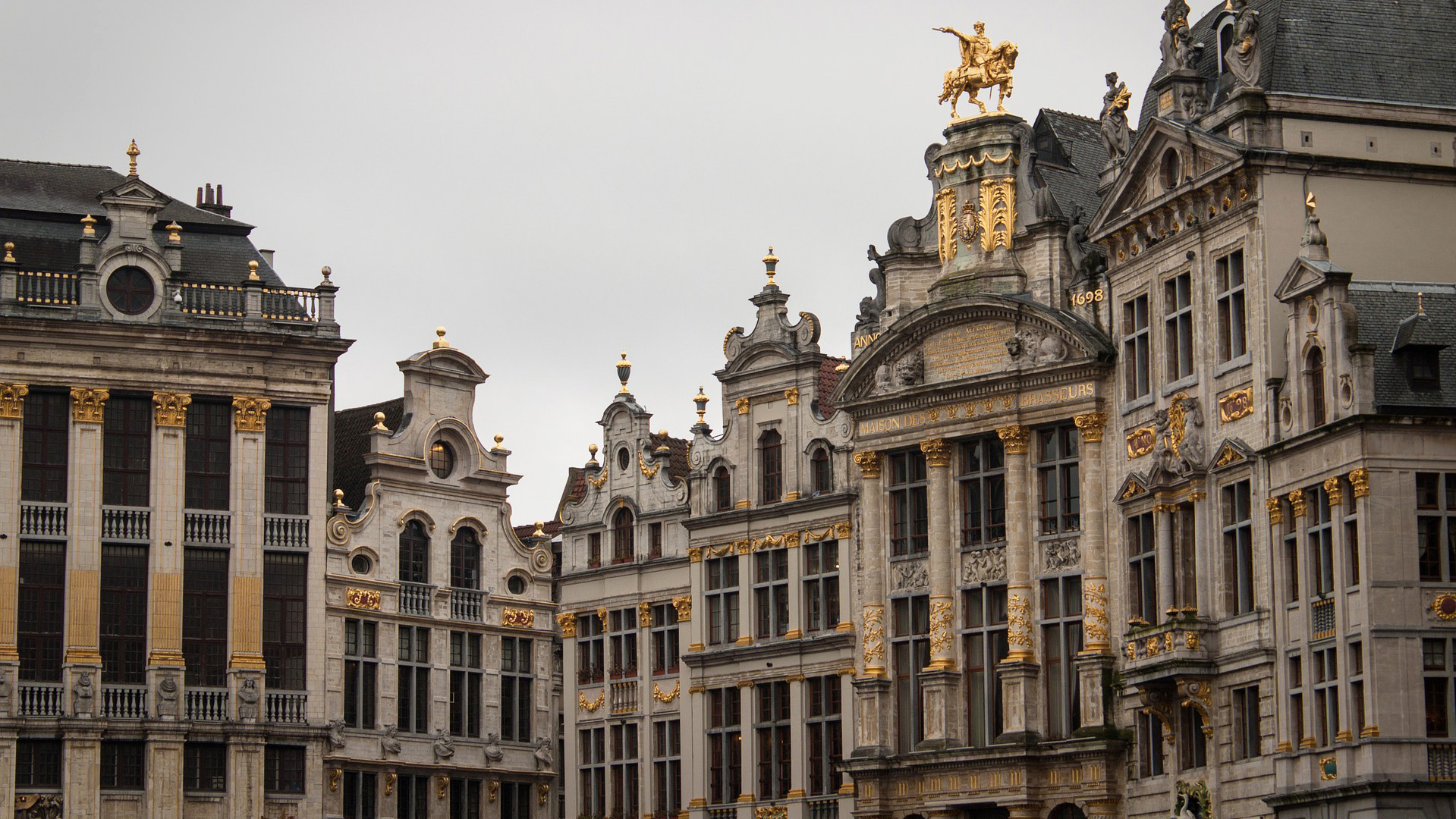
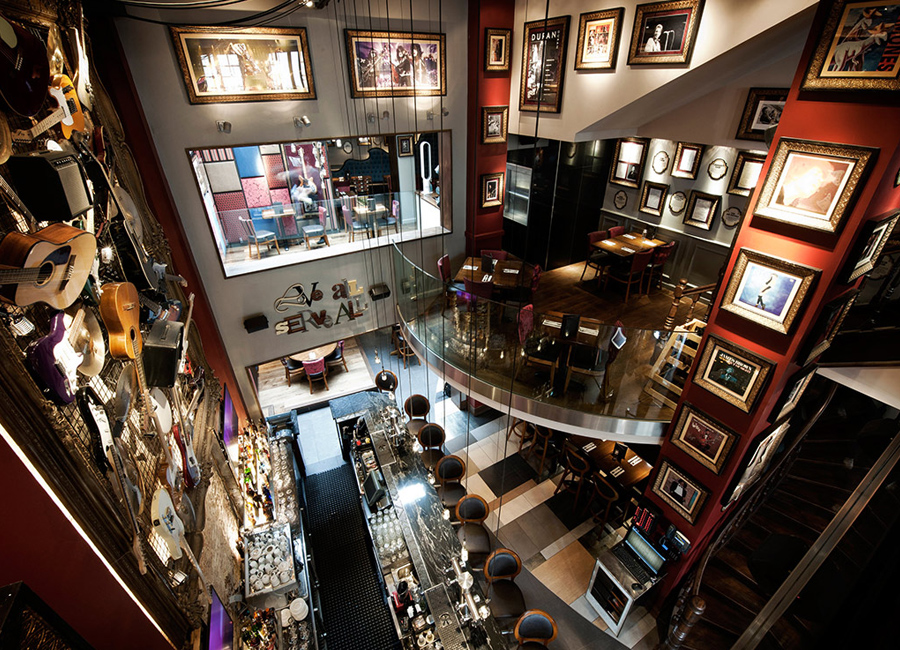
After we had handed over the Hard Rock Café in Florence, we thought we had seen the most historically sensitive site of our careers, But no. Along came a former merchant’s house in the corner of the UNESCO protected Grande Place in the heart of Brussels. Originally constructed in the 17th century, this structure had the same preservation status as the Pyramids of Giza. Comprising basement, ground and four upper floors, the building had been badly damaged by previous adaptions and the local authorities were not going to allow that to happen again.
With the help of local architect partners, we began a very delicate negotiation with the Royal Commission for Historic Monuments and Sites (the CRMS) and the regional planning authority.
There were many challenges. Finding a means of providing filtered kitchen extract ventilation and cooling for the cold rooms and freezers which could not be seen from any neighbouring streets or buildings was almost, but not quite, impossible.
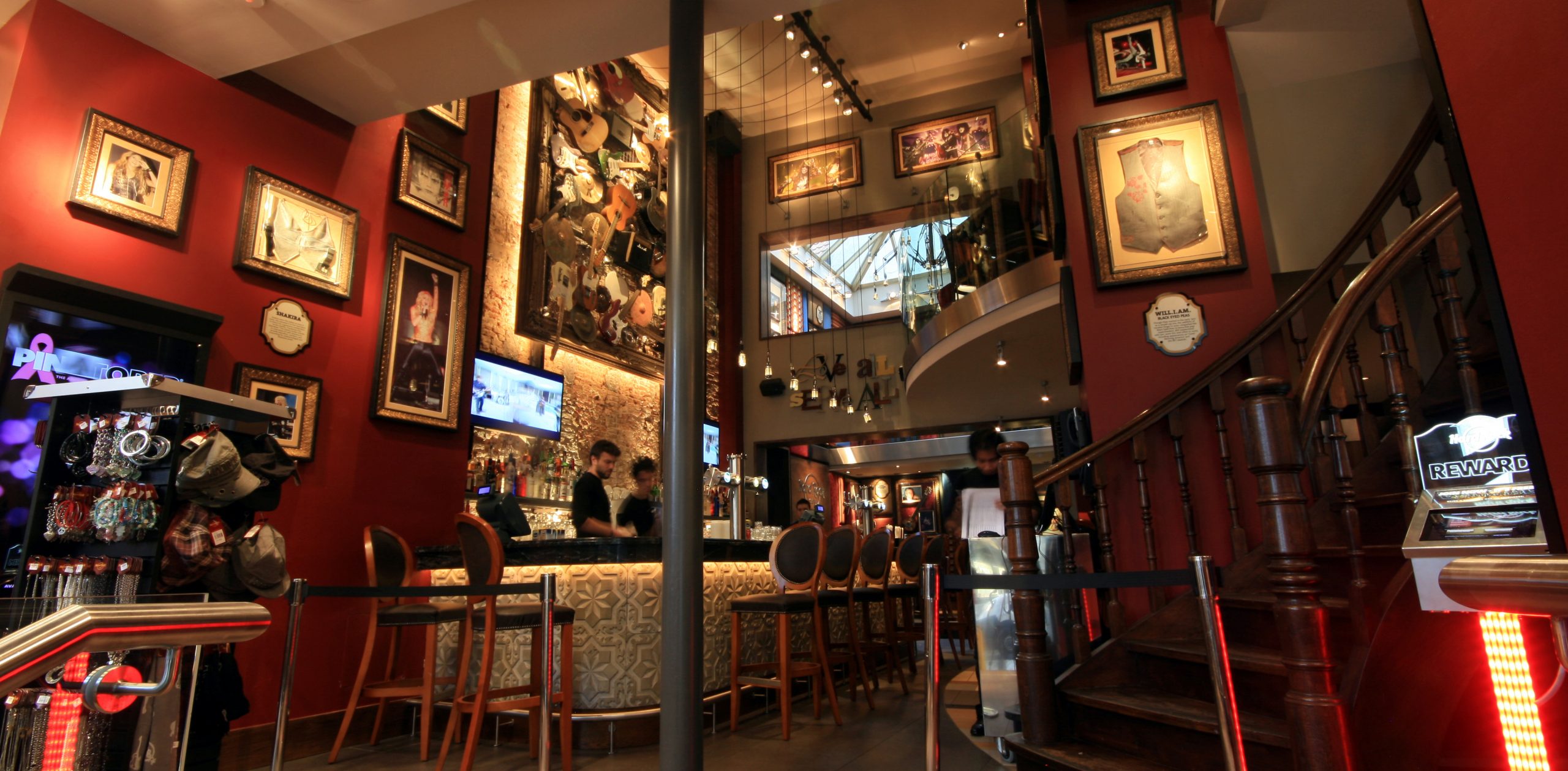
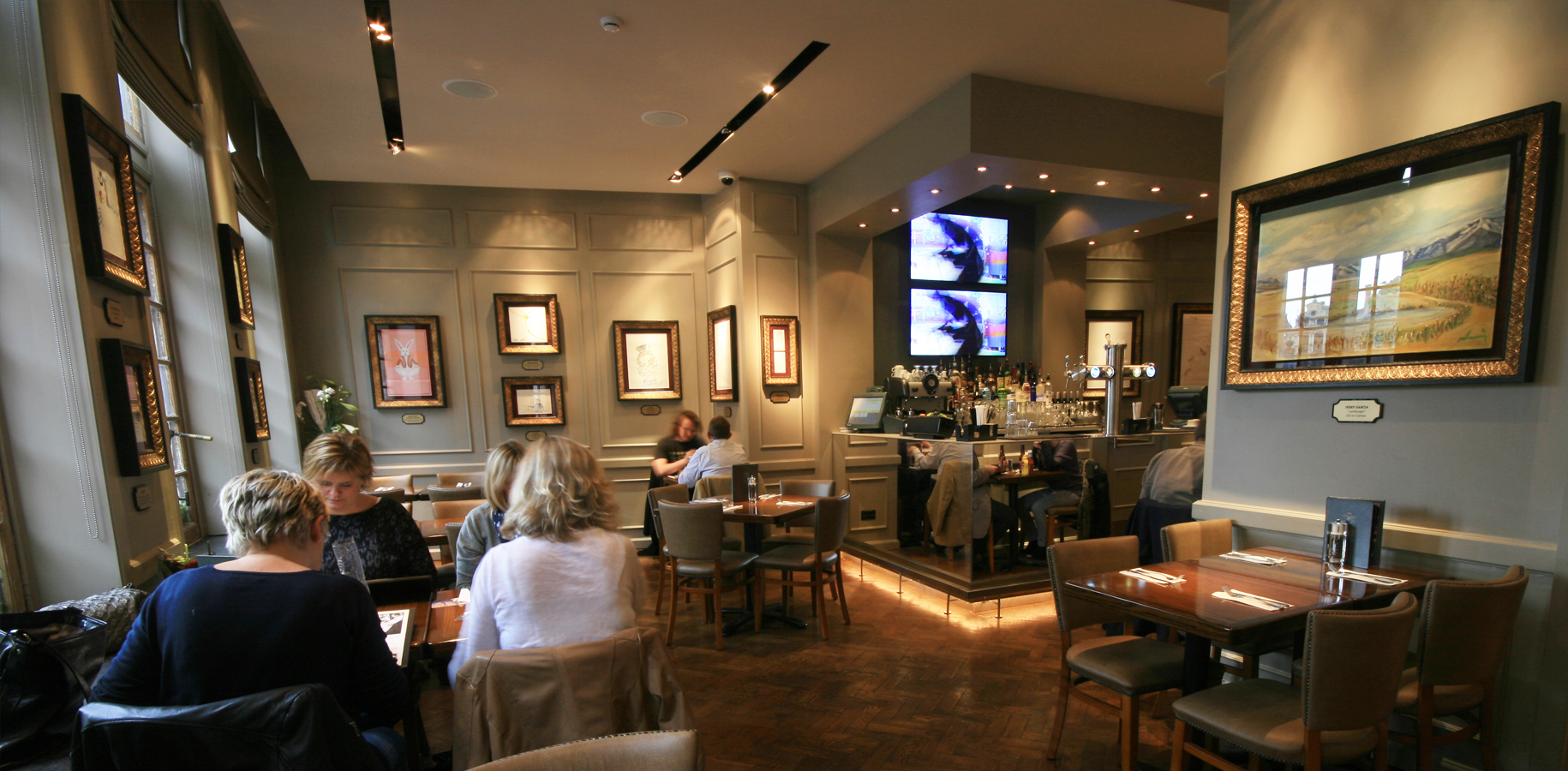
Eventually, we solved the many problems. The ground floor houses the Rock Shop and main bar. The double storey main space already existed and was adapted for dining. At second floor a ‘gallery’ space was created. This displays original artwork by famous Rock Stars including John Lennon. The third and fourth floors contain the offices and staff areas.
Client: Hard Rock International / Sector: Leisure & Hospitality, Refurbishment / Status: Complete / Photography: Hard Rock
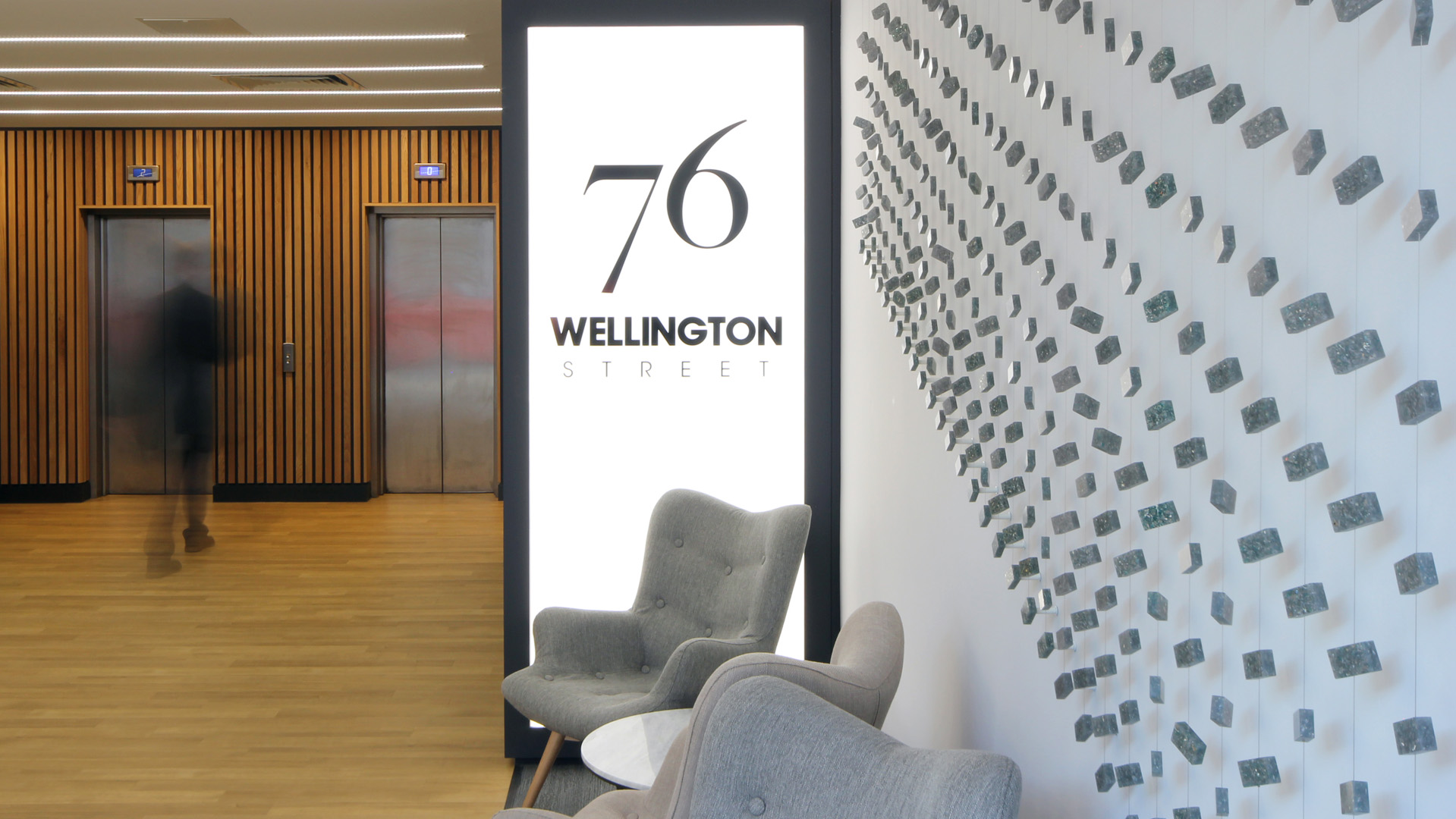
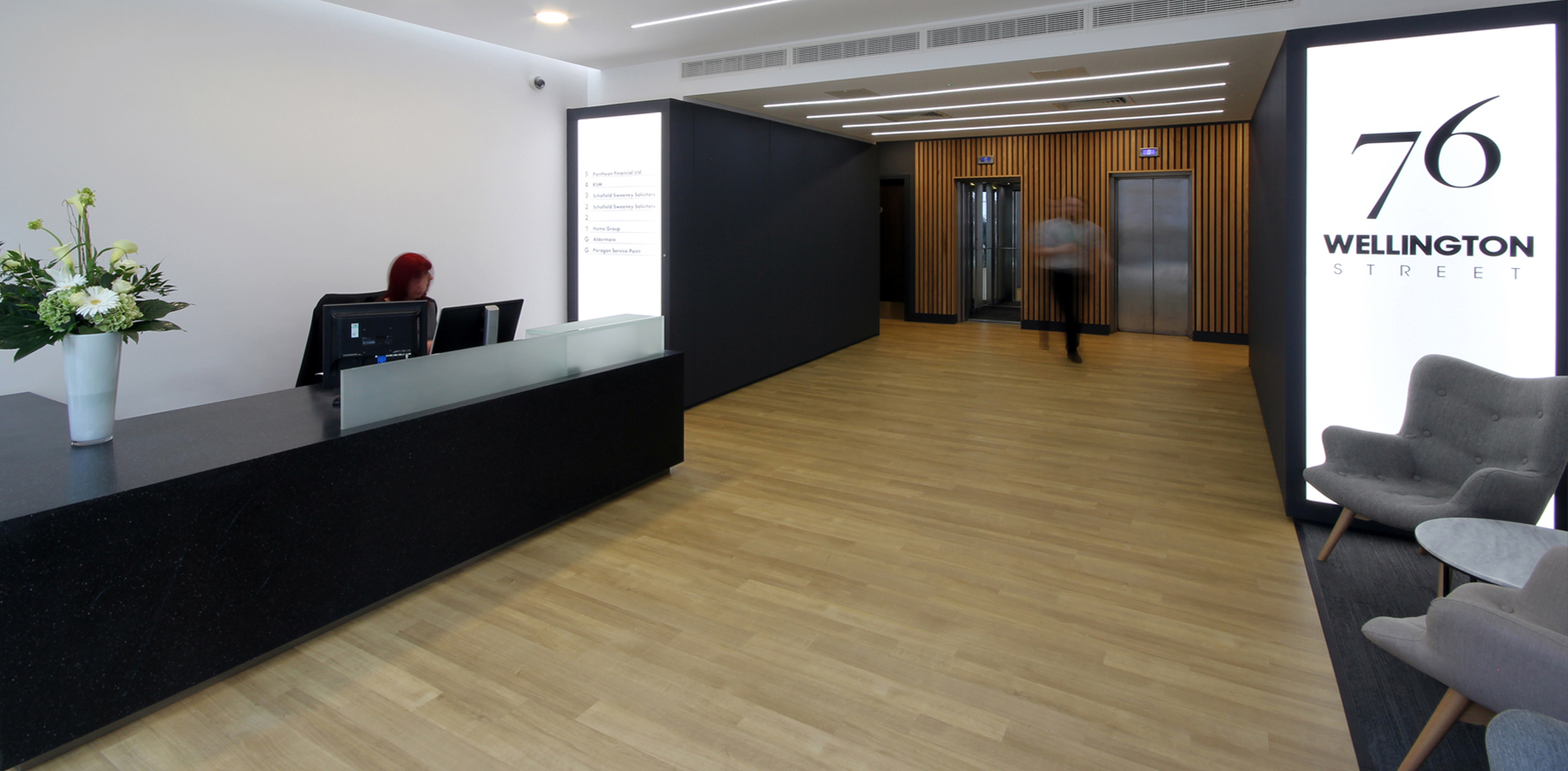
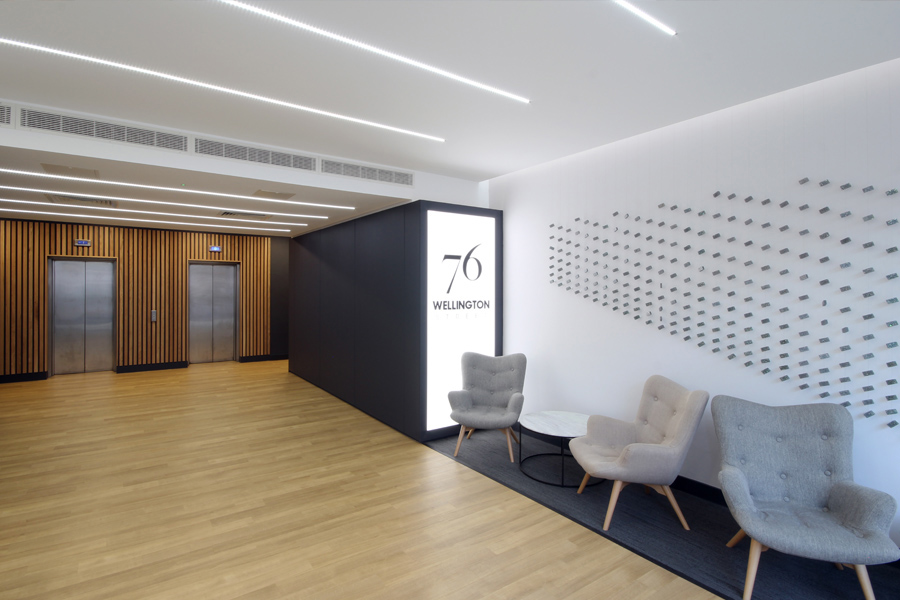
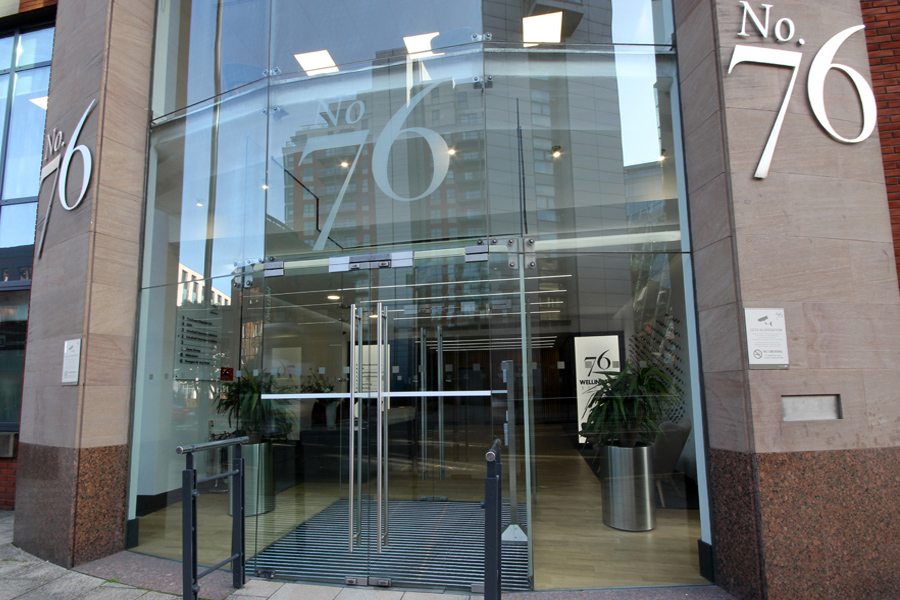
Following Ardstone Capital’s purchase of 76 Wellington Street, Fuse undertook a refurbishment and repositioning exercise to bring the property in line with that of a modern Grade A building. Completed in 1998 the building already provided open plan office accommodation arranged over ground and five upper floors, extending to 35,800 Sq.Ft. However, the reception and common parts had become dated, and with lease breaks approaching Fuse were asked to give these areas a much needed facelift.
Client: Ardstone Capital / Sector: Workplace, Refurbishment / Status: Complete / Photographer: Fuse Studios
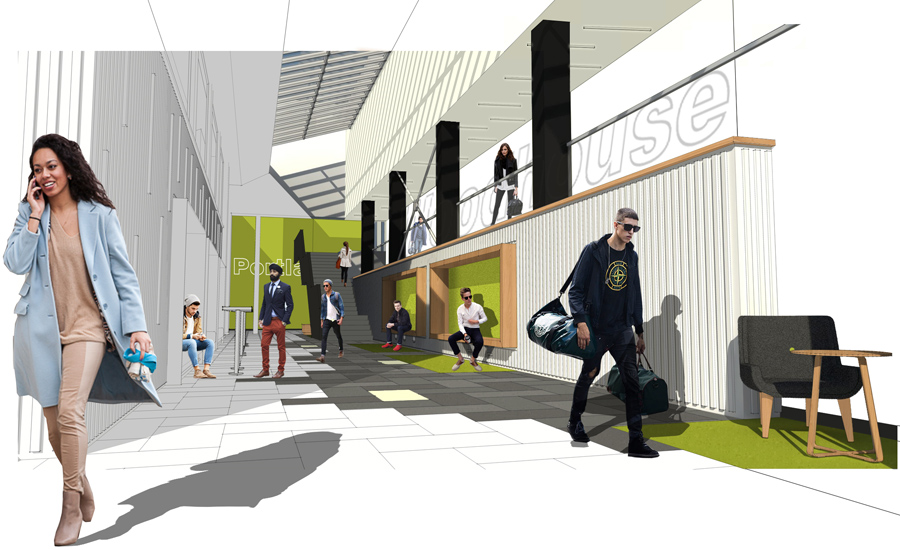
The Portland entrance created a new gateway to the City Campus and enhanced the cohesion of four key locations. As well as providing a principal entrance to the Portland and Calverley buildings – two of the largest teaching spaces in the city – the building now connects the Woodhouse and Leslie Silver buildings, which house the Students’ Union and the library, as well as a range of food and beverage outlets.
Connecting the four buildings has brought everything under one roof for the academic schools based in these locations, creating a greater sense of community and place for the staff and students alike.
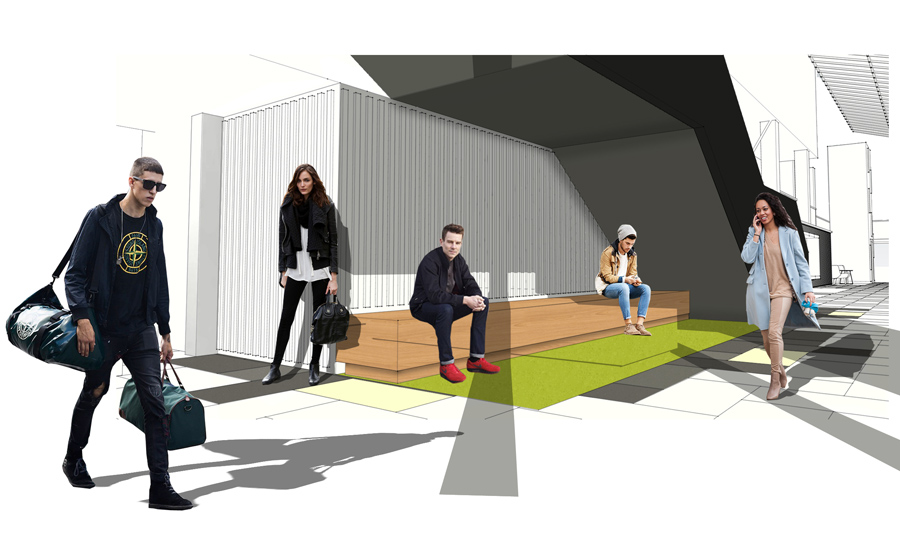
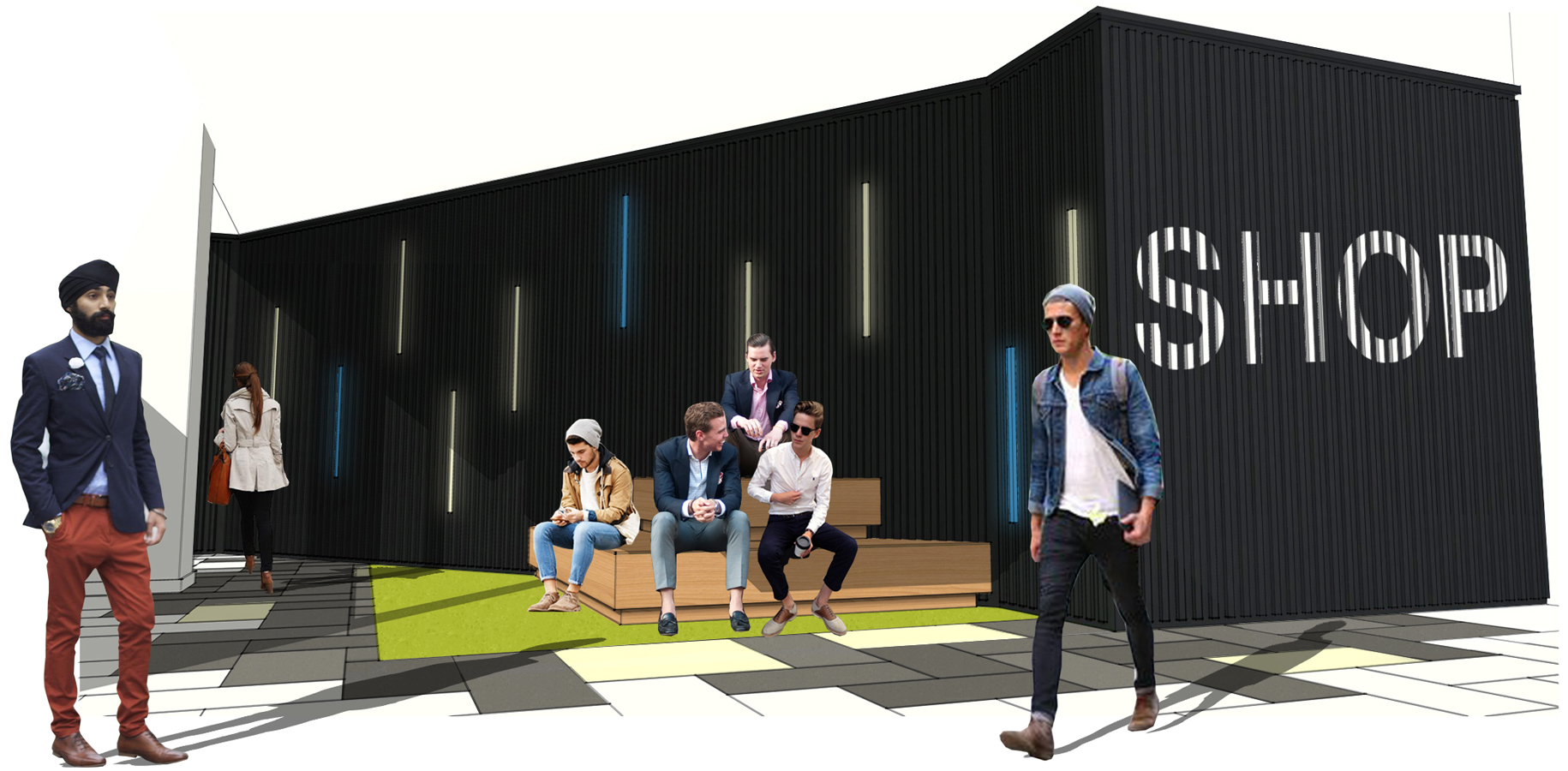
The new structure has extended the entrance onto Portland Way, heightening the university’s street presence, whilst the exterior has been designed to blend in with the Portland building’s iconic façade. FUSE were appointed to provide a design concept for the interior allowing the architects to deliver the scheme as a whole through the tender period and onto site. The brief was to work within the architectural design and help bring the creation of smaller collaboration spaces for students to meet and socialise, and undertake informal study within the new entrance.
Client: Leeds Beckett University / Sector: Education, Refurbishment / Status: Complete / Visualizations: Fuse
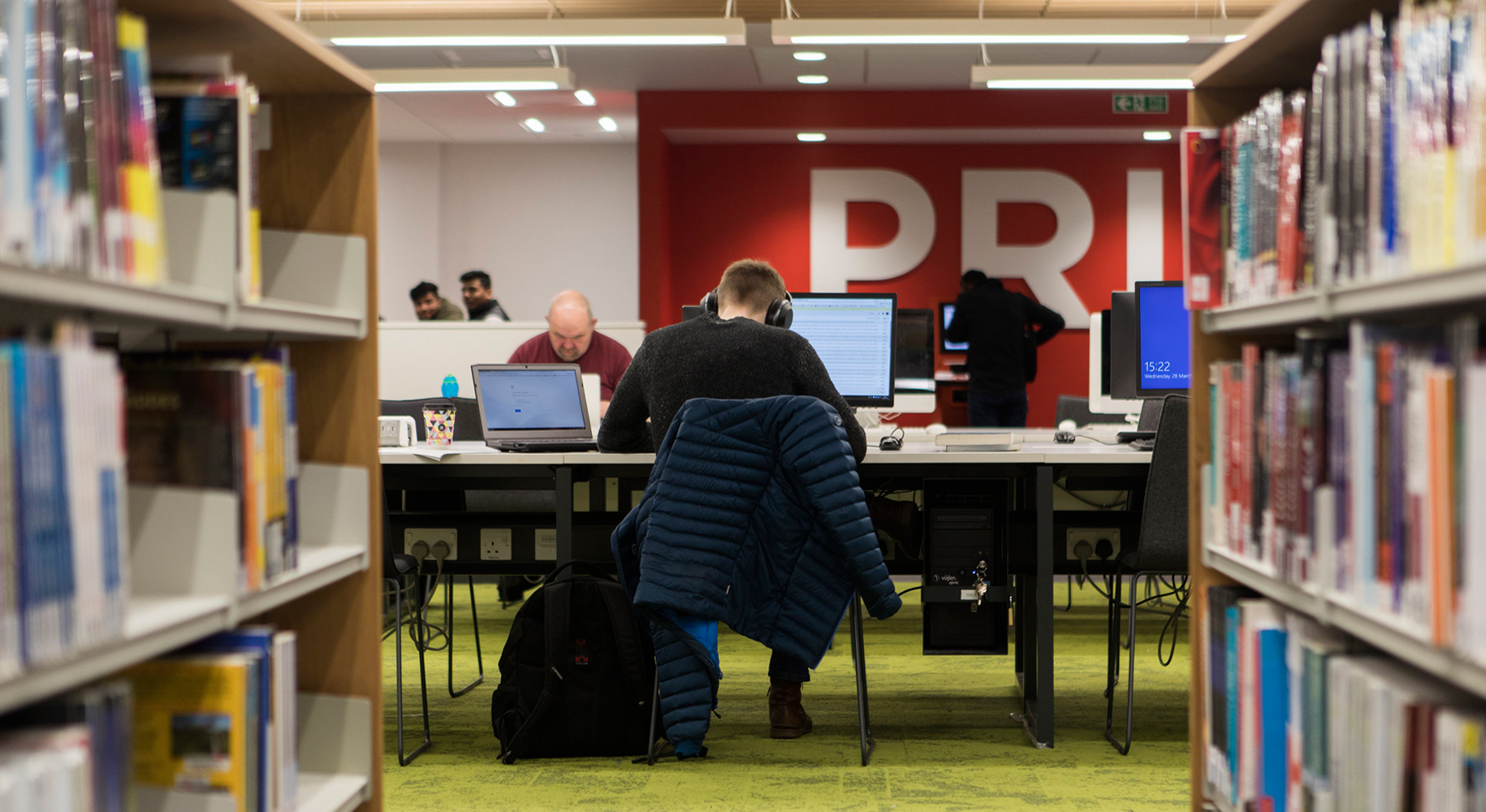
This complicated project was not only the refurbishment of the existing library building but also the consolidation of 2 other campus libraries. The challenge was to create an environment that increased dwell time, enhanced learning whilst delivering access to more books, whilst also taking into account new developments such as the Adelphi building, new student residences at Peel Park, the continuing development of the Cultural Quarter and to change user perceptions of the library by enhancing the overall student experience.
Fuse were appointed to provide a full interior design service from design concept through to on-site delivery, in which the findings of the report would be implemented over a two year period.
Due to the library being a 24 hour provision and to minimise disruption to students during key times of the academic year, the project was delivered in two phases. Phase 1- second and first floors; Phase 2- ground floor.
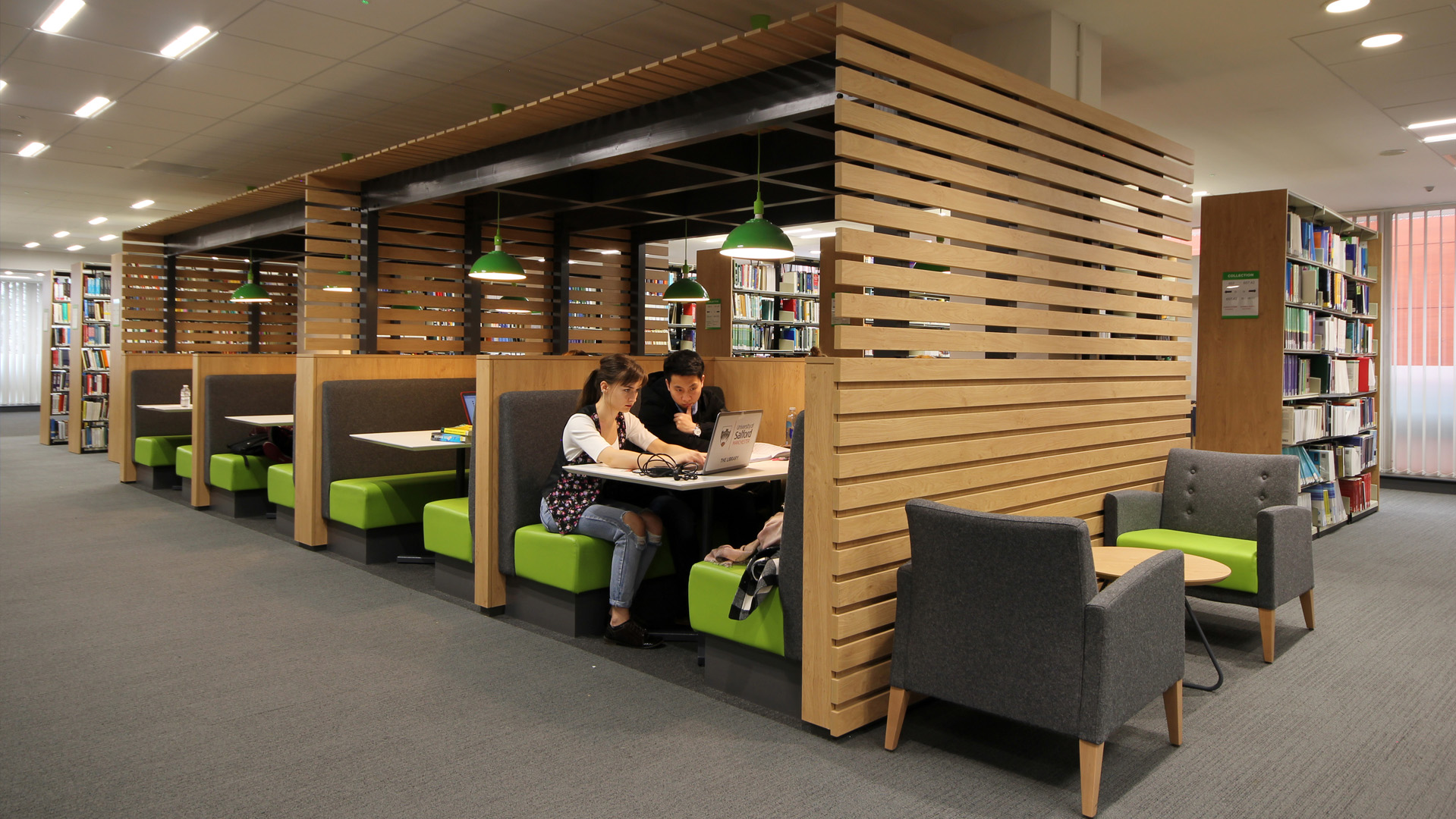
The design for the library was inspired by the park it overlooks – Peel Park – which was the first municipal park in the UK. This helped coin the phrase ‘the library in the park’ and its design ethos of creating ‘a sense of place’. This theme helped with the selection of colours, materials and artwork in the building, as well as allowing us to create fixed joinery features on each floor based on park pavilions.
The design successfully accommodates just under a linear kilometre of books and an increased seating capacity of 1152 students. The project was and still is regarded as a great success.
Client: University of Salford / Sector: Education, Refurbishment / Status: Complete / Photographer: Fuse Studios
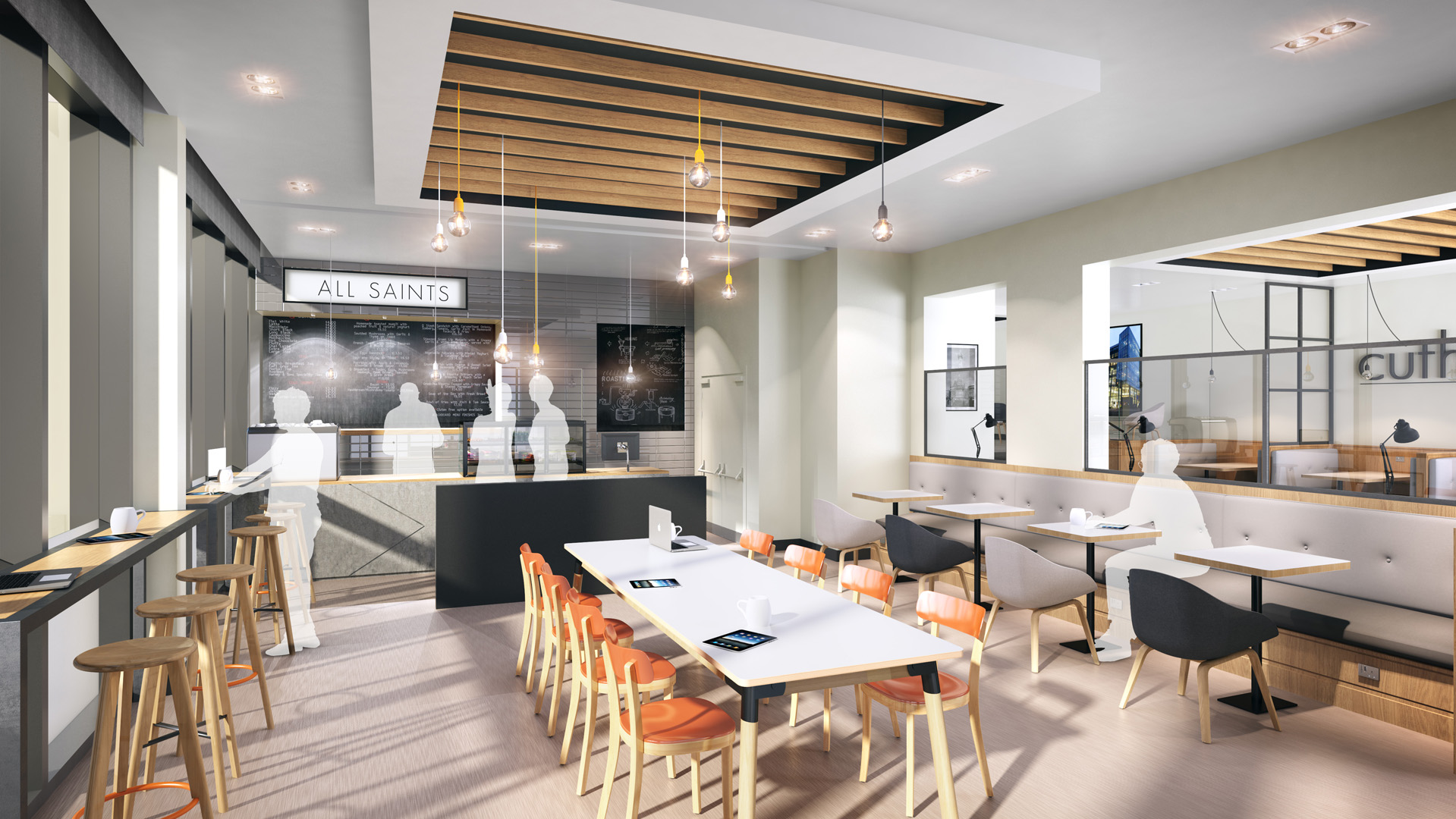
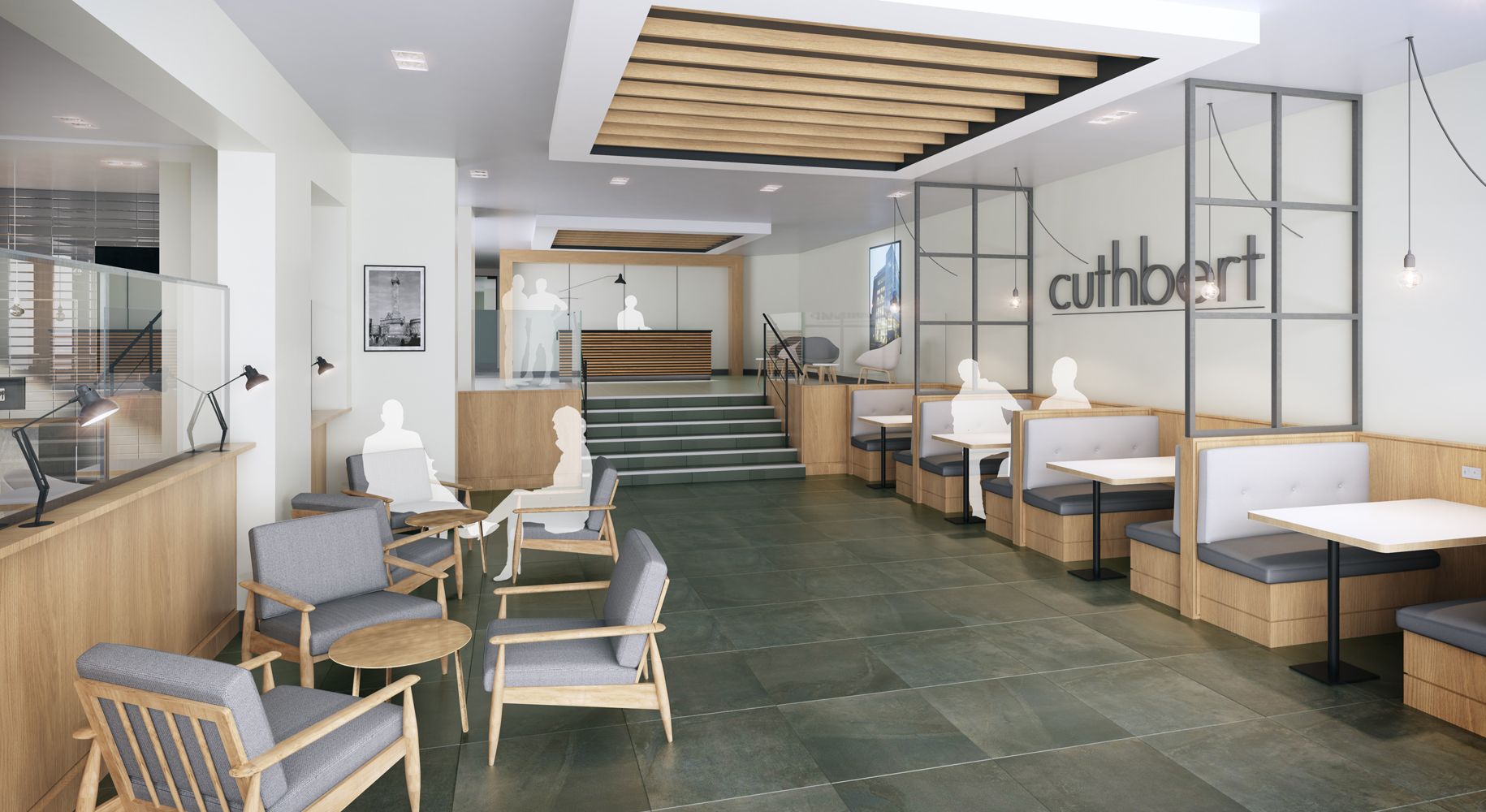
Cuthbert House formerly owned by Commercial Estates Group (CEG) is situated above the Quayside in an established City Centre business location.
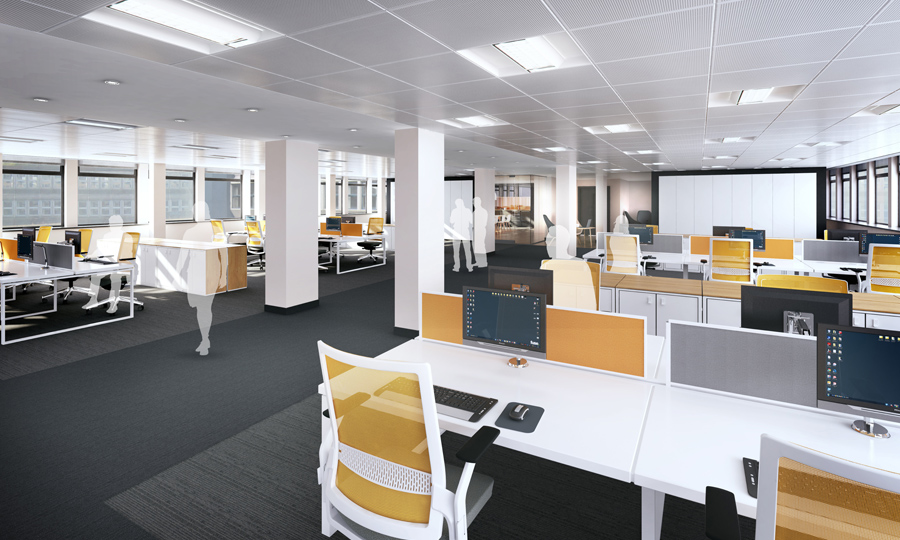
The 8 storey building provided approx. 60,000 Sq.ft of flexible office accommodation across 5 floors whilst the ground floor provided the main entrance into the building, with an externally operated cafe and two levels of on-site parking and bike storage.
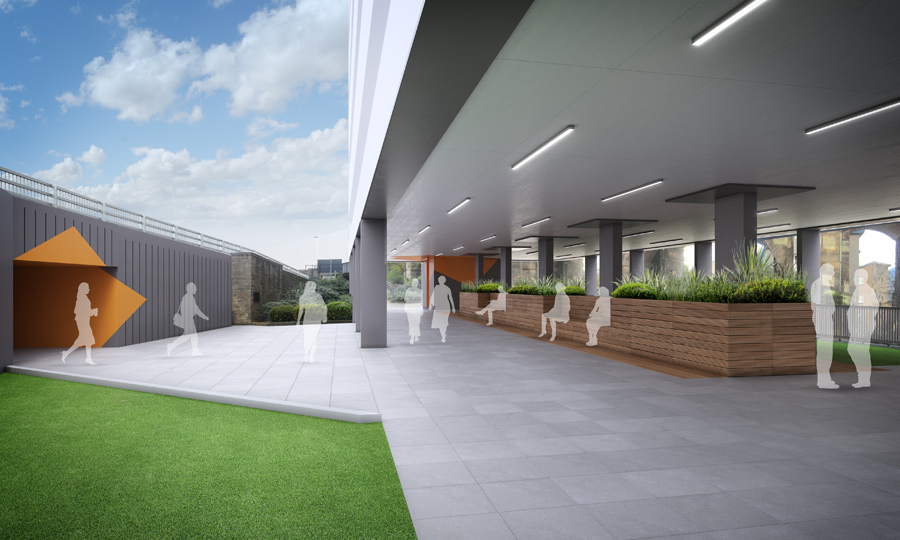
Fuse were originally asked to develop the design concept for the partial refurbishment of the building’s interior along with a refresh of the external façade and its common parts up to Riba Stage 4. As the design evolved the brief expanded to capture the café, develop a co-working concept, signage and lighting, external spaces and pedestrian links through the adjoining subways and bridge connections.
The client approved design concept and gained full planning approval.
Client: CEG / Sector: Workplace, Refurbishment / Status: Complete / Visualization: Render3D
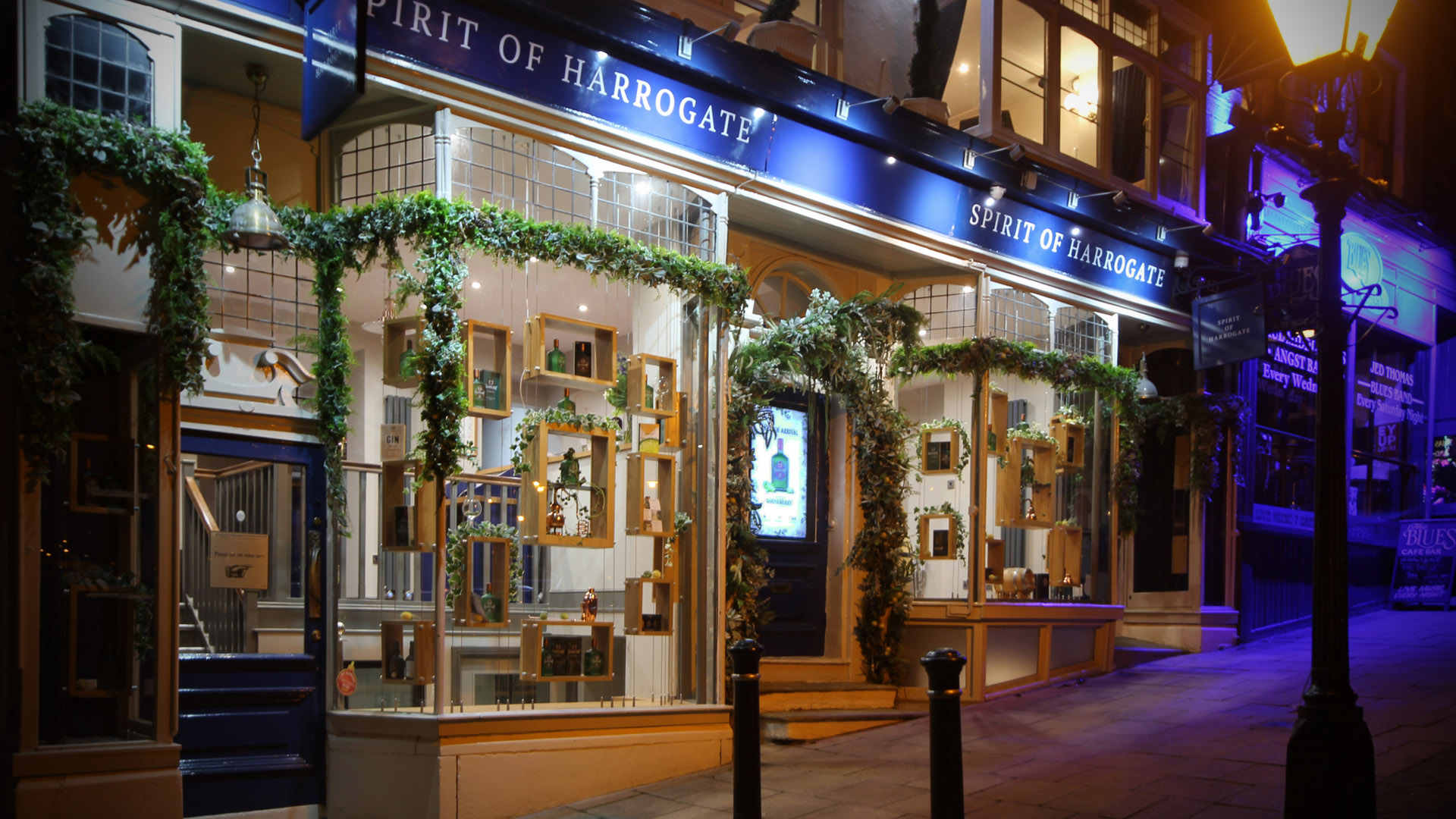
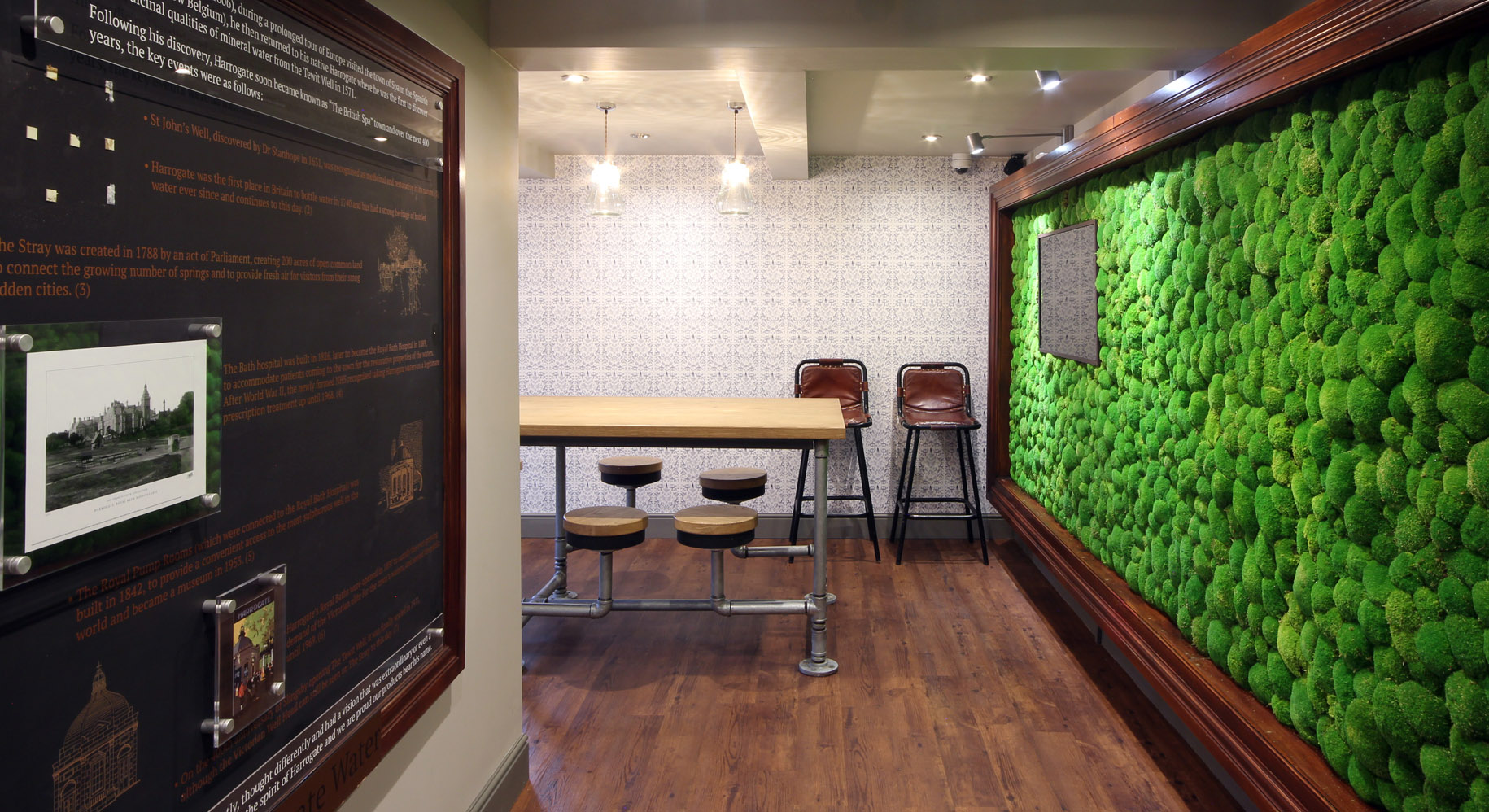
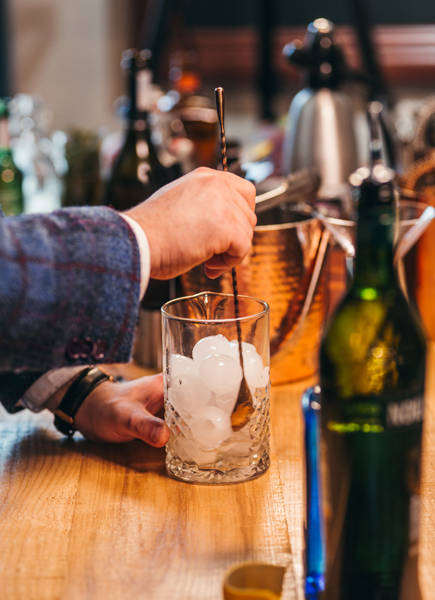
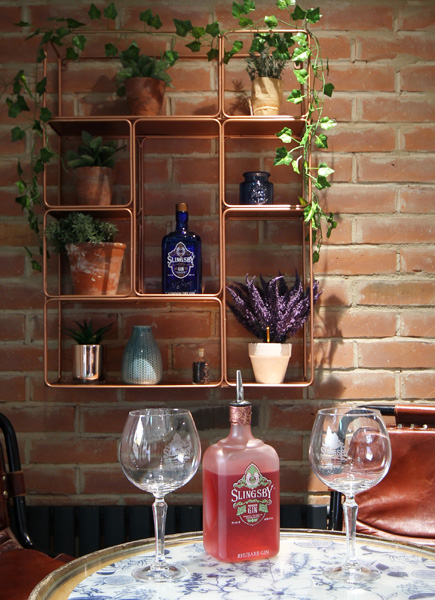
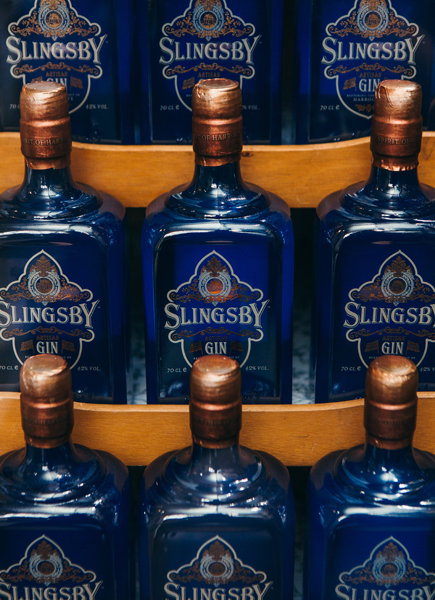
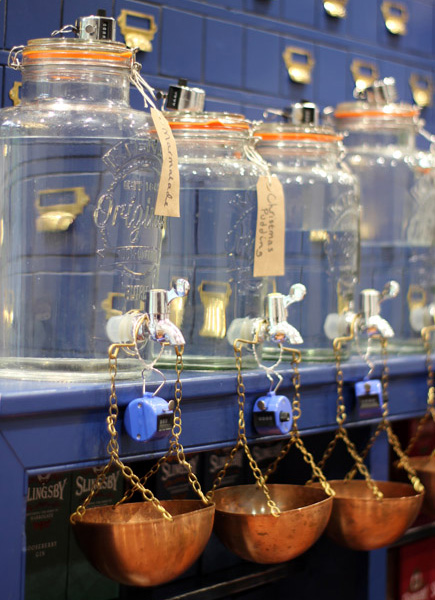
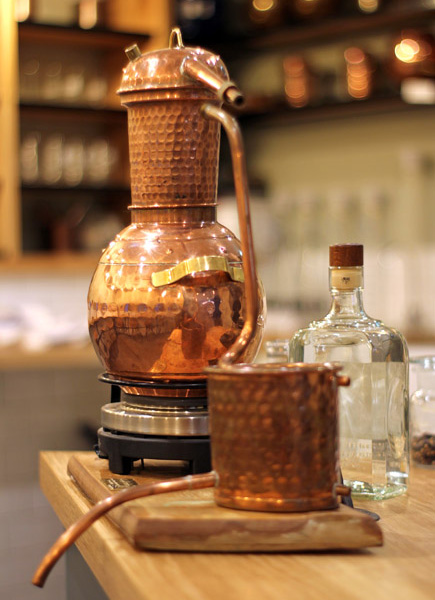
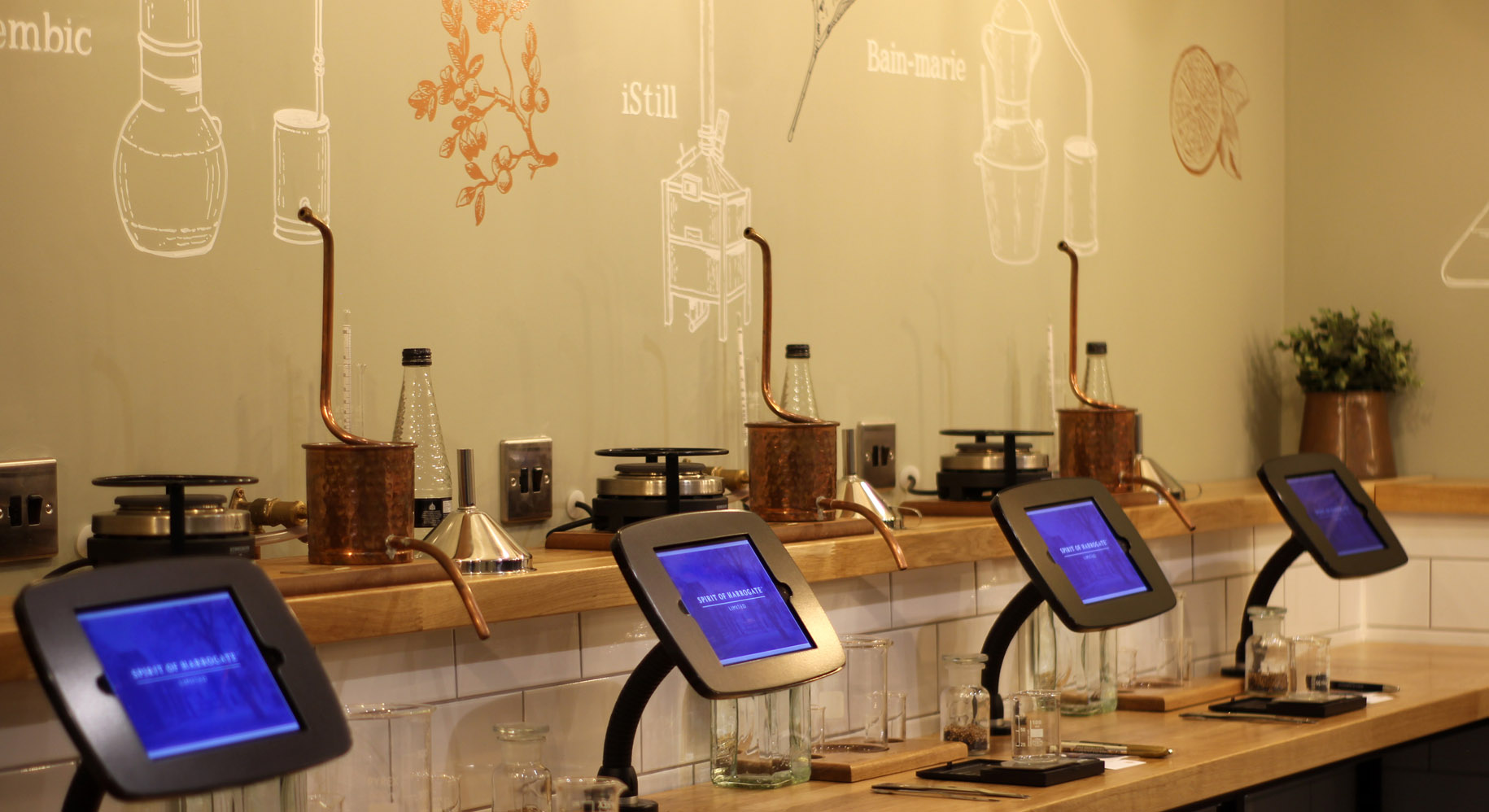
Having secured a prime retail location in the centre of Harrogate, the challenge was to create a nostalgic yet contemporary styled interior scheme for the retail space and marketing suite of Slingsby Gin. The concept of Slingsby is primarily influenced by the founder of the Tewitt Well in Harrogate, Mr. William Slingsby, and the evolution of Harrogate as a Spa town. References to Harrogate’s botanical history, apothecary and the rejuvenation of mind, body and soul were key drivers for developing the brand and interior concept. The space had to resonate with all things Harrogate and deliver a premium environment to showcase the flagship product and subsequent promotional and permanent lines.
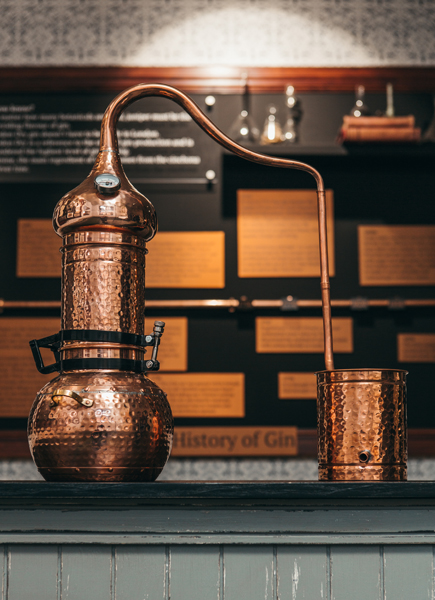
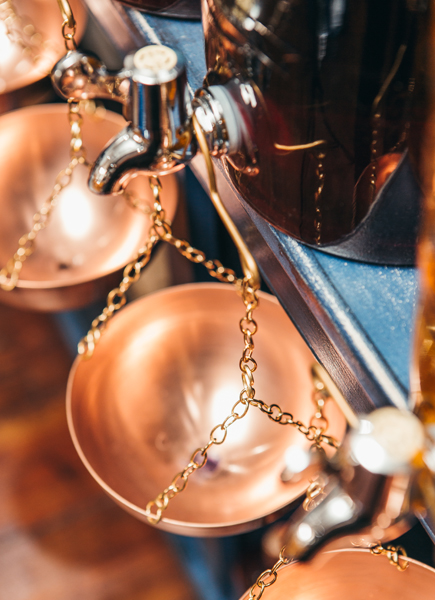
The period property on Montpellier Parade provides the perfect back drop for the brand. The apothecary styled retail space on the ground floor embodies the true Spirit of Harrogate; original aged timber floors, apothecary display units, a retail counter utilising an original haberdashery unit, lacquered steel and oak display shelving dressed with copper and glass distillation apparatus and botanical elements.
Attention to detail was critical for this brief, so much in a limited space. In depth analysis of client requirements and engaging with the brand ethos were vital to deliver a successful scheme. Ultimately the product must speak for itself and Fuse provided the perfect backdrop for this, a home for Spirit of Harrogate and a public face for this increasingly successful brand.
Client: Slingsby Gin / Sector: Leisure & Hospitality, Refurbishment / Status: Complete / Photographer: Fuse
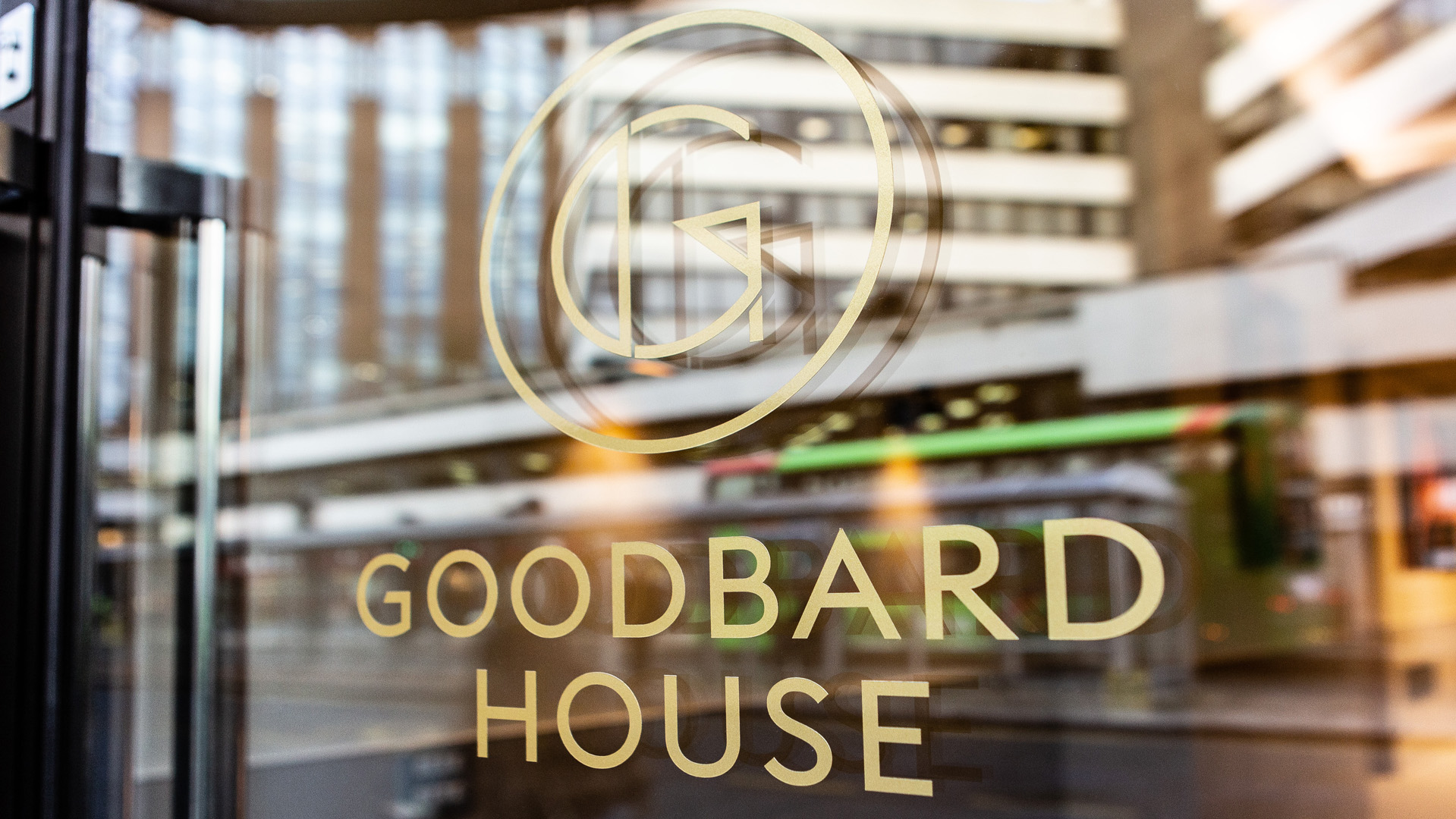
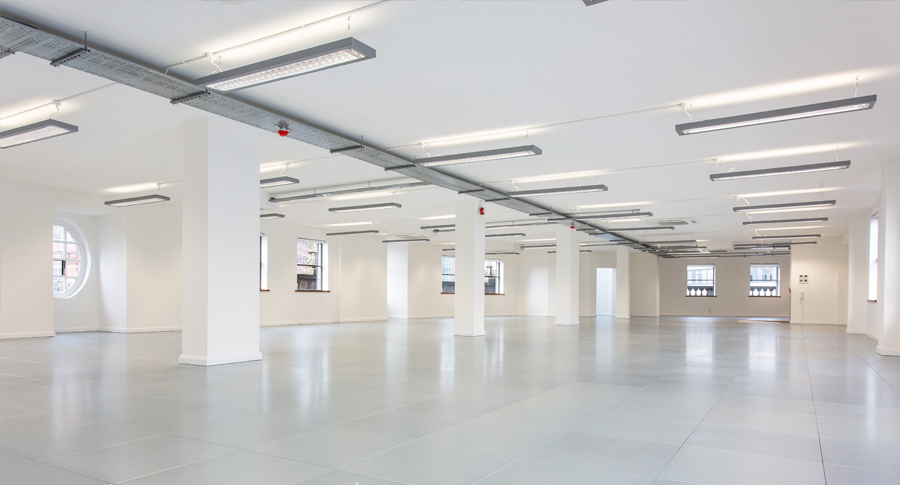
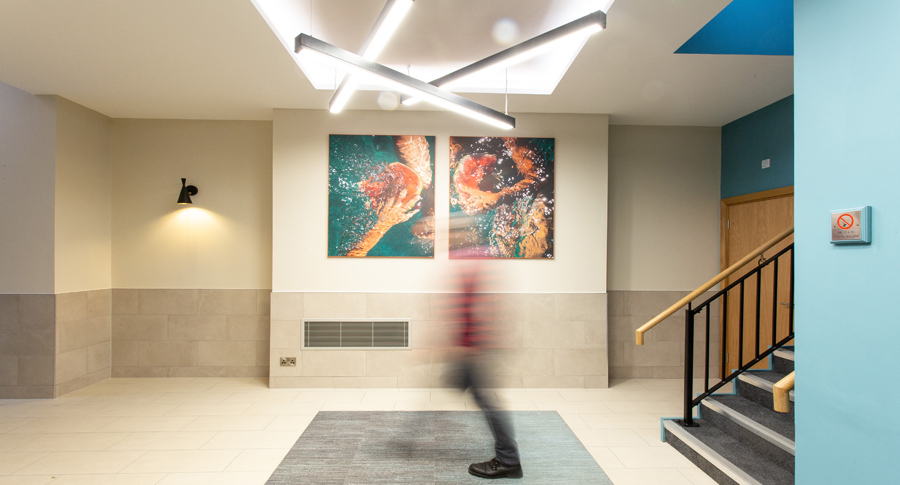
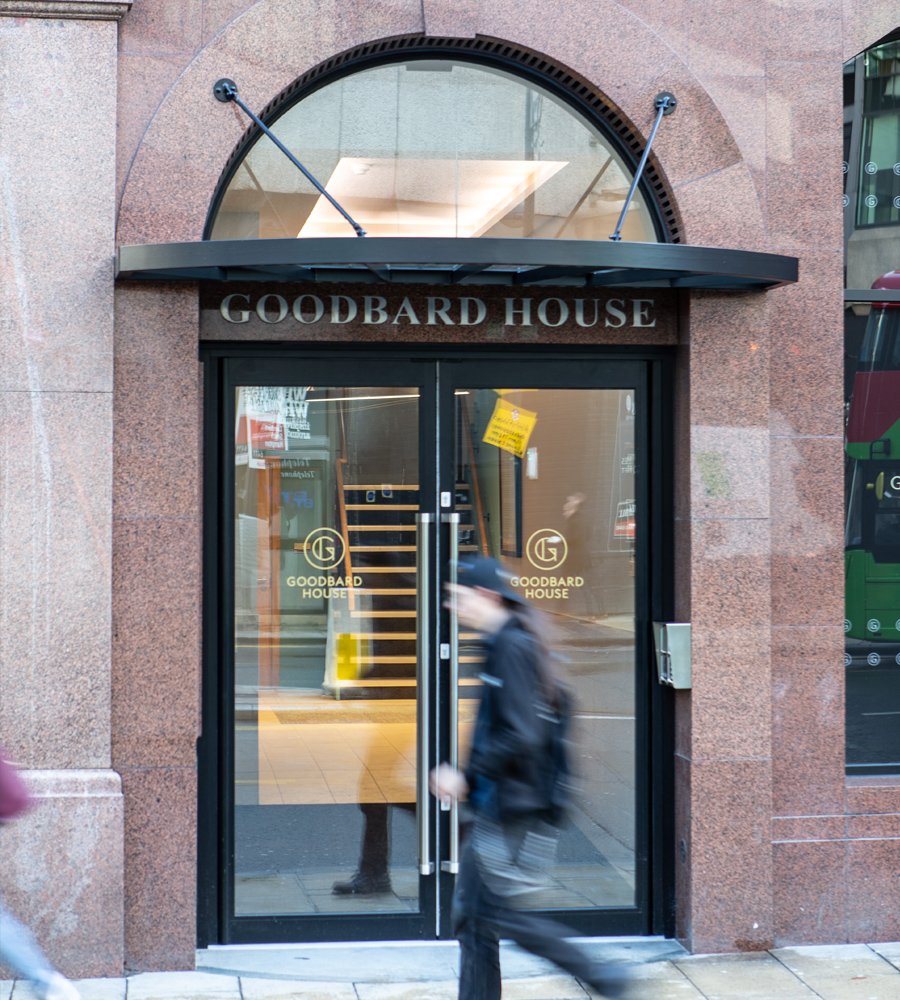
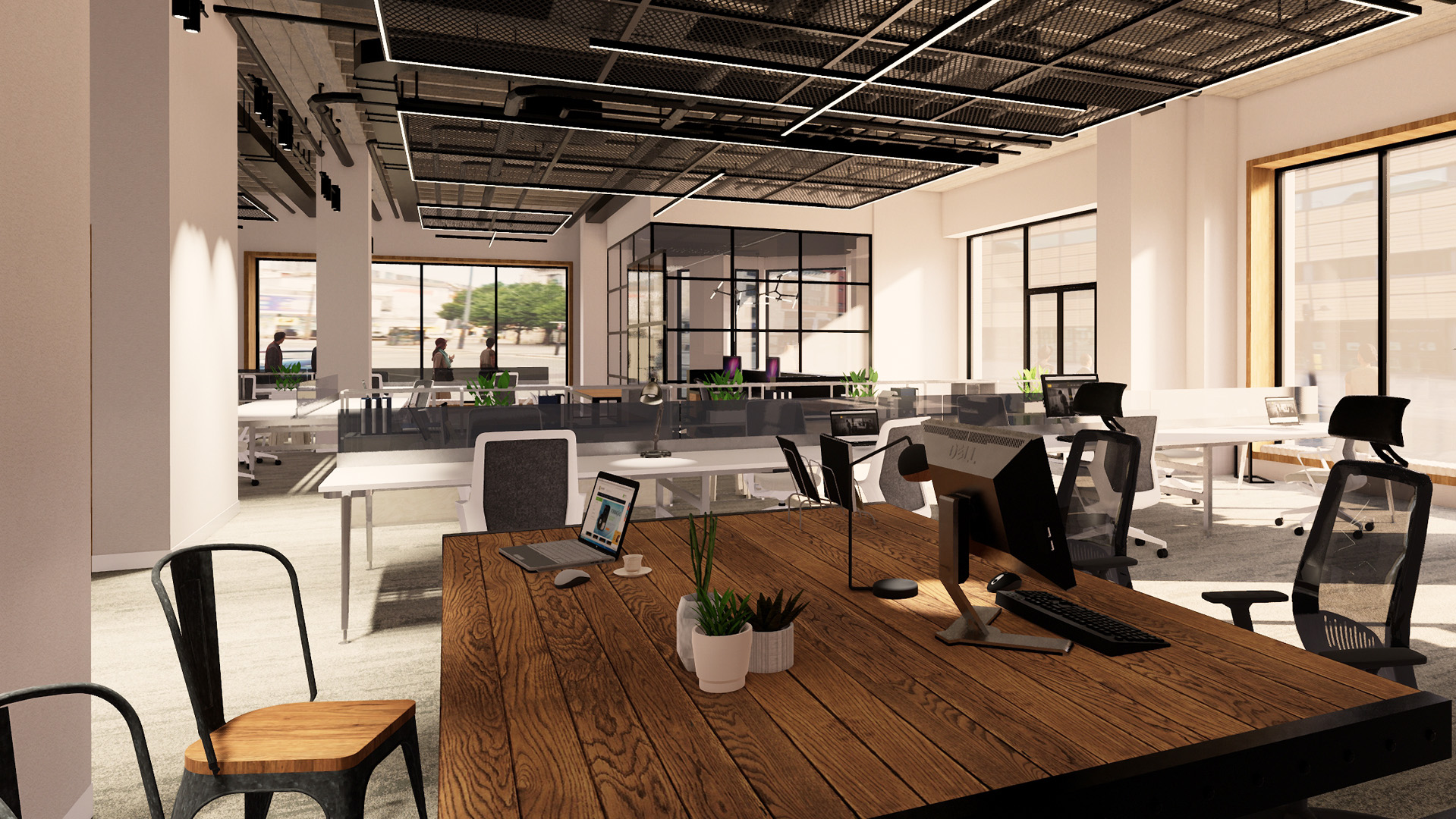
Goodbard House is in the heart of the professional core in Leeds City Centre. Offering a stunning Grade II listed facade the building is located on the prominent corner of Infirmary Street and King Street less than 5 minutes walk from the Railway Station.
Fuse were appointed to create a modern interior via a comprehensive refurbishment focussing on a new feature reception, new toilets and showers to each floor. The vacant 4th floor office space has undergone a refurbishment that will over time be continued throughout the remaining floors of the building.
Client: Rushbond PLC / Sector: Workplace, Refurbishment / Status: Complete / Photographer: Ravage Productions
Exchange Station, Liverpool owned by Commercial Estates Group (CEG) is a 190,000 sq.ft building spread across 5 floors and situated in the heart of the commercial district between Bixteth, Tithebarn Street & Pall Mall.
The original train station archways of Exchange station provide an impressive entrance to a newly refurbished reception which was previously the central core of the former Victorian railway station. The concourse reception has recently been refurbished to offer an impressive entrance leading on to a vibrant coffee shop, break out area and state of the art meeting rooms.
Fuse Studios on behalf of CEG helped deliver the design for the recent 58,000 sq,ft Liverpool John Moore’s University (LJMU) lease in which saw the relocation of 400 staff across the university’s estate into the building. As a result the building was now nearly at full capacity with the exception of a few remaining ground floor units.
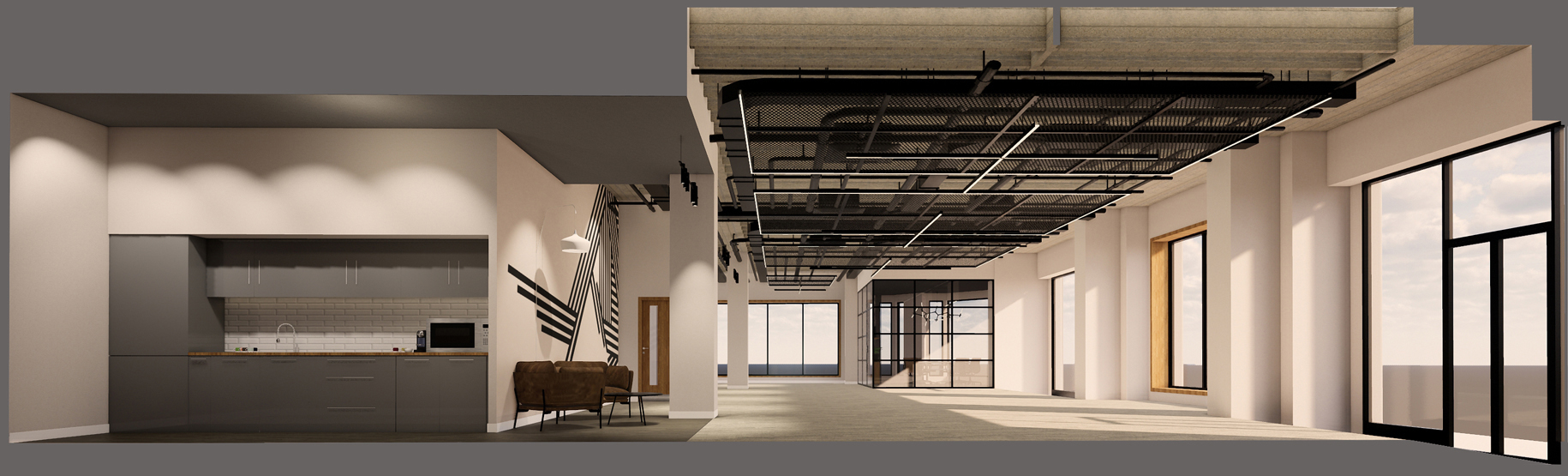
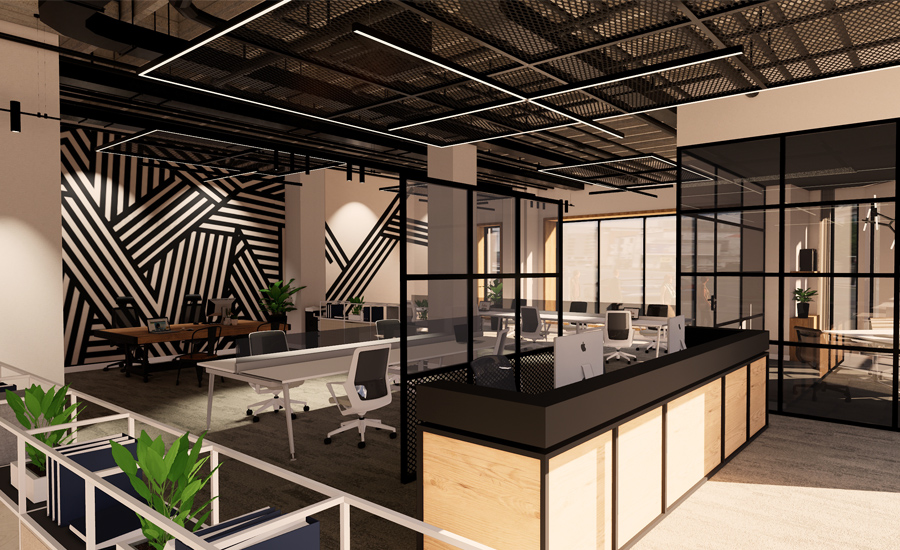
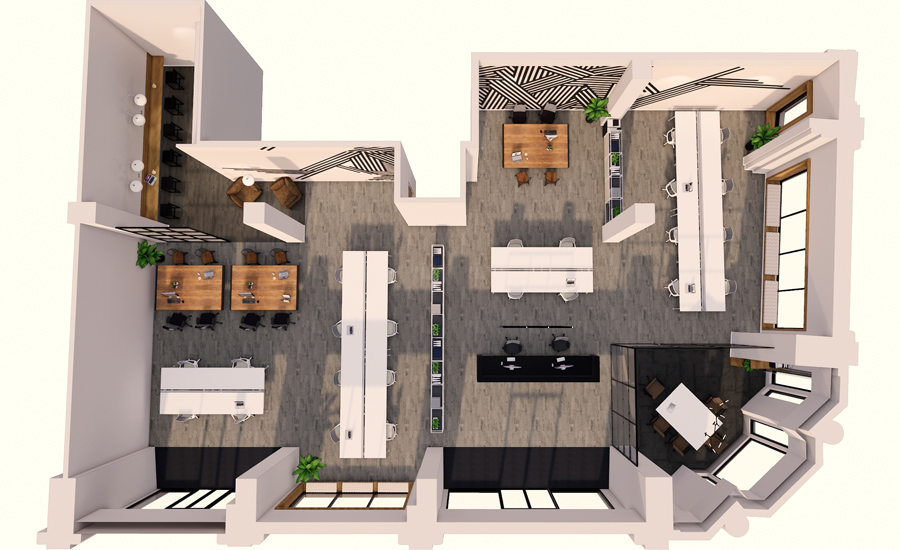
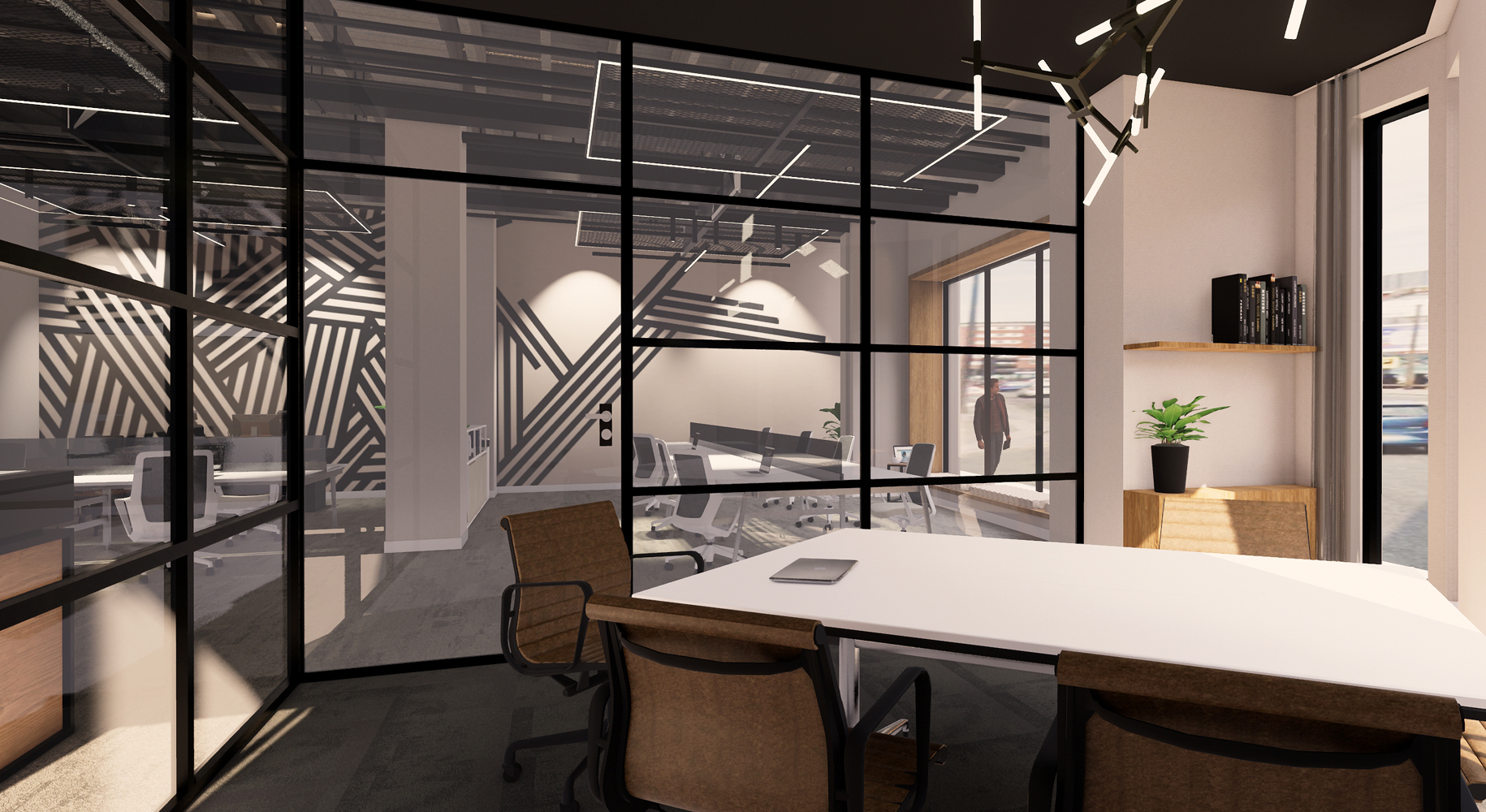
Due to its prime location on Pall Mall, it was felt that this corner unit could become a show piece for CEG and the Exchange Station brand so a modern/ stripped back look and feel was to be captured in a CAT-A fit out.
Client: CEG / Sector: Workplace, Refurbishment / Status: Complete / Visualization: Fuse Studios
Fuse Studios Limited, info@fuse-studios.com